My piece in M&M Global – not dissimilar to my original blog, slightly adapted so no need to read through!!
CES 2012: The world of television
19 JANUARY 2012
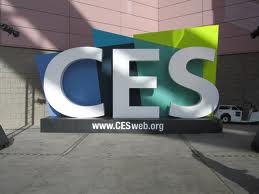
Last week executives from business, government, entertainment, automotive, consumer electronics and every major industry converged on the 2012 International CES to experience new ways of doing business at the world’s largest consumer technology tradeshow.
Everyone told me that Las Vegas was a crazy city and CES even more so but no one did it justice. This was my first visit to both and no one could have prepared me for either. The scale of the city and the event itself beggars belief. The buzz around the event is incredible with every major tech company represented (except Apple of course) and on a scale I have never seen before…See rest of article here
Everyone told me that Las Vegas was a crazy city and CES even more so but they did not do it justice. The scale of the city and the event beggars belief. There is a real buzz around the event with every major tech company represented (except Apple of course) and on a scale I have never seen before.
Executives from business, government, entertainment, automotive, consumer electronics and every major industry converged on the 2012 International CES to experience new ways of doing business at the world’s largest consumer technology tradeshow.
The 2012 International CES was the largest in the event’s 44 year history, with a record number of more than 3,100 exhibitors across the largest show floor in CES history – 1.861 million net square feet of exhibit space – and drawing a record of more than 153,000 attendees, including more than 34,000 international attendees. More than 20,000 new products were launched at the 2012 CES, and as we know it has become the second largest event for Agency Groups with Levy, Sorrell, OMG Board and 500+ people turn out from VivaKi amongst others. My boss Curt Hecht comments on this in an article in Adage – read it here.
Although there was an enormous amount covered at the show I wanted today to focus on the converged TV topic and the challenges we all face in this space. Let me start by giving you some of the highlights of the TV space for me and then look at the implications.
The TV is no longer lean back but lean in, it is being designed to draw you in and pull you from your stupor. The TV is being assaulted by set top boxes, App stores, satellite companies, it’s now no longer able to sit quietly in the corner of the room, it has to be your communicator through Skype, your music system, social media entry point, picture frame, cinema etc, it is also on a diet and becoming more colourful! (more on that later). Before looking at specifics, I have to say that above all the point I was left with was that the role of the main broadcasters and channels seems antiquated and slow at this stage and being left behind a very fast moving wave of tech.
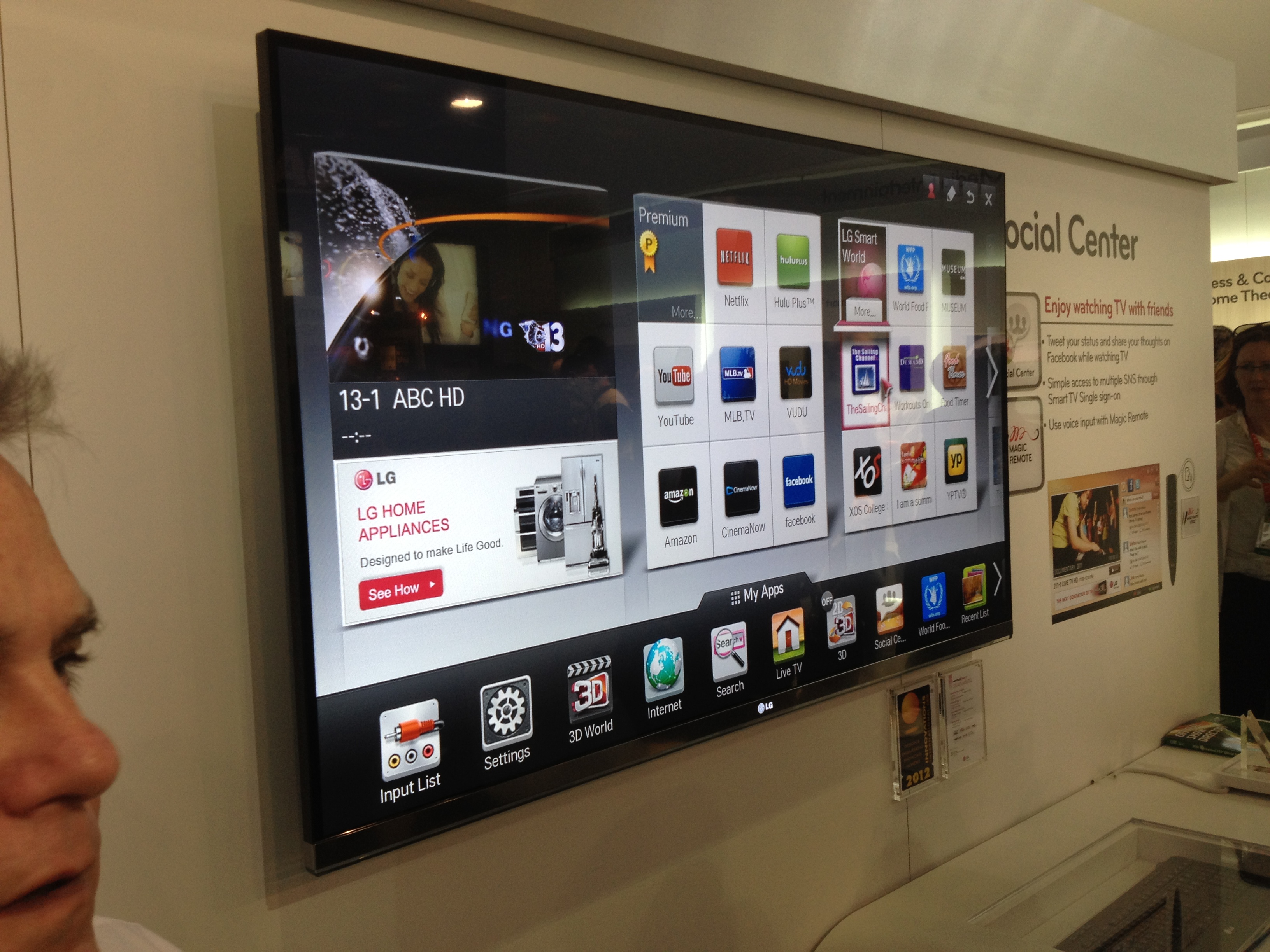
The TV manufacturers are all looking for an angle on how to interact with their devices. Microsoft want you to wave at their TVs via Kinect, LG want you to speak to their machines and have created a unique remote control that acts more like a cursor, this worked for me more than waving hands etc. The video below shows the users scrolling around the TV screen between all the apps using the very simple cursor method.
The Rise of Apps: The first thing that strikes you about the LG is that this is now all about the Apps and not about the linear TV stream. These apps remember will hold TV catchup, movie download services, Facebook, Linkedin, games etc, it will be a while before you start turning to your fav TV show at the allotted time, it is this the vast array of other ways of interacting that leaves you with the feeling that the main broadcasters have a big job on their hand. Check out this LG and it’s Apps.
In this screen you have not only the Apps but also the advertising slots available on the left under the screen, in this case Toyota, if you click on these Ads you can be taken through to full video or sites or Facebook pages, the opportunities are impressive and again this raises questions of measureability
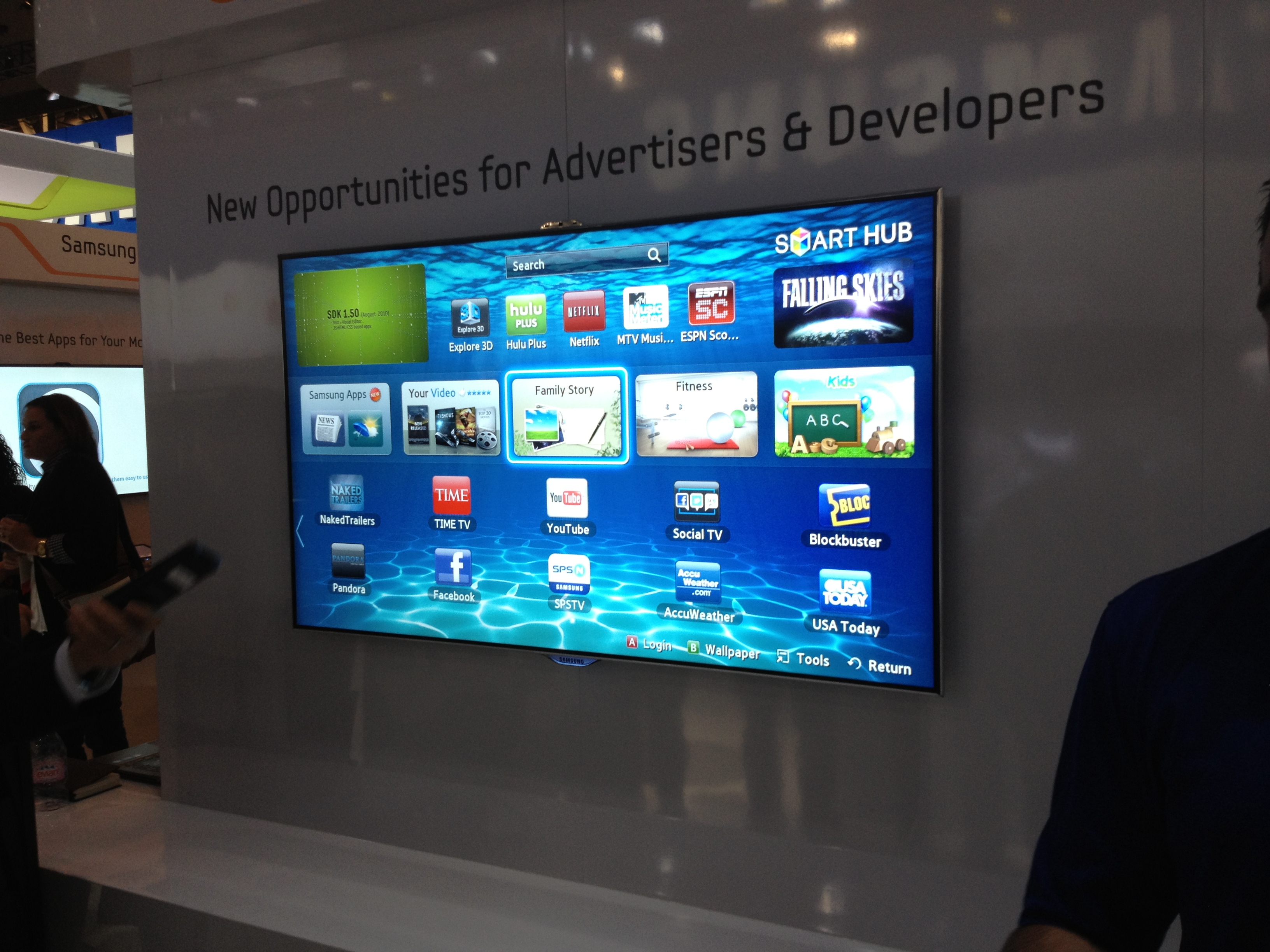
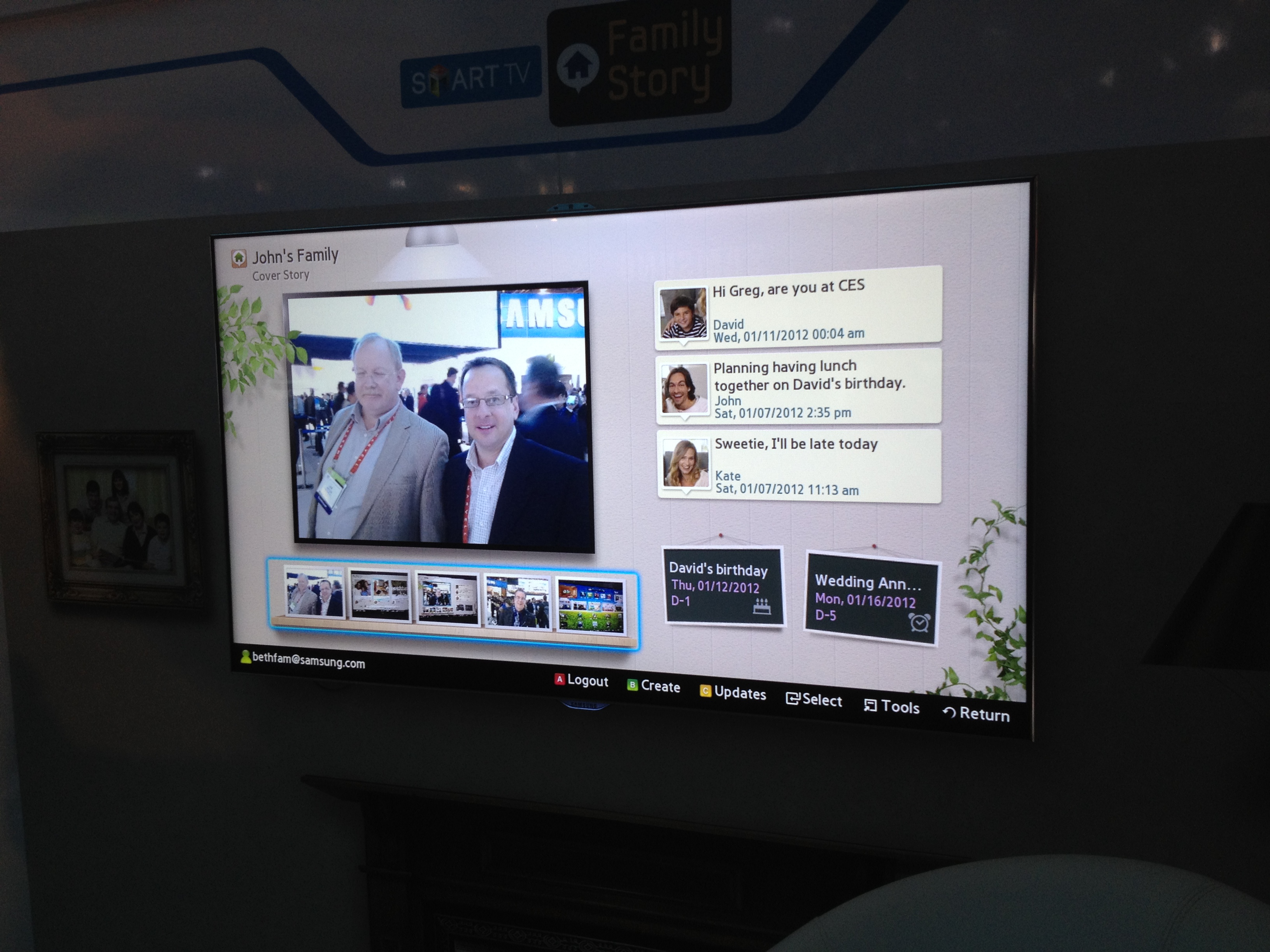
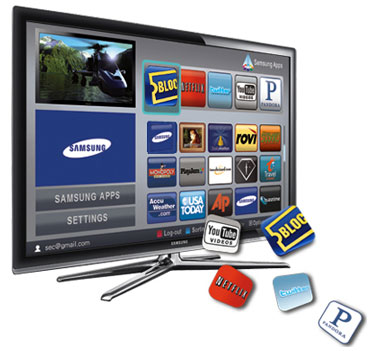
All the manufacturers have led with the App approach, take a look at the Samsung picture below, an awesome TV with incredible layout and design, again all driven by voice commands. The Samsung TVs really stood out as being very impressive both in terms of design and functionality. You will notice the social apps in the TVs, previously they have been a little clunky but now they are seamlessly integrated so you can be talking with people, tweeting or on Facebook alongside the TV programming, the second picture below shows an example of that in action. Social TV is going to be huge and will again swing the stats away from dual behaviours / screens whilst watching TV.
Facial recognition and personalisation
Right now if we want to personalise through TV it is down to the very early attempts and basic targeting alla Virgin or Sky, if we want to measure TV viewing in the family we have to press buttons or in some cases in the US people are still filling in diaries that a multi billion pound industry relies on. What about a future when the TV recognises you as you sit down, or whether you are with people, whether you are doing something else as well – are you distracted, advertiser pays less!? All this and more is coming in the new TVs. Facial recognition will be huge, imagine logging in and the TV suggesting the Sopranos episode you missed or show what your friends have been watching or even some Ads based on those you have previously watched all the way through? Facial recognition is going to transform your viewing experience and again will present you with a myriad of entertainment opps before you even get to the first channel you would normally watch!
The battle of the software
So LG and Samsung have built their own platforms for all of this to run on, so has Microsoft and Google of course, Sony was the more open minded of the manufacturers we looked at who were turning to Android to provide their operating system. Apple will have their infrastructure and others will too. So where does that leave us? Well it leaves us with the same argument we have always had – Open vs Closed. In the world of TV that debate favours closed with LG, Samsung, Microsoft, Google and Apple all running their own platforms, this is crazy in reality and a brain fade for advertisers and users. Interestingly this does not stop at the TV. Sony, Samsung and Apple in particular are all trying to wrap up your living room and online experience, trying to get you to link tablets with TV with mobile, thats the big win. What is open is the App and online companies, with all of them working to be available everywhere – email, movies, social etc are common to all, so those companies are having the time of their lives with all this innovation.
Sony went a step further by connecting their PSP to their TVs, tablets and phones, meaning as a user you can get anything everywhere. A gamer who was on the PS at home and had to run could get to the bus and then turn on their PSP and it would remotely fire up their home system and stream all the gaming to their handheld meaning they carried on exactly where they were, its a cool piece of work from Sony and needed. I felt their TV and tablet experience was behind the competition.
Measurement
We have a problem. In one TV set or should we just say large screen we have social media, photography, communication with tools such as Skype and Facetime, we have movies through all the Apps, TV shows through the Apps, the weather, an ecommerce hub and so on and yet somewhere in there people are watching TV in a linear fashion..or are they? Then on top of that we have all this on top of different platforms and players and across thousands of TVs. How as an advertiser can you a) be expected to navigate this and b) measure it in current methods. Lets face it the panels as we know they are over, they are basic and cannot fully give the advertiser a faith that they are paying for the right information. There will be ways of consolidating advertising by companies such as YuMe but on top of that everyone will be selling advertising in their Apps or via video resellers and exchanges and we have to add all this up? We need ASAP a universal tracking initiative such as online adserving etc to at least pick up a big chunk of those metrics, but outside of that the role of the TV panel either needs to reinvent itself and fast or die.
And finally..
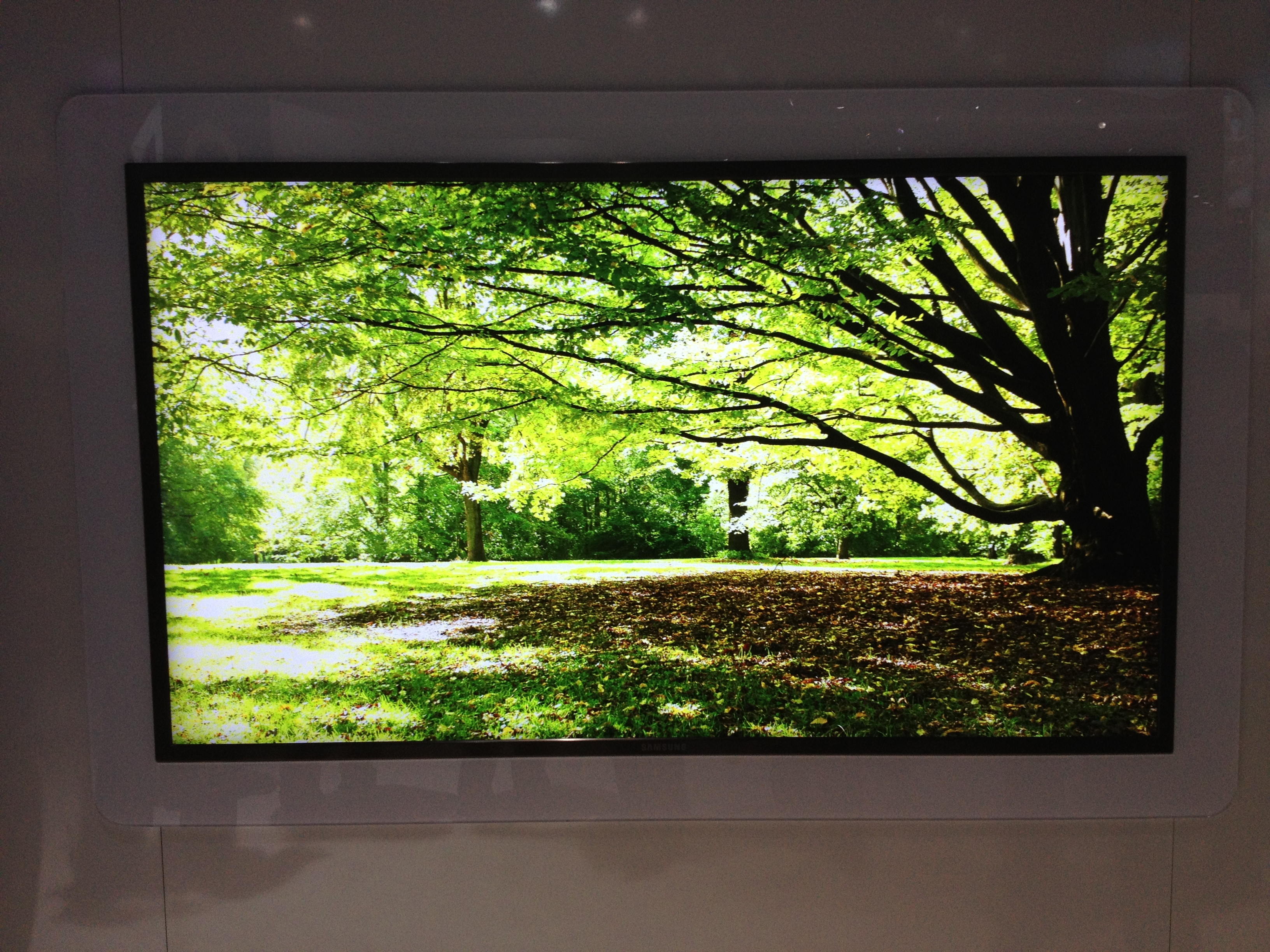
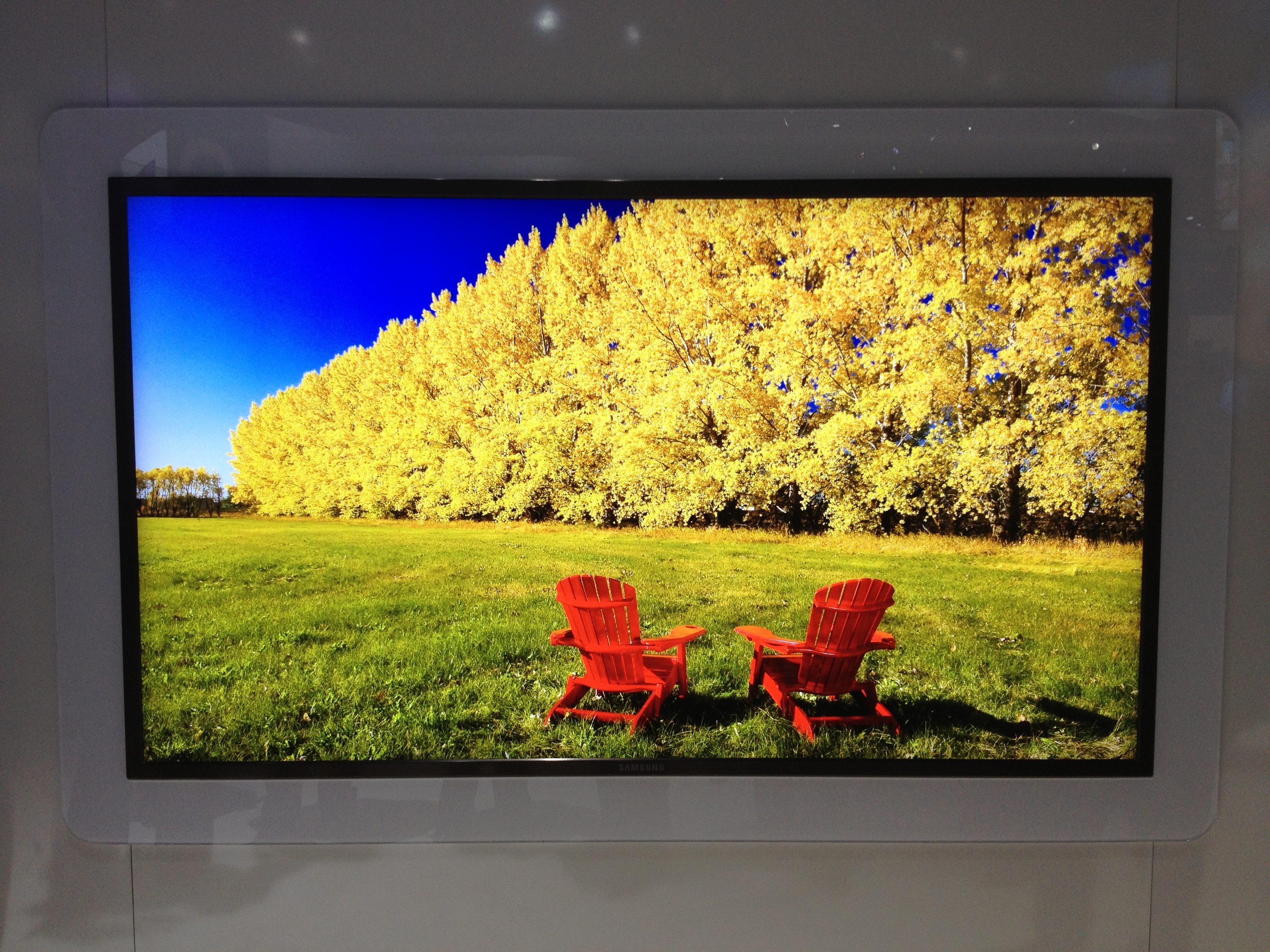
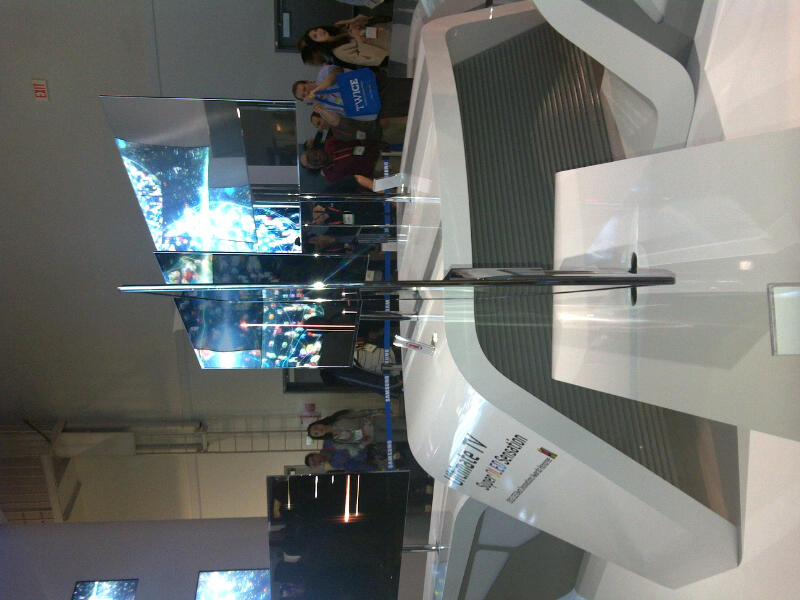
Oh my the TVs look amazing, they are getting slimmer and slimmer and brighter and brighter, see some of the images below, they dont do the reality justice but you get the idea. The colourful images are from the 4K. The 4K from Samsung basically means 4 x HD, the pictures were so real you could barely tell and check out the TV as slim as a card! The innovation is incredible and mind boggling, but I am so glad I got to see it first hand, the world of TV is an exciting one!
I quietly smiled to myself when I saw the announcement that Dataxu had bought Mexad and the press release that went with it. Dataxu buys Mexad. What an interesting start to the year in terms of consolidation. I have had relations with both companies and in both situations I / we were criticised by the companies involved for our strategy. In both cases it boiled down to driving business growth through good old fashion means rather than selling the algorithm dream.
Dataxu first of all was very down on the VivaKi partnership with Google and Invite, first was the usual Google paranoia stuff which I am used to and bored of but the second was whether or not we could succeed by using Invite, considered the lesser DSP apparently by Dataxu compared to their high tech operation. At the time I explained that to grow the marketplace and to grow my business and make a success of Audience On Demand first and foremost was to have the support of a strong partner (and a good one) with resources and scale not just in EMEA but globally. Secondly I needed consistency of offer, the finer points of the algorithm would not be the defining factor. Audience On Demand a year later is the largest Exchange Trading proposition in the world and we are delivering fantastic results and have some very smart people working for us so I feel pretty vindicated in my approach. It is therefore enlightening to now see Dataxu resort to buying Mexad to be able to deliver service and people.
Mike quotes ‘“feet-on-the-street” is becoming a key differentiator for the DSP business, because it’s not just about having the best software, algorithms and access to RTB inventory that determines success in local markets, but understanding local cultures, ways of doing business in specific markets, and the ability to advise and service local marketers and agencies in those markets.
This is exactly what I was explaining all those months ago and it seems Dataxu have also seen some truth in that approach. The other telling thing for me is around the fact that the individual DSPs are finding it hard to get into the agency groups, they have been knocking on the door for some time and the way is blocked for many of them with Invite taking the lion’s share and each of the others taking the smaller share, at least in EMEA. I have said all along that I still see this a very difficult market place for the independent DSPs, not impossible of course and I look forward to working with a number of them as we continue to test and learn, but difficult. Perhaps by buying Mexad they see a quicker way of getting through the doors, although Mexad as far as an agency trading desk is concerned is like outsourcing your TV buying so I suspect those doors, at least in developed markets, will also start to close.
Finally Mexad. I assume that even though they have been bought by Dataxu they will continue to work with multiple DSPs? I have been repeatedly heckled at industry events that working with just one is wrong and is not the way forward, that it is a flawed approach! Anyone who knows how agency land works knows that it is a large education piece and consistency of message is crucial. Audience On Demand is working well because the agency teams understand it, the publishers know we are transparent and consistent and the clients have a team of people who are aligned and focused only on delivering the best results. Perhaps Mexad will find some of the same benefits now it can concentrate on one DSP only.
This world will evolve of course and Audience On Demand will test a number of different DSPs over time, that is what any desk would expect to do, even if we retain a major partner, I hope now that Mexad is tied down to just one they wont find it too strategically difficult to handle after claiming for months that it was the wrong approach!
Aside from that Good luck to all parties and well done!
Time for @thepaulsilver to write his second post for my blog and today he covers the video marketplace and what needs to happen to realise the potential that is clearly there.
Online Video – time to fast forward
Online Video is at an interesting place. It’s poised to accelerate digital spending over the next few years. But it’s stuttering somewhat. Given the time of year, this is not about predictions, but what needs to change if Video is to fulfil its promise.
Planning
Advertisers and agencies alike need to change their planning mentality when it comes to Video. Rule number 1, it is not TV so why plan like it is?
Video planning is still dominated by replicating a TV spot buy online. In a world where we now have the ability to address and optimise at scale, why create a plan that is not suited to the strengths of the medium? The Video industry needs to embrace the move to programmatic, audience led buying. There are new ways to reach and engage audiences; TV targeting models simply are not transferable.
We also need to define premium. Advertisers (rightly so) are sensitive about content and environment but to the detriment of innovation. It seems to be a belief that only long form broadcaster content is deemed premium. Id argue that reaching & captivating your precise audience and demonstrating engagement and interaction would be a premium buy? I’m not discounting the value of broadcaster content, but it should sit within a blended schedule that really maximises audience reach and the ability to optimise.
Personalising
A lot of our research from The Pool suggests users want a different online experience, different from TV. All the more reason why we should not be repurposing a TV strategy online. Users want personalisation, they want more relevancy. Our research has shown that if ads are more relevant, users are more engaged. Users understand the web economy; if they need to be exposed to advertising in exchange for content, they want it more tailored. This is another reason why innovation is needed. A change in the way we serve ads, using data (in the same way we do for Display) to customise creatives on the fly. We simply have to.
Measurement
Speaking of optimising brings me onto a fairly contentious subject: No one knows how to measure video. Over the past few months I’ve had a lot of dialogue and conversation with those within the video space and the feeling i’m getting is we buy long form content because it dovetails nicely with our TV spot buying schedules. This would then assume that it’s a reach and frequency game against an audience. However, when we start looking at reaching a precise audience, using actual data, the goalposts move. Buyers look at clicks. Clicks are the worst metric to evaluate as a measure of success for Video. Users who click are a) from a certain type of environment and tend to be a consistent type of demographic and b) are not being subjected and impacted by your advertising. Video is truly about upper funnel engagement. Regardless of whether it’s on your mobile, desktop, tablet, connected TV. Those that do click also drive, invariably, terrible bounce rates. What about connected TVs? We are already accessing inventory within these platforms. Do we expect users to start clicking on TVs??
The problem is that there is not a common currency. And whilst there is not a 100% robust methodology to bridge TV to Video using a GRP, we should be evaluating success on engagement and cost per engagement. If that happens within long form content, short form content, it should not matter. You’re reaching your audience and optimising to engagement. If ITV, et al can outperform all else on a cost per engagement model then great.
Buying
Video is still dominated by the old guard approaches to trading. There is a fear to change and innovate and often it is misplaced, perceived fear. Video publishers look at the display space with the excess volume of inventory and fear that Video will become a race to the bottom. This is not the case. You remove UGC out of the equation and you have a model that is prime for biddable trading. You have constricted supply with an increasing demand for that inventory. Anyone knows this will lead to increased pricing. Addressable video is about improving relevancy for the advertiser and rewarding the publisher appropriately. With improved relevancy and reduced wastage means less ads required to make the impact. Less ads at higher yield means a better user experience. A better user experience means more returning visitors. And then the process repeats itself.
Trading Video over a table is not the future digital model. It will become platform based. It will become technologically enabled. But as to the reasons above, this isn’t a bad thing. It doesn’t mean prices race to the bottom. Change is happening and it’s a positive thing which needs to be embraced. At Audience on Demand we are 100% committed to making the Video space more efficient, more scalable and ultimately more rewarding for publisher and advertiser alike.
Paul Silver, Head of Product, AOD UK
@thepaulsilver
This guy presented at the recent Google Global Agency council, an extremely intelligent guy who presents with what can only be described as force. He can talk on any sector or any industry, taks about science as well as business strategy. Watch a few of his videos here
Dr Patrick Dixon, international conference keynote speaker, author of 15 books and Chairman of Global Change Ltd. Patrick Dixon is a management consultant, growth strategist and trends analyst, whose clients include many of the world’s largest multinationals. He has been ranked one of the 20 most influential business thinkers alive today (Thinkers 50 2005).
Take a look at the video below and others on YouTube.
There will be many predictions for 2012, these are less predictions as thoughts on what I see around me right now and discussions being had. That is why I have referred to this as ‘watching change’ rather than predicting it. As usual with me its tech heavy but not exclusively an inspired by some recent people I have met lately, more of that for another post.
What do I think we will see changing in 2012?
1. The rise of campaigns targeted against connected TVs, there is so much movement in this space and it is happening so quickly, I believe more advertisers will be looking to agencies to deliver more targeted advertising on the TV through connected TVs and set top boxes. Video advertising shown on streamed content on TVs will also increase significantly in 2012. What I find most interesting in this space is that as with mobile there is a lot of talk but I can see things moving faster than anyone predicts. If you look at the Xbox alone, they have more ‘set top boxes’ than Sky, that makes them the most connected organisation in the UK in regards the TV.
2. From an agency perspective the silos of search, exchange trading and buying on APIs will be broken down as we start to use Data Management, targeting and buying across all three of them to drive campaign results. We will all get smarter about talking data as a planning mechanism rather than a list of sites to represent targeting. Where we can combine audience targeting with context and highly dynamic creatives we will hit the bullseye. This process is already well underway but see this accelerate in the next 12 months.
Where do I see the greatest opportunity for improvement?
A. The greatest room for improvement will be in video as we move from a disparate, highly admin intensive channel that is still managing to scale rapidly to a more platform, third party adserved, data driven opportunity for clients. Video has the opportunity to explode in terms of volumes, the use of buying platforms and third party adserving will make that possible and produce better results for advertisers and a more efficient delivery from an agency perspective. I hope AODv achieves this on behalf of the agencies.
Video revenues could increase significantly with this last impetus, it is a shame that it is being held back by some major broadcasters hell bent on protecting the old models and the ‘it has always been like this approach.’ We know how successful these people have been in the past, so I think they should move to a bigger and better learning model.
Technology:
What tech/device will completely transform the way you do business?
Connected TVs, already have become more and more prevalent in shops, the connected TV will bring the social TV experience to the living room that is currently produced by the highly reported two device usage people employ now ie PC on Twitter whilst watching TV. The connected TV and to set top boxes such as Xbox will allow users to genuinely multi task and enjoy a more social experience. On top of that they will of course also be able to access new content that will pull more influence from the linear TV schedule
What technology has transformed us in the last two years?
Life changing is pretty strong but the ability to work in the cloud would be up there, whether its docs in Dropbox or my iPad, iPhone, Apple TV and Airport Express all linked up wireless at home with no need for synching etc. The principle that the devices no longer need to be mega storage devices is a huge shift and the always on, access anywhere approach to tech is an amazing shift.
What do I think we can’t live without now that will be obsolete next year?
The death of the desktop, its all tablets and laptops and as working conditions become more and more mobile the desktop becomes more and more out of date. Of course that wont be next year but as a trend I believe we are starting to see the PC desk top being eroded, as companies no longer want to invest in more and more office space, instead opting for work from home or hot desking lap tops and tablets become the primary device.
General:
What will change specifically in media?
Our organisations are becoming more and more global by nature, the pitches, the advertisers the media properties we spend with and so the nature of new business requires a more joined up and well round global group to answer these challenges. If you don’t do it well you will lose those big international advertisers, more and more focus will go on how we weave our different agency properties together in a meaniful way that gives clients the maximum amount of insights and services with the minimum amount of disruption.
What do we need most to see greater success in 2012?
We are in a transition period where media owners, Ad Nets and Portals are all trying to plan for the future but manage their old business at the same time. As an industry we need to give companies 12 months to allow that change to happen even if it upsets shareholders and the bean counters. Many organisations will take a hit in terms of ad revenues they receive for direct response campaigns direct from agencies and have not seen it returned through the new approaches such as AOD. It does not mean its wrong, it’s just difficult to manage but they have to so they can reshape for the future.
Mobile needs tracking and ad serving badly! Mobile usage is huge, it brings online to offline and offline to online. The world of the web is social, personal, local and mobile and the smart phone ticks all those boxes and yet we can’t seem to bring the advertisers to spend the revenues. This remains what seems an eternal challenge to master.
VivaKi Nerve Center launched Audience On Demand in the US back in 2008, launched in London in 2010. Now the UK’s largest trading desk is looking to add to the team as we grow month on month working with some of the UK’s largest advertisers. We work with Starcom Mediavest, ZenithOptimedia and Razorfish teams and are the most lined up agency group in the UK with full support from the agency brands and our success reflects that.
Paul Silver Heads up the Audience On Demand Product and is one of the most respected people in the industry and he will be joined by the Head of Activation on Monday Geoff Smith, current Head of Technology at MEC, it’s a dream team backed by a number of activation and analyst team members and together we are really making great strides in the market place. If you want to work on private marketplaces, scale plays, strategies across the exchange space then you should contact me or Paul.
Bored at an Ad Network, or worrying about their future? Perhaps at another agency Group but struggling against constant resistance and confusion, maybe in a ‘specialist outfit’ but seeing just how restricting and myopic that can be? Want to work for a team that works openly and collaboratively with publishers then email us..
A video from the Publisher and Trading panels at Exchangewire. I was on the first panel with Nigel Gilbert, Martin Kelly and others talking about whether we think the media plan will continue into the future and how different it will look.
As the digital landscape evolves so the companies within it have to adapt as well, but actually we all live in a short term world. Both publishers and agencies have their work cut out for different reasons but all too often good strategic decisions are being strangled by short term demands. This challenge has never been more obvious than right now.
I have been talking daily to organisations both in our group and externally about how we plan and adapt for the future, we can all see the major digital portals for instance having to sit and scratch their heads a little about dealing with the here and now but planning for the future. Take a Yahoo or a Microsoft, they have both embraced the new world of exchanges and yet somehow want or need to protect their network offerings, the two don’t sit easily in reality. As strategies they should be rewarded in their approach of embracing the exchange world, but instead they are under pressure to deliver their targets based on a 2010 estimation, when the world was entirely different. Was it that different? Were we not all talking about exchanges etc back then? Well yes we were but the spend was not backing up the rhetoric, 2011 is a different story. Audience On Demand, as the biggest exchange trader in the UK has accelerated incredibly, and that growth is having an impact. Look at Specific Media who but a year ago was recruiting staff and buying Myspace and a few short months later is making redundancies, that’s how quickly things move.
We are though at a juncture, and it’s for that reason we need some patience from the bean counters. 2010 did not properly represent the Exchange growth, 2011 is closer to the truth but 2012 will be big. As the long tail of Ad Nets is absorbed into the more focused addressable media hubs and digital consolidation continues, the likes of the Yahoo or Microsofts will begin to see the benefits of the exchange infrastructure and will be able to let go of the old DR network approach. They will start to reap the spends that once went to the Ad Nets, but this time via exchanges.
It is refreshing to see the strategy Yahoo are playing out in the us. There was an article today in fact on this in Adage – click here. They are going to take a hit in the US with their strategy of blocking the Ad Nets, Criteos and others from buying their inventory. Yes short term that is going to hurt them, longer term its a great move and will pay back undoubtedly. We are seeing a significant adjustment in the digital ecosystem.
Agencies are evaluating just as fast, less from a revenue perspective, more from a structural perspective. If you designed an agency today, would you do it the same? I doubt it and yet the upheaval required sometimes makes people think twice and come up with a number of reasons why they should not do something even though in the longer run it makes perfect sense. This requirement to change however on agencies and publishers comes from a number of key trends;
consolidation of digital, we have all seen the stats that show the big digital companies control a huge percentage of the total spend and audience, even within the exchange space you are dealing with a few big partners. I believe that clients are starting to see a new digital landscape that is not 40 sites on a plan. They are realising that actually they can achieve almost all they need with API buying, Audience On Demand and Search, its a shift, everyone is looking for scale and efficiencies.
Globalisation of media and advertising. Most pitches are becoming global, not all, the recent in for ZenithOptimedia of RBS proves that, but many are. As such as the clients think more globally then they look to the agencies to do the same, and the more you think like that the more the scale partners of Yahoo, Google, Microsoft, Facebook etc become important to them and us.
Commoditisation drives value. This is an interesting development for me. Years of being told by Microsoft and Yahoo etc that their inventory is ‘premium’ has rarely been backed up by any real insight except their own research. Now we have commoditisated huge swathes of inventory through DSPs and exchanges we are being able to see what value inventory has and what performs. We see the volumes of money we spend with these companies through the DSPs and what eCPM we pay for them, none of this is determined by a person or a power point slide or negotiation. Tech has decided, results have decided and demand has decided and the patterns are very interesting indeed. After millions of pounds of spend through Audience On Demand we now see the true value of inventory and yet it has never been more commoditised.
Technology is in fashion. Of course tech has always been in fashion but never more so than now. It has been developed for agencies in a meaniful way. Demand Side Platforms for exchange trading, Bid optimisation platforms for search and API buying, these things have been designed to help us drive efficiencies and improve performance and we really see the opportunity now. It’s brutally competitive though and VivaKi have decided to work with the best partners and then develop tech that links all those partners up providing an interface to work with, this we see as the great opportunity, if you then add that to new streamlined teams and workflow, you have a heady mix that can deliver fantastic performance and service.
So where does that leave us? It leaves us with a lot to do and we need more people to take up the challenge and either drive the change through their organisations or give the people who have to do it a break so they can work through this transition. The end result though is the ship has sailed, the change is underway and we need to embrace it or become a dinosaur.






 Bertozzi's Bytesize