Uncategorized
Have Publishers learnt from the past?
I was recently prompted to think about the sales policies of publishers when Criteo approached us to buy their inventory through a Criteo network. On the face of it one could argue it would be a good buy for us, potentially unique inventory, sourced through publisher deals that by many peoples opinion is good quality and high up the adserving priorities of the publisher. Obviously after about 1.5 secs I decided I was unlikely to contribute to the clever business model of Criteo by filling their coffers so they can then go pitch direct to our clients and move the business. That is not what this post is about but it set in motion some ideas that I think publishers should consider.
Companies like Criteo, have created a good business and are doing well in their niche but they got there through persuading publishers that they should sell to them quality impressions, in some instances first look, even above direct and brand channels at a low cpm vs those direct channels but high vs the RTB market. They deliver good business for them and everyone is happy.
Problem is that they buy a lot of it and need to get rid of it and so they want other people to buy it from them ie trading desks and potentially Ad networks / Managed DSPs. The demand in the exchanges has increased significantly since many of those deals were done and so cpms for quality inventory like this will likely create a higher cpm than they bought from the publishers. So that means then that trading desks are buying good inventory from Criteo rather than direct from the publisher? Is that what the publisher had in mind when they sold or agreed to the positioning of the sale?
I think it raises questions that publishers yet again have to face, is it better to sell at a flat cpm or find other channels to monetise. A lot of big names are doing this and for me makes no sense, if you want your inventory to be monetised, come see us rather than put us, your direct buyers second to someone who is re selling it to us? It is time to ditch the flat cpm and embrace the auctions and private market places.
We can also offer transparency to the publishers as to how well their inventory is performing and we can partner to create improvements for them and us. The alternative is sell and see no insights. In my view that era has ended. Publishers, come talk to us we can help you with that.
Audience On Demand & Audience planning and buying video
A brief video outlining Exchange Trading and Audience On Demand view of it, a basic outline only.
My Interview with Beet.tv on Programmatic Video – AODv
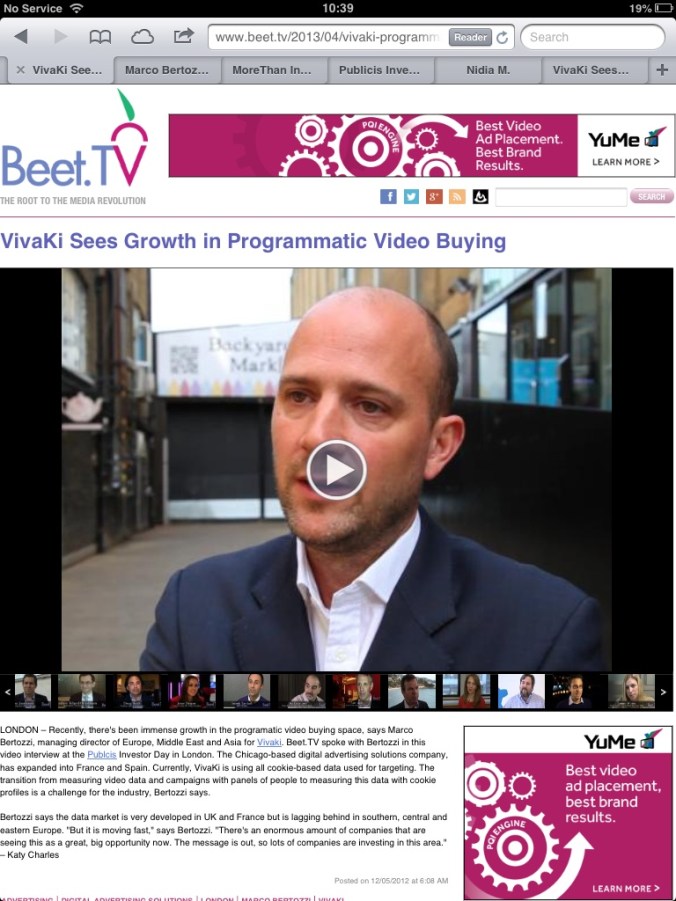
Post PublicisInvestorDay I speak with Andy at Beet.tv on Audience On Demand Video.
Adweek – Trading in Real Time Panel – VivaKi, Xaxis, Amnet, Cadreon
The only session in Adweek Europe event on the future of trading and Data driven display. We even talk transparency. It’s longish but if you like this stuff!
A great turn out for the event and we coved Programmatic premium, the future of the agency role, transparency and some interesting word association.
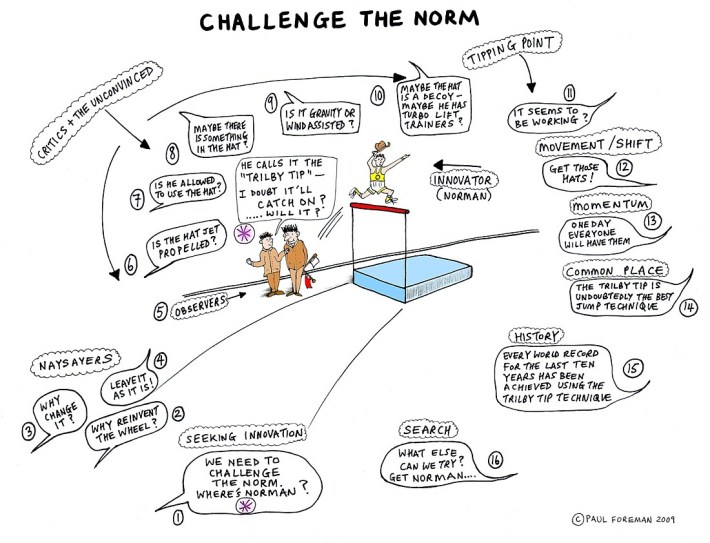
Do we do enough to change our advertiser’s business?
Since the dawn of advertising and media our business has been evolving and adapting to the changing consumer landscape. Rishad Tobaccowala, our own Chief Strategy Officer described agencies as cockroaches for their ability to survive against the odds. It is not just agencies though, publishers, tech firms, Ad Nets have all pivoted to some extent or another, it is in our DNA.
We have been focused on our own internals and what the consumer has been up to but the advertisers we work with have more or less stayed the same. Yes they have embraced new ways of reaching their target audiences and moved at varying paces to use digital and so on, but give or take they have the same or similar teams, structures and demands.
It strikes me that we as agencies don’t do enough to challenge that, we are happy making sure our own businesses are future proofed but how much time do we spend telling the clients that they need to change fundamentally? Why are we restructuring, creating new businesses, skills sets and yet we don’t spend much time explaining to the client that they should be future proofing. Would we suggest a new structure to their media team, propose that they need new skill sets or a new unit? I am not sure we do and it is not our fault in many cases. Everyone has heard of the jumping flee story, if you keep putting the lid on eventually they stop jumping and I think we are all a little like that at times, we have ambition to change things with our advertisers but often it is rejected as too difficult or their incentives are not aligned.
In this new world of RTB, programmatic buying and data where all our businesses have evolved to a greater or lesser extent, in some cases creating new businesses and structures, what are we telling our clients? Are we suggesting they carry on the same or should we be telling them to think differently? Do they need a centre of excellence in this space, how can we get established and sometimes entrenched brand managers to adopt these new philosophies quicker?
If we are all future proofing – what are we asking our advertisers to do other than buy media differently? We need to think bigger and challenge our very important customers to do the same.
CES Microsoft interview – tech, data, consumers and advertisers
After a few gruelling days in Las Vegas for CES, Microsoft asked me to comment on a few issues around the role of technology and how Microsoft are placed both from a platform and data perspective.
We will laugh when we tell our kids we had to watch Ads!
 We will laugh at the idea of having to sit through an Ad we didn’t want to watch in years to come. The likes of CBS, who recently downgraded an award to DISH for their Hopper product (a product that allows the viewer to skip Ads) by influencing the CNET panel, will need to change their views and fast.
Perhaps people have not noticed but the beginning of the end for being forced to sit through Ads is already underway. Google is building a business on the back of skippable Ads. It is a mere skip and a jump before that model is rolled out to TV. It’s not just Google though. We have all got used to fast forwarding through Ads on our PVR’s. There are companies like DISH, with their Hopper product, making it a central offering. Even online Apps usually have a premium or Ad subsidised version. Other companies, for example SpotXchange, have rolled out account based solutions where users can pay to skip ads. The concept of not watching Ads you do not want to watch is entering our ecosystem like water pouring through a leaking dam. No matter how you try and plug the leak, the tide is turning and before we know it the idea of forced Ad viewing will be a thing of the past.
Consumer opinion eventually is paramount. This is not about not watching ads, it is about watching ads that are relevant and entertaining. As viewers get used to skipping ads and companies offer that as an option in a new medium, like TV, consumers will turn there first. The DISH example in the US will be an interesting one to follow. When PVR’s were first launched, the whole industry was very nervous about them and the implications. But we coped. Google’s skippable Ads is a fantastic model for them with incredible CPM’s on ads that are watched through to the end. It works for them. Advertisers also like the idea of paying for real user viewership. The challenge therefore is for advertising to improve (please no more perfume Ads following the same old, superficial format) and for the delivery mechanism to improve.
This is all fine for online, but TV? No way! Well in case anyone had missed it, TV is changing. The mechanisms through which we watch TV are changing and the way content is being consumed and distributed is changing. Addressable advertising across multiple devices is already under way in Alpha and Beta tests. Ads will become adserved which will allow better targeting and if targeting improves, the response will be better and consumers will appreciate the relevance. If we can do this well then who is to say that the Google business model will not suddenly look attractive to broadcasters?
Importantly we will question this idea of ‘extra value’ in TV, which is code for wastage as opposed to actually buying the audience we want. An Audience On Demand offering could quickly be applicable in TV. So if we can combine adserving technology, with proper targeting and importantly measurement (let’s not get in to that today!) and sprinkle some consumer boredom with relevant advertising, we are well underway to a world where we tell our Children that; ‘yes they made us sit through five pre-roll ads before we were allowed to see the programme we wanted to watch’ – ‘and at a time dictated by them’! A crazy notion.
Blog also ran on Digiday – http://www.digiday.com/agencies/skippable-ads-are-a-good-thing/
Shifting skill sets in agencies – Digiday
Shifting skill sets in agencies – Digiday
Not the deepest of contributions but its for the scrap book!
Happy New Year. Thank you and Good luck!

 Bertozzi's Bytesize