Original article in Campaign HERE
Cannes is fast approaching, so it makes sense about now for us discuss creativity and technology and how it works together to power our advertising future.
I wonder, though, whether the changes in advertising we have experienced over the past 12 months are going to have as much impact upon the event as the new need to register to walk into a hotel or get on a yacht.
This past year has been quite traumatic for the advertising community; the ongoing onslaught against programmatic, the questions about digital vs offline, and circular debates about which media channel is most influential.
These would all be the standard issues for an average year, until ANA-gate, which kicked off a huge surge of self analysis across the industry.
Procter & Gamble’s Marc Pritchard weighed in more recently and delivered the biggest mic drop – basically calling out the whole digital industry. And of course it did not end there.
Too many unfulfilled promises and uncovered secrets in terms of the micro-targeting, data offerings, media properties that are unsuitable, and not enough human eyeballs.
Enter stage left – The Times – and so the we hit rock bottom. Technology, data, programmatic, privacy, fraud, all in the spotlight.
It has felt like an endless stream of negativity, but what has it changed and how can we expect Cannes to reflect it?
The initial outcomes of all this introspection have been a drift towards a rejuvenation of interest in more traditional channels. TV, premium publishers and “safe” environments are having a renaissance, as advertisers worry about where their ads are appearing.
It feels to me that we have reached “peak technology” within advertising. Too many unfulfilled promises and uncovered secrets in terms of the micro-targeting, data offerings, media properties that are unsuitable, and not enough human eyeballs.
Now we see the need to have a reset – a fresh approach to how we connect with consumers.
It has felt like an endless stream of negativity, but what has it changed and how can we expect Cannes to reflect it?
Now, I’m not suggesting we are going to see an “anti-tech brigade” per se, but we will see a surge of realism… a step back.
In advertising we adore the creation of a powerpoint presentation. Yet we are all familiar with the feeling you get when you get lost in the weeds and eventually you have to say, “what are we trying to communicate?”
I feel that’s the same with our whole industry. I have worked in digital from the start, and we have done exactly that – we started to tell a story, a good one, but it got more and more convoluted.
We allowed other people to insert slides that were “really important” – adserving, retargeting, audiences, data, programmatic – until we are all staring at a mess of charts on the inside of a meeting room glass wall.
We are now looking to go back to basics. What are we trying to communicate?
Well, I suspect Cannes is going to be the echo chamber. Woe betide anyone who starts wanging on about data without substance, to my mind, I believe the industry is getting to the point where, if you don’t own that data, if it does not come from a reputable registration, you should keep quiet.
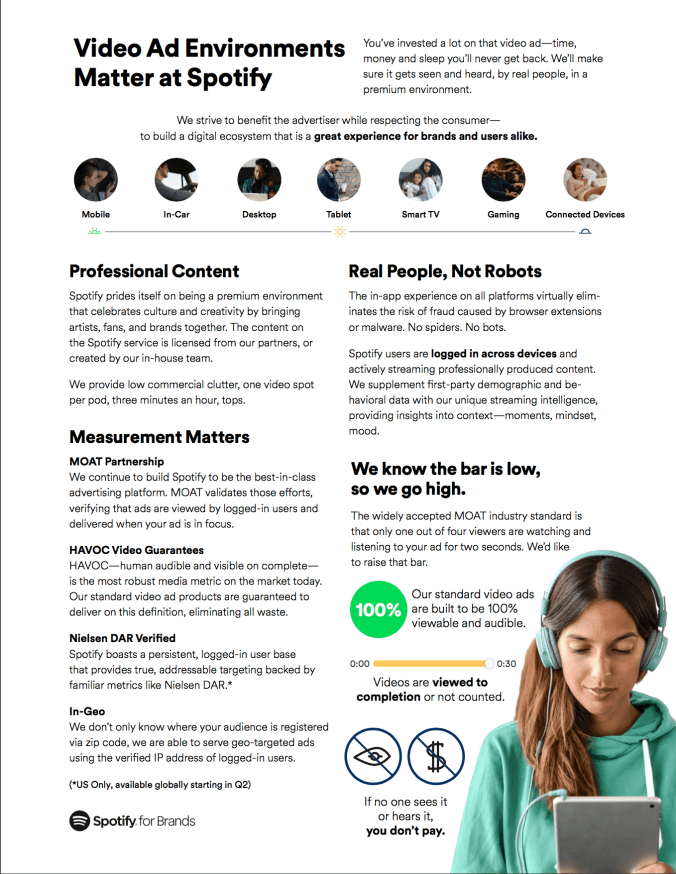
Stop paying for videos the moment they start playing. Take down the spend going to programmatic Adnets that won’t tell you where your ads appear. And let’s show our ads to humans.
Geo data, segments, match rates and most recently viewability numbers that only talk about desktop and not mobile, your time is up.
We are about to take a step back and look at that wall and rip up all those superfluous slides, get back to basics and start again.
Here is how it will look:
- Everything begins with a great campaign idea. It begins with a strong hook, a smart idea, a utility that people want, a price people need.
- It will be followed by some easy questions – did they see my ad? Did they see all of my ad?
- Did they see my ad for the whole ad or majority of it?
- Was my ad seen by a human?
- Was my ad on a property that I would be comfortable with in terms of content?
- Do I know where my ads were served?
- Did my ads deliver some ROI?
Anyone remember taking this for granted 15 years ago? Well those properties exist today and there is lots of room for them.
What Cannes I hope will show is that advertisers need to pull down those slides that don’t fit that narrative.
Advertisers have to cut that budget that is being wasted and reinvest into premium publishers. Spend to your heart’s content with digital but make it quality – so stop persuading yourself that scrolling video is viewable and three seconds is good enough.
Stop paying for videos the moment they start playing. Take down the spend going to programmatic Adnets that won’t tell you where your ads appear. And let’s show our ads to humans.
I believe that advertisers could slash half their digital budget and reinvest in the publishers that deserve it – those that deliver audience, quality environments and humans. Our industry has been planning and buying based on muscle memory, and that has to end.
I have worked for 20 years in agency and a few months at Spotify. I am proud of what we are doing as a business and I want to challenge the industry to hit these standards. It is possible. And yes, Spotify does hit those standards, but so do others.
Let’s take the blinkers off, rip off those slides that add nothing to the narrative, and ask the biggest players in town to shape up, and to leave room for them and the other premium publishers.
Let’s cut the dross, and I hope Cannes will shine a light on quality and cast a shadow over the kind of behaviours that will finish our industry and ruin the presentation
Read more at http://www.campaignlive.co.uk/article/reached-peak-technology-its-time-reset-digital-media/1436267#XA4X1cD4BcGXQ3jx.99
 Bertozzi's Bytesize