AOD Summit – 2012

The two days ended with a great talk from one of the godfathers of digital – Scott Ferber. Founder of ad.com the worlds most successful ad net and now founder of Videology. The guy is both crazy and unbelievably bright, engaging and down to earth.

20120714-201018.jpg

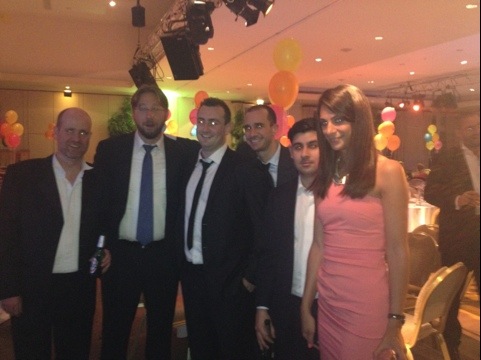
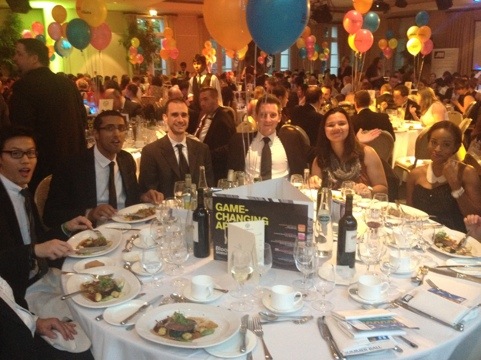
Two tough days of Audience On Demand and VivaKi bonding, I probably did not plan it brilliantly by accepting an invite from Google to take all 28 of us to the IAA Summer ball! There were some tired faces on day two but it was the right thing to do. The team had a great time.

20120715-063733.jpg

20120715-063911.jpg

We had people from UK, France, Italy, Dubai, Spain, Germany, Belgium, Netherlands, Sweden and Poland. Too many teams claim to have resource and capabilities in different markets but that means clicking the geo buttons on their DSPs. We have established teams now driving markets forward and it’s exciting to see in action.

There are an amazing amount of similarities between markets, there is a curve of adoption that I believe is reflected in most markets but only where companies are pushing the market. It looks very different if you are a follower. Our teams in Dubai for instance are not pushing they are creating it, I highlight it as the entrepreneurial spirit that makes the people in The Vivaki Nerve Center different.

The two days ended with a panel with Stewart Easterbrook, CEO SMG UK, Matt Roche of Weborama, Ryan Jamboretz of Videology, Jon Slade at the FT and Jason Bigler of Google painted a picture for the markets to take back of a world in which programmatic buying and RTB was going to be fundamental to all their businesses.

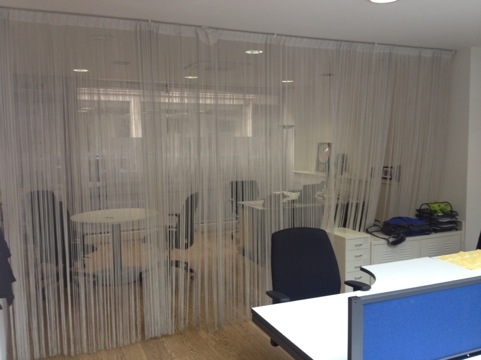
This Monday sees a new home for us all. We have enjoyed being part of the SMG team at Whitfield street but very excited about having our own office. It has been two years and 4 months of hard work that has taken us to this point and it feels like the time is right for expansion. I do need to get rid of the curtains though!

20120717-104512.jpg

The market is still moving fast with acquisitions and evolutions and indeed people moves. Interesting to see Damian Blackden move to Adnologies this week, showing that data and exchanges are still pulling the talent to them and we continue to meet with a myriad of tech companies all trying to carve out their space.

All change at The VivaKi Nerve Center

The one consistent in life is change (I think there is a more eloquent phrase) but it is true and I am excited to be in the heart of that change. Curt has been a great leader but everyone moves on at some point and our team is really strong and we are excited about VNC 2.0. Below is the release that went out yesterday, exciting times all around.

CHICAGO,  4/12/12 – VivaKi CEO Jack Klues today announced that Kurt Unkel has been named President of the VivaKi Nerve Center. Unkel assumes responsibilities from Curt Hecht, who moves to a new role at The Weather Channel. Unkel will report into Frank Voris, global chief financial officer for VivaKi. Rishad Tobaccowala, chief strategy and innovation officer of VivaKi, will serve as advisor to Unkel and the Nerve Center leadership.

Prior to assuming the role of president, Unkel had been EVP/general manager of Audience on Demand™ (AOD) – one of the Nerve Center’s fastest growing practices and largest revenue-drivers.  Today the practice services 350+ clients and manages over 15,000 daily campaigns across display, search, video, mobile and social.

Unkel has been a member of Publicis Groupe for more than a decade and among the Nerve Center’s first employees. Prior to joining the Nerve Center, Unkel created and led digital strategy, investment, analytics and ad operations teams across Publicis Groupe, with a special focus on General Motors (GM). Unkel resides in Detroit and will be based there.

“Curt Hecht has built a strong foundation for the VivaKi Nerve Center, and Kurt Unkel is just the right person to drive our vision forward,’ said Klues. “Kurt has shown great leadership in building and developing AOD from one of the first agency-led ad trading platforms with two clients and three employees to a world-class practice that has been replicated in markets all over the world, and leads the competition.”

“The Nerve Center is comprised of some of the sharpest minds in digital and tech,” said Publicis Groupe Chairman and CEO Maurice Lévy. “With Kurt at the helm, we look forward to more aggressively pursuing new opportunities in arenas such as data, mobile, social and technology.”

Unkel and the Nerve Center are supported by a seasoned leadership team, including Doug Kofoid, who is EVP of product development. Kofoid is an operations expert and co-author of several Nerve Center products, including AOD Social.  The Nerve Center will leverage his expertise more broadly across the globe in the coming months.

Sean Kegelman has been named EVP of partnerships, and will continue to lead global partnerships and create new opportunities with companies like Google, Microsoft, Yahoo, AOL, Facebook and others for the Nerve Center and the VivaKi agencies it supports.

Marco Bertozzi has been elevated to executive managing director of Nerve Center EMEA, focusing on continued expansion of the Nerve Center throughout the region.  Co-founder of The Pool, Tracey Scheppach will continue to explore engagement models of the future while serving as EVP/innovations director for VivaKi.

The Nerve Center leadership team also includes Pradeep Ananthapadmanabhan, who continues to serve as chief technology officer for the Nerve Center and Project Olympic; Ken Wiesman, who leads Finance and Barb Jobs, who continues to lead Talent.

The Nerve Center was formed in 2008 to provide tools, technology and offerings that give VivaKi agencies and their clients an edge when it comes to digital media and marketing solutions. The Nerve Center currently employees more than 250 employees worldwide, with a presence in  Australia, China, France, Germany, India, the Netherlands, Spain, United Arab Emirates, United Kingdom and the United States.

My Media Week

My Media Week: Marco Bertozzi

Hayley Pinkerfield, 21 March 2012, 3:15pm

This week Marco Bertozzi, managing director EMEA for the VivaKi Nerve Center, visits Spain, plays squash with Greg Grimmer, and teeters on the wrong side of The Thin Blue Line. Link here

 
Image

Monday

Every day starts pretty much the same as every other day, and has done for the last two years. Baby cries, cats miaow, I wake up and reach for the BlackBerry or iPhone to check what my US colleagues have been emailing about through the night, or to see how late people have been out and posting messages from all corners of Soho Land.

From that point in though, every day is very different. Which is a good thing, as variety is one of the things I enjoy most about working at the VivaKi Nerve Center.

I start today by catching up with Publicis’ global Google lead Simon Birkenhead to discuss what’s going on across the business. In fact, today is a day of meetings with our global partners, as I later met up with our new global lead from Microsoft, Nicole. It’s a tough gig understanding such a complex business and I wish her luck.

An afternoon of calls and a couple of quick meetings, then it’s off for my weekly punishment in the form of a personal training session.

Tuesday

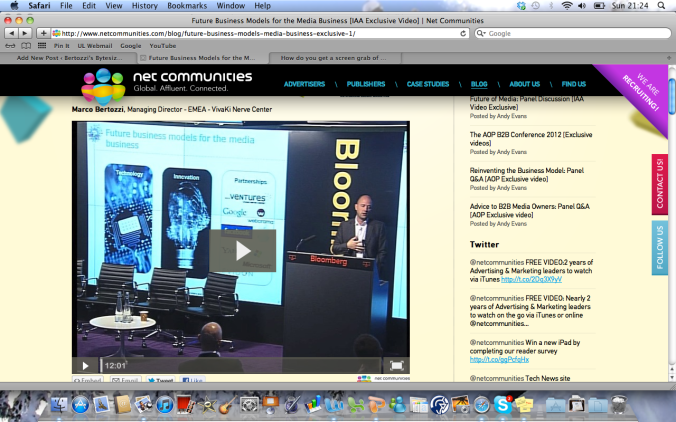
I am down to present at an IAA event on the ‘Future of Media’. I expected it to be a relatively small affair, but it turns out to be a big event in a grand venue at Bloomberg (I make a mental note to thank my head of communications, Claire, for the heads-up.)

I think it goes OK, although I might have alienated all of the women in the audience when I described women as waste in the context of a specific audience targeting example – I was misunderstood!

Jump on my scooter to have a catch-up with Steve King, worldwide chief executive of ZenithOptimedia, which always turns out to be an interesting and entertaining discussion.

After about a year of organising, I finally managed to have a quick lunch with Chris Mellish of Razorfish. As well as working with ZenithOptimedia and Starcom MediaVest Group, the Nerve Center works closely with Razorfish and Digitas, and it’s always good to hear what they are up to.

Later on, I also catch up with Olivia Yabsley who runs content for Digitas, to round out the group in a day.

With a couple of client sessions fast approaching on the world of exchanges and some prep for our regular EMEA AOD (our proprietary addressable media capability) call, I sit quietly at my desk and nail some work before home time.

Wednesday

A sickeningly early start – I’m up and out of the house by 4.30am to go to Madrid with my boss Curt Hecht, global chief executive of the VivaKi Nerve Center.

We have a full day of meetings with the management of VivaKi, ZenithOptimedia, Performics and Starcom MediaVest Group, to go through the VivaKi plans. The Spanish guys are always open and enthusiastic and a pleasure to work with, they also lay on a great lunch in the office. It makes our spread look pretty shoddy.

We’re close to launching the results from the UK rollout of The Pool, a global research project to identify the industry’s optimal online advertising model, and I share progress with everyone. The results are in line with the other markets, which is hugely encouraging.

So six hours later, we run for the airport and get back on the plane. I have done a lot of travel over the last two years and it is still enjoyable, but I guess one day it will drag. I never enjoy being away from my wife and child too much though.

Thursday

A morning thrashing Greg Grimmer at squash. Sorry, I should say getting a thrashing from Greg Grimmer. This week, however, I have bought a new racket and trainers – so his days are numbered.

Later today, the UK leads for AOD Activation, Geoff Smith, and AOD Product, Paul Silver, and I have our monthly catch-up with the ZenithOptimedia and SMG trading guys. It is usually part presentation, part piss-take of each other. Mauricio Leon and John Baylon are not wallflowers, so you have to give as good as you get!

We’re celebrating today as AOD has achieved an incredible milestone and delivered 100 billion impressions. And that’s just in the US and UK. No mean feat given it didn’t exist at the beginning of 2008.

In the evening I head to the leaving do of my good friend Phil Christer, who has recently moved to Google. Phil has kept me sane on many occasions and I know he’ll do great things in his new job.

Friday

Today does not start brilliantly. I am pulled over by two police motorbike riders who have been tailing me for the last mile. Shame I hadn’t noticed them in my mirrors sooner because I realise I’ve just performed some of my most reckless scooter-riding of the last few years.

Mounting a pavement, running a very close amber/red, doing 40mph on Tottenham Court Road, with some weaving thrown in, all mean I am up the creek.

After immense contrition from me and puppy-dog eyes, they unbelievably let me off. I get into work pretty happy and thankfully things pick up after that.

I have a good catch-up with Iain Jacob of Starcom MediaVest Group around the VivaKi Nerve Center and SMG progresses across the wider EMEA region. It’s important to make sure that we are lined up with the senior agency regional and global leads as we expand in terms of products and scale.

Lunch is with our tech partner on Audience On Demand video (AODv) and another expansion discussion as AODv rolls out into more European countries. Creating publisher uptake of this new way of buying video is top of the agenda.

It’s a great lunch, but I’m glad to leave – the downstairs of Navarros always smells of bleach. A productive afternoon of clearing emails and a bit of Twitter banter and my week ends with a very cautious scooter ride home. I’m determined not to get pulled over by the police again – well, at least for a couple of days.
Exchangewire coverage of the expansion of Audience on Demand

Last week Performics announced the launch of its ATS in France. Here Marco Bertozzi, Managing Director, EMEA at VivaKi Nerve Center, gives some overview on the announcement and how Performics’ clients in France will benefit from the new buying strategy.

Can you give some details on the launch of the Performics trading desk in France?

MB: Vivaki Nerve Center has a consistent approach to Audience on Demand in every market. We adjust in terms of data partners and inventory but the approach is the same and we are excited that we are now live in France. Performics is a central performance team in France and will be a centre of excellence for Audience on Demand in that country. It is still a nascent market, although growing very rapidly. Its a sign of the team over there that they have created the proposition and have started to grow the client base aggressively.

Will we see significant budget being passed through the platform. What benefits will it have for Performic’s clients?

MB: Already we are excited by the number of clients who want to go live in the market and how many are getting involved in Audience on Demand. Assuming we continue to see the excellent results in France that we have seen elsewhere, I would expect a consistent increase in spend away from the network proposition to the exchange space. I would imagine this is ahead of the market place for the agency groups.

Can you give some details on the partnership with Weborama? How will the new trading desk use Weborama’s data to trade across dynamic supply?

MB: Weborama is a good example of Audience on Demand reacting to the local market needs. Although we have a consistent approach in terms of strategy and technology we acknowledge there will always be important partners in every country and Weborama is one of those in France. It was therefore vital that they were an integral part of getting AOD off the ground in that country and we are working on some exciting audience segments and custom solutions for our clients.

You are the first ATS to market in France – but how evolved is the exchange eco-system there? Is there enough supply available in the market?

MB: I think people underestimate supply in some of the main countries. If you add up the inventry from Adex, Orange, Admeld and others there is a good volume to be able to supply our campaigns. This space is only going in one direction. Better to be in now and learning than follow the crowds. I think very quickly the supposed lack of audience will disappear and I hope the team at Performics will have a clear view of how to make the most of the new inventory as it comes online.

Are we likely to see more roll-outs across Europe? What country is next on the road map?

MB: Yes, yes, yes. Spain is already live and we are hopeful the Netherlands will be shortly after that. Of course Germany and Italy will help complete a Western European approach – but as fast as possible I would like to get a Nordics and CEE offering up and running. That comes with more technical and infrastructure issues but its already well underway. Its vital for our clients that we have an International offering in EMEA. The US is flying with China live and Australia being fully scoped, its exciting times for Audience on Demand.

NMA piece I contributed to, small coverage for a big subject.

As the online display ad ecosystem continues to evolve, this map of the status quo highlights the essential cogs and major players

Comparing the UK online display ad marketplace of ten years ago with today’s shows how rapidly it has changed, from an exchange of media and money through an ad server to a technologically complex and multi-layered ecosystem. And it’s about to change again.

One of the most talked about developments of the last six months has been Google’s acquisition of Invite Media, a technology firm with a demand-side platform that lets advertisers buy from multiple ad exchanges through one interface, while providing people support services.

While automated buying through ad exchanges has been heralded as a way for advertisers to cherry-pick the most targeted impressions in real time, with publishers avoiding the wastage of bulk buys and getting the highest value for inventory, its success depends on an abundance of buyers and inventory, plus knowing how to define bids.

Infectious Media founder Andy Cocker, highlighting the complexity of what’s currently on offer, warns, “There are around ten companies to which agencies could go to license DSP technology. But unless they know how to bid in a safe and controlled way, and how to use data to buy, they won’t have a good experience.”

For these reasons, development of automated trading has been hesitant. But some media players expect Google’s acquisition to change this. They argue it’s an endorsement of how display trading will develop and that it will help pave the way for much-needed standardisation in an area of technology that’s hugely disparate.

“This space needs to develop as a marketplace. Google buying Invite will only bring sophistication,” says Marco Bertozzi, EMEA MD of Vivaki. “Because it’s so dominant in search, there are a lot of people who start wailing and pulling their hair out, but everyone’s still using DoubleClick. The natural reaction is that it’s a bad thing, but any investment in the space is a good thing.”

Google’s latest acquisition gives it end-to-end capability within the online display ecosystem. It now offers an ad server, ad network, ad exchange and DSP technology. The impact this will have is hotly debated by industry players.

“We’re investing significantly in technologies that are helping to grow the display advertising ecosystem for publishers, agencies and advertisers,” said a Google spokeswoman. “Like our partners, we see enormous potential in this space. Real-time display ad buying, in particular, is delivering significant benefits for all players.”

Yet Jay Stevens, international VP and general manager for The Rubicon Project, which works with publishers to optimise inventory yield, is worried. “Google’s acquisition of Invite represents the last link in that value chain,” he says. “It already controls a digital market through search. If it owns the display landscape as well, it’s monopolisation which will hurt agencies and publishers.”

Full article here http://www.nma.co.uk/features/online-display-map/3018213.article