An incredibly joined up BCG study between ZO, Performics and VivaKi focused on the benefits of a unified platform and advanced targeting. A combination of strong partnership and strategy achieves very strong results.
programmatic
12 Months of Adtech reviewed
In 12 months the Ad tech market place has gone totally crazy, impossible to keep track of it all and the money invested is off the scale, but below I highlighted a few stories and events in the last 11 months that I noted. I will have missed others for sure!
There has been some negativity around the space with transparency being a hot topic and whether advertisers want to take this all in house, but those headlines have distracted from some incredible market changing investments, purchases and alignments. Enjoy the reminisce!
January
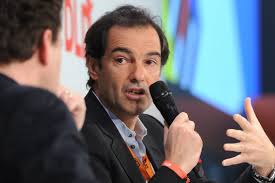
The Partridge in a Pear tree for Yahoo was Enrique Decastro, bringing him in on a huge salary and being presented as a saviour for the organisation, driving sales and value for the business. Unfortunately January saw that particular partridge being shot. Quick acting by Marissa to be fair to her, but an unlikely choice in the first place according to many. More recent news has seen Lisa Utzschneider fill that space, coming in from Amazon.
In other news Turn receive their belated Christmas present raising $80m as they march on as a leading DSP in the market and looking to expand beyond that descriptor and moving more towards a wider DMP, services model, some might call agency model.
Holy F*** February
February was IPO crazy month with Pubmatic rumours, Rubicon filing, Rocketfuel all taking the plunge – some big valuations were banded around and it was the month everyone realised that the good times were back and the VCs were starting to spend all that cash they had been hoarding through the bad times – the bubble is inflating. Google buys another company, on the back of Deepmind in January, a London based machine learning company, called Vungle. We have seen the signs but Oracle buying Bluekai was a big flag being waved to show that the digital media business was being taken seriously by the cloud and consultancy companies. We also saw round one of TV disruption being won by the old school with Comcast getting Netflix to pay them for streaming services, the upstart being slapped into place.
But all the IPO business paled into insignificance when the world collectively went ‘what the f*** app’ as Facebook put down a multi billion dollar offer for the social messaging app. Cue the hand wringing about lack of revenue, too high a price from the digerati turned incredible commercial strategists. Facebook are clear on this, show us something growing fast and taking share and I will show you my cheque book (or should it be Visa Debit Card). Scale is everything in a world where data and the identification of people and what they are doing and where they are doing it becomes the most valuable asset. Or perhaps Mark is hoping to achieve the same status as Steve Jobs who was approved to appear on a US stamp that very same month.
Modernisation March

March saw a number of moves for the future by different companies. Comcast bought Freewheel, a clear indication they are gearing up for a programmatic, data led future and could not resist the tide any longer. At the same time AOL One launched to much fanfare – the Game of Stacks now well underway with AOL taking a big step forward, We are but pawns in this incredible battle of supremacy between AOL, Facebook, Amazon, Twitter and Google and there is much more to go as we see this play out. The single view of the customer across screens is a vital offering and these teams are throwing everything at it, whilst Microsoft seems to be frozen to the spot at the moment. Perhaps they need to remove their whole sales team and start again? Oh..
Finally in modernisation March we saw Conde Nast take the stage and announce proudly, albeit a few years late that they had decided that yes programmatic was something to pay attention to and they would be getting involved. Thanks for that.
April Fools?

The first signs of trouble for the IPOs of the previous months – the city falling out of love with a number of them, seeing prices fall significantly and some below opening day. There was some scepticism at IPO but recent press questioning whether these companies were right to value themselves on the hard work of bot traffic came into play. As the curtain lifts on the methods of many RTB companies this may be a theme for the future, perhaps even hitting the FT one day…oh it did.
RadiumOne saw some ‘Rocky’ waters as their CEO was eventually prosecuted for beating his wife up. It took some time and a fair amount of industry Twitter rejection to get him ousted but it happened and then everyone moved on as he set up Gravity8 three minutes later.
As if to demonstrate two different strategies Facebook and Google both made a play for the future with Facebook launching an…. Ad Network..meanwhile in other news Google bought a drone company – was it an April Fool? well after Nest in January and now a drone maker it appears not – Internet of Everything anyone?
Merger May, Maybe not

Publicis and Omnicom call off merger. Must be something else they can buy sooner or later surely?
Millenial and Rocketfuel taking an absolute beating on the stock market as increased speculation on their businesses and whether or not they are complimentary or in conflict with agencies rage. Google and AOL keep buying companies to further enhance their operations, Google getting into attribution and AOL into cross channel allocation, interesting that both are now toe to toe on making the stack work. It was a month where everyone appeared to be tooling up with Axium buying and Liveramp to help with data onboarding.
Qriously June

What is the worst brand name in Adtech? Qriously of course. Apparently that was not all bad and brought some pre Cannes exposure coupled with their expensive tablet card asking for a meeting. Memorable but expensive I would say, some might say a qrious decision.
June was the month GroupM announced a withdrawl from open exchanges and that it would be done by Christmas, big claim for sure. Could someone check for me? pretty sure they are still there but there is still time. As with every year Cannes came around and the Adtech world took it by storm – the rose looked and tasted the same, the beaches were packed with hard working media folk but the names were different, everyone had upgraded this year and the place now resembled an Exchangewire event at scale. It was a good time to be in Cannes as the money continued to flow and pay for those expensive tents and lunches. Mediamath picked up a massive 170m dollars, Twitter bought Tap commerce for 100m, Facebook bought slingshot and WPP ploughed 25m into a DMP strategy.
Buy buy July
Enough said, the boom continued and at pace. Facebook buys Liverail as its next move in Stack Wars, Yahoo buys Flurry to continue its successful push into mobile revenues, a battle it appears to be winning as we are seeing now as it overtakes Twitter in mobile revenues. Linkedin bought Bizo, a natural fit for both and makes us wonder if the sleeping giant is starting to wake up and join the fight.
Rocketfuel bought the very transparent X+1 as it starts the long road away from the darkness and into the incredibly difficult world of running a business transparently. In the spirit of transparency Turn took a turn in July and went on the offensive, taking aim at Tubemogul amongst others, it felt like an email you send late at night when slightly under the influence – stand away from the send button. Oh no, you did again..in August.
August.

Everyone went to the beach. Google bought some more companies.
Facebook me September!
Millenial fights back and buys Nexage to grow out its programmatic credentials and build credibility in the data and RTB space. At the same time WPP drop their adserving business and buy into the DSP business, out with the old in with the new.
The Alibaba IPO put Yahoo into a very interesting position, as perhaps a buyer or maybe a seller? There is a strong belief that Yahoo and AOL are on a collision course and so having their P&L filled to the rafters with the Alibaba IPO cash will put them in a great position either way.
But really all everyone wanted to talk about was Atlas and the launch of their new adserving platform and soon to be launched DSP. Facebook had now made its biggest move in the Stack wars. Combining improved adserving tech with their data and soon to be launched DSP. With this move we see ever more clearly that there are likely to be some large islands of tech and everyone of those is ring fencing owned and operated inventory and how you access it. We have moved a long way from the utopia of one access point to the web and are now focused on how can we join these islands up with DMP and other technology.
Hotober

Publicis buys RUN and invests in Matomy – something to expect as we progress and competition comes not just from other agency groups but also the very aggressive managed service offerings and RTB networks. Agency groups will need to tool up more and more and so I think we can expect more down the road. Mediamath go to prove the point and buy Upcast showing how they need to tool up as well and keep delivering new products and services cross channel and cross device. Meanwhile Videology launch a programmatic TV offering to follow Turn but go a step further in teaming up with major US TV partner.
Stack Wars is back in October with Yahoo buying Brightroll, a sensible move as you consider the purchase of Adapt by AOL and Facebook of Liverail a couple of months earlier. We now see them all with video offerings, display offerings, adserving and performance products and suites of data. I think we are about at the right time to see them kick off. Atlas has hired a key guy in Damian Burns to lead their offering, once he has his feet under the table I think we will see some real movement.
Noooo!vember

Headlines were:
Publics buys Sapient a huge acquisition and another one under the radar taking the advertising world by storm. An incredible team of people joining the Publicis.Sapient platform.
Channel 4 after years of resistance to programmatic have announced they are getting into the market place and will no doubt leave ITV where to go next. Either way it is clear the TV marketplace is hotting up and now we are seeing a hockey stick of activity and partnerships. Exciting times all around.
Rubicon buys two companies to help build out its direct deal automation tech..yawn. Yes you got it, we are going to take all those buys you used to do over the phone and now do it on a platform without any cherry picking or data insights. Just back to buying impressions. Back to the future.
I am sure I missed a number of big deals – list them below so we get the full picture of the comings and goings of Adtech and its sheer scale. Thanks
CampaignLive US article on Advertisers missing the prize of programmatic
My piece in CampaignLive publication in the US – to see click here
How did it come to this? You can’t mention programmatic without talk about transparency, trading desks and advertisers taking it “in-house.” A part of me that would likely get fired says “Go on, then” because it will mean that advertisers spend considerable time understanding the space, in order to appreciate what is required to do this well. They will also be doing the right thing with their media — I don’t mean taking it in-house, but rather the likely improvement in execution and management of their media using the latest technology.
While in-house has been a hot topic this year, all we have right now is a lot of noise. Companies stirring up the ecosystem trying to make hay while the sun shines and consultants with minimal experience in this complex space suddenly getting the light of day. It is a real shame. I spend so much time talking fees and transparency with advertisers and so little on strategy that I truly believe they are missing the chance to make the most of this incredible opportunity.
Advertisers setting up their own programmatic operations is as sensible as Google deciding to set up an agency business and go direct to clients. “They do that,” I hear you cry! Not really. They chase revenue, and if they see that being taken by competitors they step in. Google also has tens of thousands of free sales people — they are called agencies. Clever businesses stick to what they do best. Even brands that have been working away at this for some years are still struggling to keep up.
I recently read that taking it in house was expensive upfront but you get payback over years. I have never read such incredibly ill-informed, ill-thought rhetoric in all my life. It infers that programmatic expertise in agencies after the first couple of years runs on nothing. The reality is people need paying; tech companies need paying; innovation needs to evolve. Nothing goes away after initial set up; it only grows. It is this kind of crazy talk that is distracting advertisers.
Let’s start with talent. Programmatic now commands some of the highest salaries and brightest brains. This creates multiple challenges for employers — motivation, retention and a lack of insights from outside the immediate business. Technology evaluation skill sets, data analytics and audience insights knowledge, data warehousing, contract negotiations, legal, creative, partner management – these all are essential for a successful programmatic business. Spare a thought for the team doing it in-house — two, perhaps three people. They will not be immune from the same standards agencies have. Brand safety is still brand safety. The CEO will be no less unhappy when the Wall Street Journal reports a fraud blow up and an in-house team has been managing it. The same effort needs to be applied in or out of the house and that costs money.
Why would an advertiser want to take that on? Because they are unhappy with transparency? Because tech fees are high and they want to find ways of saving? It is a false economy. “Buy cheap, buy twice” is a phrase I am a firm believer in.
The companies who have managed to do this well are few and often pure-play digital, online businesses with very specific KPIs that are easily tracked and measured and with a culture of digital innovation. Netflix is one example. Moneysupermarket in the U.K., another. Almost all, including the most famously quoted however, are relying on third parties to do the work. That is not taking it in-house, it’s just not using an agency. And they are right not to, but if a little less time was spent on the angst of transparency and fees (easily solved by talking with your agency operation) and more time on the strategy, then the fees will make sense. More time also needs to be spent talking about the amazing case studies of clients that have embraced this space and are turning their media investment around – there are many.
Advertisers who empower their agencies in the programmatic space and invest the time to really partner with them will dramatically change how they do business and the results they achieve.
As a final note on this, While hundreds of millions of advertiser dollars are spent on blind, low-CPM, long-tail ad networks that are taking 60 percent margin, I find it very difficult to believe that an advertiser is achieving the most they can from programmatic or indeed asking the right questions about their media investment, whether that is taking it in-house or not.
Marco Bertozzi is VivaKi’s President, North America Client Services and Audience on Demand EMEA.
Read more at http://www.campaignlive.com/article/programmatic-taking-in-house/1317802#Rwl3QzVofffQABqe.99
Jay Sears interview in advance of Adweek New York Panel
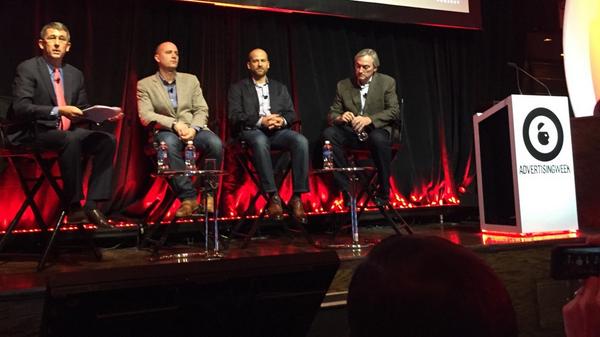
Your Name: Marco Bertozzi
Your Company: VivaKi
Your Title: President EMEA and US Client Services
SEARS: Where do you read your daily news [not just industry news, but all news]? Do you still read a newspaper? Listen to the radio? Use social media?
BERTOZZI: Twitter is usually where I start the discovery. Where I end up reading the news varies. I also use the Guardian News app as an anchor. Occasionally I will grab a newspaper but safe to say most of my news consumption is online.
SEARS: What’s your favorite commercial of all time?
BERTOZZI: My favorite commercial of all-time is an ad for Blackcurrant Tango.
SEARS: Today on average in the United States — out of each $1.00 spent on media (all media, not just digital) by one of your advertisers — how much is spent on automated or programmatic channels?
BERTOZZI: We’re seeing $0.08 of every $1.00 spent on programmatic channels in 2014, and I think we’re still in the early stages of adoption — even in the U.S. — but it’s starting to rise. We’re going to see a sharp increase as education continues across agencies and clients.
SEARS: What was this number in 2012?
BERTOZZI: $0.06
SEARS: What will this number be in 2016?
BERTOZZI: $0.14
SEARS: What is the mission statement of VivaKi AOD?
BERTOZZI: Audience On Demand® (AOD) was built exclusively for Publicis Groupe agencies and their clients. Created in 2008, our sole purpose has been to help our agency partners and their clients control their brands and messaging in a fragmented, digital ecosystem. We work as an extension of the agency team our clients trust to steward their advertising spend and marketing activity.
SEARS: Please tell us:
SEARS: Overall United States managed budget (media spend) for your trading desk, expected in 2014:
BERTOZZI: A lot
SEARS: Percentage increase, United States managed budget (media spend) 2013 vs. expected 2014:
BERTOZZI: It’s a healthy increase
SEARS: How many employees are there in your United States organization [headcount number]?
BERTOZZI:
Total across USA: 261
Total in:
New York: 80
Boston: 8
Chicago: 123
Detroit: 23
San Francisco: 2
Los Angeles: N/A
Dallas: N/A
Other: 25 employees in Seattle
SEARS: What are VivaKi AOD’s three biggest U.S. initiatives in 2014?
BERTOZZI:
Quality and viewability. We launched Quality Index — a proprietary evaluation process that vets all ad placements through AOD. Built on performance metrics and data provided by comScore, Integral Ad Science (IAS), Proximic and various DSPs, as well as ad server performance data, Quality Index also sources inventory according to various metrics that assess viewability, page content quality and historical performance.
This year, we also invested in the building out of the VivaKi OS, combining the AOD Platform and DMP, supported by our established channel solutions (display, mobile, video and social) and our VivaKi Verified teams.
We introduced AOD Brand into the US market. Focused on large-scale formats, it gives advertisers impactful creative in the right locations. It’s the best of RTB with premium inventory, utilizing private marketplaces and giving brand advertisers a vehicle to deliver programmatically against brand objectives. It’s an approach already heavily used in Europe but now formulated for the US.
SEARS: By 2016, what percentage of your holding company’s U.S. media spend will be automated or programmatic?
BERTOZZI: As above
SEARS: Can linear TV be automated, yes or no?
BERTOZZI: Yes! The real question, however, is whether large broadcasters are willing to invest in adapting to new and efficient ways of trading or do they prefer to hold on to “how it has always been done.” Media automation is an inevitability and those that move fastest will benefit the most.
SEARS: Does VivaKi AOD plan to automate linear TV in 2014? 2015?
BERTOZZI: No, but we intend to work with all available and accessible inventory and that includes connected TV inventory which will increase substantially over the coming months and years. The shift from TV to multiple screens will power the increase in inventory and as audiences across devices move away from just traditional TV the opportunities will only increase.
SEARS: Once linear TV is automated, will it be bought by TV buyers or digital buyers?
BERTOZZI: As we are already witnessing, there is a massive blurring of roles within agencies. By the time linear TV is automated I would suggest that roles and in fact most agencies including those in our group will be well under way with planning and buying being very much across screens and channels.
SEARS: On the subject of business models, the best way to describe your company is:
a) Product organization – i.e. you curate a media product for your agencies and advertisers
b) Service organization – i.e. you recommend and manage best practices and best of breed products for your agencies and advertisers
c) Combination of both
d) Other
BERTOZZI: Other. We see our role as threefold. First, we build technology that powers AOD in order to join up the complex programmatic ecosystem. Second, we evaluate and consult with advertisers on technology and data providers that best address their particular campaign needs and goals. Third, we provide marketing expertise and services for agencies and advertisers on campaigns including human oversight, strategic direction, context and advice that a machine simply cannot [offer].
SEARS: On the subject of advertiser clients and transparent vs. non-transparent models:
a) We have a transparent model — clients know media and other costs (i.e. costs are unbundled)
b) We have a non-transparent model — clients do not know media and other costs (i.e. costs are bundled)
c) Combination of both
d) Other
BERTOZZI: A. We make sure that our clients know how much spend is going against working media. I strongly believe this should be an absolute given for any business that aligns its objectives with its clients’ objectives. We also do not arbitrage media, as we believe this is counter to the principles and efficiencies offered by programmatic media-buying and takes us further away from the spirit of collaboration and true partnership with our clients.
SEARS: What percentage of your agency or advertiser’s site direct budget (direct orders) has been automated?
a) Less than 10% (of site direct dollars)
b) 11-20%
c) 21-50%
d) Over 50%
BERTOZZI: A. All of our buys are auction-based and therefore we do not allocate budget for direct-buys.
SEARS: Which of the following will accelerate the automation of site direct (direct orders) budget? Pick all that apply:
a) Dynamic access to all publisher inventory [vs. just “remnant” or “auction”]
b) Ability to leverage publisher first party data
c) Ability to leverage advertiser first party data [against all publisher inventory, especially premium]
d) Availability of rich media, expandable units and larger IAB Rising Star formats
e) Ability to more easily curate audiences for specific advertisers across the premium content of multiple publishers
f) All of the above
BERTOZZI: While all of the above are valid considerations, I believe the biggest factors that will help accelerate the automation of direct orders are actually tech development and greater alignment on inventory. As I’ve previously mentioned, there have been occasions where we wanted to push significant spend across premium publishers but the publishers were not ready to accept it.
SEARS: Tell us a bit more about you.
SEARS: Who was one of your first mentors as a child?
BERTOZZI: My brother. Five years older than I, he was (and is) someone I looked up to and not just because he defended me when I got into scrapes. It was his sound advice that ultimately led me into media agency life — so I should thank him for that!
SEARS: Money is not a concern. You no longer work in advertising or technology. What would you choose to do for work?
BERTOZZI: Having always loved animals, I would choose to work on an African game reserve. The solitude and connection to nature attracts me as does working with the most incredible animals on the planet. I would however probably still look for a connection to data, no matter how slow!
– See more at: http://www.mediabizbloggers.com/rubicon-project/276847701.html#.VCVuSnKwSgI.twitter
Digiday Post : The Ad Tech threat agencies need to take seriously
My piece on Digiday outlining the threat of Ad tech disintermediation. First posted here.
I remember sitting with a founder of a well-known demand-side platform a few years back (feels like a lifetime), and he was warning me how the evil Google would disintermediate us all and destroy the agency trading desk business if we were not careful.
The irony now is that the worst culprits of all are the new, up-and-coming tech vendors who are chasing the direct-to-advertiser relationship at any cost.
As an agency, allowing a DSP or real-time bidding ad network to control all the programmatic spend may seem the same as giving an insertion order to an ad network, but it is far from that. The rules have changed with the rise of ad tech. Our whole business is based more and more on data. We need to manage, explore, test and learn with data, and the data needs to be held at the hands of the agency running the wider business, or remain in the advertiser’s hands should they choose to take the process in-house.
To release tens of millions of dollars to a managed service DSP is to release all of your intellectual capital to an external company where the same rules expected of an agency may or may not apply. We see clear benefits when we are able to apply the agency learnings to all the programmatic opportunities. Whether we are looking at cross-channel attribution, econometric modeling or online and offline synchronization of media spend, we can make activity work so much harder in that context — and tie it back to the advertiser’s own data whether on or offline. A third party, or siloed business, simply cannot do the same.
Agencies take heed: This is no longer just a question of outsourcing some digital buying but rather the outsourcing of your agency role and intellect to a third party. You may not recognize the danger, given the modest level of programmatic spend relative to massive TV budgets. But when this spend drifts away, a little bit of control goes with it. Not a good situation given the projected growth of programmatic.
Take a lesson from search. Two things happened in search that made it one of the biggest battle grounds of the agency world through the mid-2000s. The first was that the agencies ignored it when it launched, and the second was they fought tooth and nail to get it pulled back into the agency when it had grown into the mammoth beast that it is today. Today’s DSPs are yesterdays search villains.
An agency digital lead should fight to keep the programmatic business close. Yes, I am biased toward a relationship with an agency trading desk — not just because data-driven, programmatic buying will be the lifeblood of the future media agencies but also because the right agency/trading desk relationship is better for clients.
An advertiser might be attracted to cheaper options. A siloed, third-party provider might “feel” unbiased. But what happens when the market moves (which is does every day), and that marketer is tied to a single provider. They move at the the speed of the provider. Or they pay the significant switching cost. Yes, DSP technology evolves. But their lack of access to the ideal marketplaces may leave an advertiser handicapped. And how will the marketer know? It’s hard to measure performance without any comparison or opportunity to swap (short of making an extensive investment).
The agency relationship should give clients cross-platform, open access to all opportunities — and objectivity. Trading desks should deliver the benefits of relationships, learnings and experience with all of the best DSPs, plus perpetual evaluations of new and evolving partners. They must be able to provide the brand safety, starting with basics like full disclosure on where ads are appearing and how much of your budget was spent on media. It is fascinating to me that Rocketfuel discloses 60 percent margins and there are no concerned glances from advertisers. Really? 60 percent?
I have been warned all my life that Google is the bad guy, but it is becoming clear that as the story unfolds, we are seeing a very different picture. The VC-fueled pressure cooker we are in at the moment is creating disintermediation on a grand scale or at least the potential of it. And agencies and advertisers should both see that there is a major role for their partners in helping them steer through this time so that we don’t walk blindly into a repeat of 2001-2008, an era that both agencies and advertisers regretted longer term.
Beet.TV interview talking video retargeting, Ad fraud, value vs price
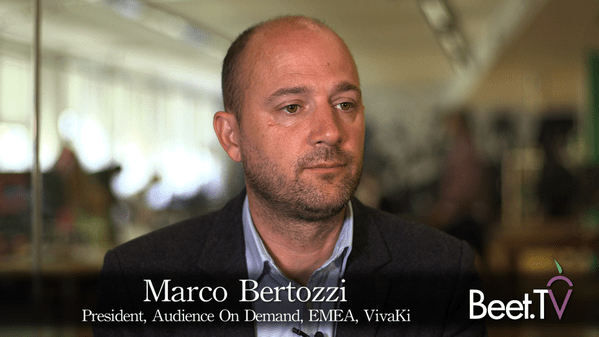
Discussion of some big issues of the day around video. The role of auditors, advertisers and agencies in Ad fraud / quality issues, how programmatic video can now be a creative way to continue dialogue through re-marketing and publishers ultimately will benefit from the fact tech is starting to reveal how poor many Ad network sells are to clients.
New Audience On Demand video on programmatic buying from VivaKi
A video that outlines Audience On Demand and programmatic buying more generally.
Presentation on programmatic at Webit Conference – Istanbul
My ten minute presentation designed to trigger some discussion in Turkey about RTB and programmatic.
Adweek and Programmatic in 60secs with @SMG_London
Blink and you will miss it! A quick interview for @EmergingSpaces on programmatic at @AW_Europe
Rubicon 2nd Annual Agency Trading Desk / Adweek questionaire
The latest Adweek Europe – Rubicon 2nd Annual Trading Desk panel was preceded by a questionaire covering growth, strategy and the odd personal question! The panel showed again that there is no slowing in the programmatic business although everyone is approaching it slightly differently. The most extreme being Xaxis who have moved away from being an ATD and becoming more an Ad Network.
SEARS: What flavor ice cream best describes your management style?
BERTOZZI: Cookies and cream – you have to take the crunchy and the smooth.
SEARS: On average in the EMEA market — out of each $1.00 spent on media (all media, not just digital) by one of your advertisers, how much today is spent on automated or programmatic channels?
BERTOZZI: $0.04. Definitions of programmatic vary wildly so making comparisons between organizations can be difficult.
SEARS: What will this number be in 2015?
BERTOZZI: $0.08
SEARS: Describe how most media (all media, digital + non-digital, non-programmatic media) is bought and sold today.
BERTOZZI: Planning and buying is still largely a non-automated business in the context of digital exchange trading. All channels use technology to facilitate processes — DDS in TV as an example. The true interaction of buyer and seller through a tech platform is limited to Search, API work across Facebook, Twitter and LinkedIn, etc. and exchange trading.
Planning is still being driven by offline systems that set the picture to be interpreted online. The shift to programmatic means advertisers are creating portraits in real data that we can immediately execute across the digital ecosystem. The Data advertisers own online and CRM data, combined with publisher data and the tech to join them up will drive the next stage of data planning.
SEARS: Tell us the about the EMEA operations of VivaKi:
BERTOZZI: VivaKi is the global leader in digital advertising solutions working with Publicis Groupe agencies to help them and their clients navigate the evolving and chaotic media landscape. We focus on the three areas of Addressability, Dynamic Interaction and Data. Our EMEA operations span 17 markets and are delivered through a combination of people on the ground locally, supported by a central Activation Centre based in Amsterdam and regional leaders of our Platform and channels.
SEARS: Please tell us:
SEARS: Percentage increase, managed budget (media spend) 2013 vs. expected 2014 for EMEA:
o BERTOZZI: 70%
SEARS: How many employees are there in EMEA?
o BERTOZZI: We have a total of 90 people working across 17 markets in EMEA
SEARS: What countries are you entering in 2014?
o BERTOZZI: We realized very aggressive growth plans for 2013 launching two regional Activation Centers — firstly in Amsterdam to scale AOD across EMEA with the launch of an Activation Center in Singapore towards the end of 2013 to drive growth of AOD across Asia Pacific.
We have seen significant growth through the Activation Centers and have a number of further market launches lined up this year. In addition we are also planning to expand the number of markets across UAE through our Activation Center in Dubai.
SEARS: What are VivaKi AOD’s three biggest initiatives in EMEA for 2014?
BERTOZZI:
1. 2013 saw us implement aggressive global growth plans with rapid expansion across a number of markets and 2014 will see continued investment in developing these markets into programmatic leaders. Every market from London to Moscow is on a curve of programmatic sophistication and so we are running at different speeds across each of them. Education of agencies, publishers and shared knowledge through the AOD Platform helps everyone accelerate.
2. We are launching a major development of VivaKi Verified, our proprietary process that rigorously reviews all media, data and technology partners across client critical needs to ensure the highest level of brand safety, consumer privacy and client data protection. We will create our own Quality index across every one of our URLs and as an example will combine leading data suppliers in the area of viewability. This will continue to provide reassurance for advertisers as well as a whole new way of targeting campaigns day-to- day.
3. SkyScraper is our Groupe data warehousing proposition — a single data store with 95% of Publicis Groupe spend data, adserving data, DSP data and third party data. This is an infrastructure we have been working on for a number of years and will become very much front and centre of operations in 2014 as we continue to grow out data sophistication.
SEARS: By 2015, what percentage of total media spend in the EMEA region across your holding company will be programmatic?
BERTOZZI: We estimated at around $0.08.
SEARS: To reach a higher adoption of direct order automation and use of the programmatic channel, what are the major impediments to overcome?
BERTOZZI: I believe that there are many companies who are pushing for direct deals / programmatic premium or whatever the latest buzz word is. I actually don’t think things have moved forward much in 12 months. The idea of private market places has moved forward very fast and is a large part of what we do in AOD, but the idea of a single IO line item being delivered to a single media owner at a set CPM is less prevalent.
There still needs to be tech development and alignment. For example there have been a couple of occasions where AOD wanted to push a large block of spend across some premium publishers and we could not get the money away as the publishers were not ready to accept it. Part tech issues, part inventory.
SEARS: How are RFPs used between your operating agency clients and your trading desk? What does a “Programmatic IO” or a “Programmatic RFP” look like?
BERTOZZI: I think we are in danger of building this unique process and infrastructure around programmatic. We need to remember this is still planning and buying and ultimately starts with an advertiser and a brief. Initially briefs are focused on our clients’ challenge and it is our job to build out a strategy that answers that. The tools and techniques we use vary, real-time data instead of offline static data etc. but the goal is the same.
As we work with advertisers we work on deeper and deeper strategies that move away from a line item to a platform for their digital advertising. The sooner we do that, the better the results.
SEARS: What should top comScore publisher CROs do to build their direct order automation and programmatic selling with your trading desk and operating agencies?
BERTOZZI: First of all every publisher needs to break down their own siloes. It is vital that they set up their internal adservers to manage the sale of inventory to the best bidder, not carve off inventory to direct sales and then pump the rest out. We as buyers in programmatic should compete with their internal teams for the best of the best.
Publishers need to align inventory and creative product development with the programmatic space from the outset. Start to shape the business around it early in the planning cycle so the company slowly evolves over time.
Publishers need to know their data intimately; they need to value it so they can have discussions with a real stance on how they think they stack up versus the market and where possible have evidence to back it up.
Employ the right talent to be able to do all of this. There are still too many companies with the wrong balance of people calling the shots. Agency trading desks, independent trading desks and others are all tooling up in this space so if publishers don’t they will be at a disadvantage.
SEARS: Why is direct order automation so important? Is it important?
BERTOZZI: Being able to combine a Publisher’s first party data, with advertiser data across premium inventory is going to be very important for this business to evolve. Managing where and how spend is delivered has always been important to advertisers but I believe there is still a lot of hype in this space and mainly generated by those with the most to gain.
SEARS: What countries in the EMEA region are the leaders and laggards in programmatic?
BERTOZZI: There are no laggards; there are countries that live with different pressures to others and those that have a particular client base. We have seen the UK and France expand rapidly. This time last year we were all bemoaning Germany but we have seen considerable expansion there as well now.
We are expanding with new markets, all hungry to be part of the revolution which is very exciting, but in every market we have to take our time and move as fast as market conditions allow, all the time educating and demonstrating benefits.
Tell us a bit more about you:
SEARS: If you could choose a movie star to be the global head of your trading desk, who would you choose and why?
BERTOZZI: That’s easy. It would need to be a superhero. Let’s keep it simple and call it Superman. They have to fly around a lot, be able to resist the slings and arrows of the industry but never tire and want to change the world for the better! The X-ray vision would come in useful to see through the bullshit.
SEARS: If you could travel for pleasure anywhere in the world, to a place you have never been, where would you go?
BERTOZZI: There are too many places, but somewhere remote, with sea and mountains, and ideally somewhere without a connection so I can for once switch off from the emails!
SEARS: If you were trapped alone on a desert island and needed to choose one ad holding company CEO to accompany you ( other than your own holding company CEO), which CEO would you pick and why?
BERTOZZI: That would have to be John Wren, for rather obvious reasons!
SEARS: What is your favorite restaurant in the world?
BERTOZZI: It has to be the crazy, authentic restaurant in my home town of Cesena that I have been eating at all my life.
– See more at: http://www.mediabizbloggers.com/rubicon-project/Marco-Bertozzi-of-Publicis-VivaKi—-The-Jay-Sears-Interview.html#sthash.SeUTbeJa.dpuf
 Bertozzi's Bytesize