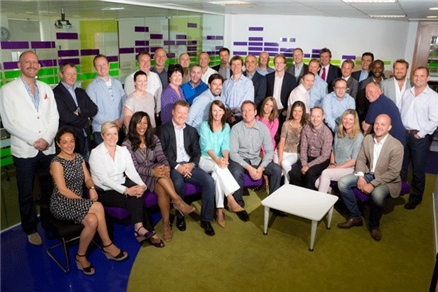
Coming to your senses: the Spotify Video story, presented at Dmexco

The Spotify journey from Audio to multi sensory platform that encompasses video and audio has been a really interesting one. It continues at pace and has been infused with our unique data proposition as well.

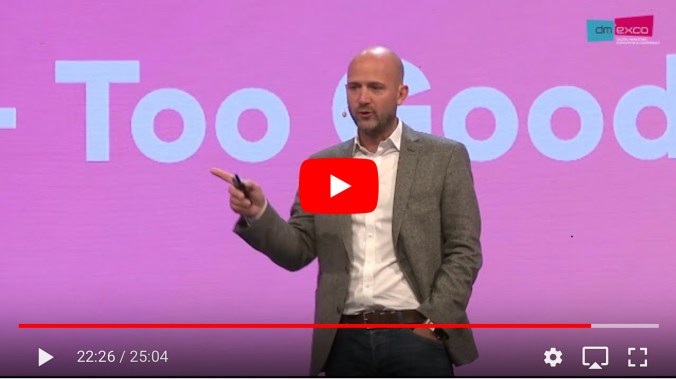
At Demexco we took the main stage and presented it to 600+ people, here it is in all its glory. Some of the videos have been covered, so hold your breathe through a couple of those! CLICK ON THE PHOTO TO LINK TO VIDEO.

50972C5A-D0A1-45EB-879E-7E1A687FA74B

Have we reached ‘Peak Technology’

Original article in Campaign HERE

Cannes is fast approaching, so it makes sense about now for us discuss creativity and technology and how it works together to power our advertising future.

I wonder, though, whether the changes in advertising we have experienced over the past 12 months are going to have as much impact upon the event as the new need to register to walk into a hotel or get on a yacht.

This past year has been quite traumatic for the advertising community; the ongoing onslaught against programmatic, the questions about digital vs offline, and circular debates about which media channel is most influential.

These would all be the standard issues for an average year, until ANA-gate, which kicked off a huge surge of self analysis across the industry.

Procter & Gamble’s Marc Pritchard weighed in more recently and delivered the biggest mic drop – basically calling out the whole digital industry. And of course it did not end there.

Too many unfulfilled promises and uncovered secrets in terms of the micro-targeting, data offerings, media properties that are unsuitable, and not enough human eyeballs.

Enter stage left – The Times – and so the we hit rock bottom. Technology, data, programmatic, privacy, fraud, all in the spotlight.

It has felt like an endless stream of negativity, but what has it changed and how can we expect Cannes to reflect it?

The initial outcomes of all this introspection have been a drift towards a rejuvenation of interest in more traditional channels. TV, premium publishers and “safe” environments are having a renaissance, as advertisers worry about where their ads are appearing.

It feels to me that we have reached “peak technology” within advertising. Too many unfulfilled promises and uncovered secrets in terms of the micro-targeting, data offerings, media properties that are unsuitable, and not enough human eyeballs.

Now we see the need to have a reset – a fresh approach to how we connect with consumers.

It has felt like an endless stream of negativity, but what has it changed and how can we expect Cannes to reflect it?

Now, I’m not suggesting we are going to see an “anti-tech brigade” per se, but we will see a surge of realism… a step back.

In advertising we adore the creation of a powerpoint presentation. Yet we are all familiar with the feeling you get when you get lost in the weeds and eventually you have to say, “what are we trying to communicate?”

I feel that’s the same with our whole industry. I have worked in digital from the start, and we have done exactly that – we started to tell a story, a good one, but it got more and more convoluted.

We allowed other people to insert slides that were “really important” – adserving, retargeting, audiences, data, programmatic – until we are all staring at a mess of charts on the inside of a meeting room glass wall.

We are now looking to go back to basics. What are we trying to communicate?

Well, I suspect Cannes is going to be the echo chamber. Woe betide anyone who starts wanging on about data without substance, to my mind, I believe the industry is getting to the point where, if you don’t own that data, if it does not come from a reputable registration, you should keep quiet.

Stop paying for videos the moment they start playing. Take down the spend going to programmatic Adnets that won’t tell you where your ads appear. And let’s show our ads to humans.

Geo data, segments, match rates and most recently viewability numbers that only talk about desktop and not mobile, your time is up.

We are about to take a step back and look at that wall and rip up all those superfluous slides, get back to basics and start again.

Here is how it will look:

  • Everything begins with a great campaign idea. It begins with a strong hook, a smart idea, a utility that people want, a price people need.
  • It will be followed by some easy questions – did they see my ad? Did they see all of my ad?
  • Did they see my ad for the whole ad or majority of it?
  • Was my ad seen by a human?
  • Was my ad on a property that I would be comfortable with in terms of content?
  • Do I know where my ads were served?
  • Did my ads deliver some ROI?

Anyone remember taking this for granted 15 years ago? Well those properties exist today and there is lots of room for them.

What Cannes I hope will show is that advertisers need to pull down those slides that don’t fit that narrative.

Advertisers have to cut that budget that is being wasted and reinvest into premium publishers. Spend to your heart’s content with digital but make it quality – so stop persuading yourself that scrolling video is viewable and three seconds is good enough.

Stop paying for videos the moment they start playing. Take down the spend going to programmatic Adnets that won’t tell you where your ads appear. And let’s show our ads to humans.

I believe that advertisers could slash half their digital budget and reinvest in the publishers that deserve it – those that deliver audience, quality environments and humans. Our industry has been planning and buying based on muscle memory, and that has to end.

I have worked for 20 years in agency and a few months at Spotify. I am proud of what we are doing as a business and I want to challenge the industry to hit these standards. It is possible. And yes, Spotify does hit those standards, but so do others.

Let’s take the blinkers off, rip off those slides that add nothing to the narrative, and ask the biggest players in town to shape up, and to leave room for them and the other premium publishers.

Let’s cut the dross, and I hope Cannes will shine a light on quality and cast a shadow over the kind of behaviours that will finish our industry and ruin the presentation
Read more at http://www.campaignlive.co.uk/article/reached-peak-technology-its-time-reset-digital-media/1436267#XA4X1cD4BcGXQ3jx.99
BertozziBytesize: Why do TV and ‘Digital’ have to argue all the time?

DONT START…I added quotation marks around digital because I know that Tess Alps would be all over it in a second, but I had to describe it as something and there lies the issue for many. Old ways of describing a world moving at a 1000mph are not sitting comfortably at the moment. In the last week or so I have been witnessing the never ending battle of TV vs Digital. The first was during IAB Engage and the second was the Video Ad News conference. Mainly played out on Twitter, noone wins, it normally involves bright people and Nigel Walley and I always wonder what it would be like to have all these people in a room together, working together.

At the heart of the issues lies the definition of what constitutes digital, TV, mobile and how should we talk about them and report them. Those who follow Twitter feeds on the topic will see it is something that appears to have little end in sight. Now I know we are all eating from the same trough, advertiser money, but surely we can work more effectively together and create some strategies that bring all sides together to recognise the benefits of both.

It strikes me that we have a synergistic relationship going on where one supports the other. TV has a history of making brands famous and creating a rapid rise in a brand’s recognition, digital has helped socialise TV and delivers the ROI through websites and follow up digital activity (in addition to instore) but it is vital that we work together to create more studies and more work to prove out these different theories and at an industry level, not just advertiser or agency case studies.

Digital has taken a battering over measurement and quality in recent times and indeed this should and I believe is a wake up call for many in the industry, TV on the other hand is perhaps guilty of resting on some laurels in terms of what it has achieved rather than making sure it is future proofing itself. An amazing amount of progress has been made in the last 2 or 3 years and its great to see but there is a lot more to go. An example of adaptation is where TV may use different tech to deliver ads but can still report back in similar TV metrics and not dive into digital ones, likewise video networks and supply sources have to find a way to include themselves in the GRP discussion rather than bang the table saying, ‘they are right about measurement.’ Todays moderator in an opening address was fast to try and encourage the audience to agree that TV measurement was wrong, we have always known it, but at least it was consistently wrong.’ Controversial. Especially given the current digital malaise. TV measurement is solid if at times a little limited but not wrong.

I would be excited to see TV progress in the way that Sky have started to go, taking incremental steps forward in targeting and reporting and I believe we will rapidly arrive at an offering that combines a good quotient of TV and Digital (there I go again, all TV is digital) benefits. Sky is in the driving seat right now so don’t be surprised to see the channel broadcasters cutting deals with Sky to be able to use Adsmart and IQ like targeting in the future. One area I will be interested in is to see how they embrace the data discussion as regards advertisers and their DMPs. It is still early days but the use of DMPs is moving at pace and becoming more and more sophisticated. As advertisers explore ways to use their first party data against media properties and media buying, perhaps TV has an opportunity to work with them collaboratively and not create another walled garden.

Of course Sky can become the next walled garden and on some levels I would not blame them, but they are in competition with Google and Facebook who most definitely are walled gardens. They  are unlikely to change, Facebook has 350+ billion dollar reasons why it cant be bothered to, BUT ITV and C4 could go a different route and help advertisers invest in their properties and demonstrate sales through integrations with DMPs.

Its not often I sit on the fence or become a middle man, but I believe that we could all learn something from each other and one is not better than the other. The biggest crime is that we don’t admit failings and don’t admit that we could learn from one another. As more TV becomes localised, one important lesson to learn from digital is to not let standards drop on creative. TV advertising on the whole is of the highest standards but as a more local offering creeps in with Sky openly encouraging local businesses to come into the TV market place, we are in danger of having a US experience with men standing outside their local garages offering this weeks best deals. TV must keep creative of the highest standards.

We need to keep going back to understanding people, and as we know, people don’t differentiate these channels in the way our industry does, they instinctively just know what they want from each of them. We could all learn from that too and get on with working out how best to engage them and not annoy them.

My video interview with @Google ‘Think with innovators’ series

My interview with the Google series ‘Think with innovators’ looking back over my career and laying out some of the learnings. It brought back some great memories!

Original article here

For Marco, innovators often tend to be lone, disruptive voices, whose biggest challenge is persuading the majority that change is a good thing, and that the outcome of that change will be positive for both agency and clients alike. In his many years of advancing the digital agenda, he says there has been no bigger challenge than the introduction of Programmatic, starting in 2009. “If you look back, there were whole businesses that did not believe this was the future,” he remembers, “but at every organisation now there are big advocates for Programmatic who all have a common thread of trying to change how the business has always worked.” In driving that change, Marco recalls that there were no short-cuts, as he spent years “literally going door to door” in an effort to educate colleagues and clients about the power of the new technology.


Innovation is in your DNA. I think you can learn some of the skills that are required, but it goes back to ‘what motivates you?’ The motivation to innovate comes from within.

Marco Bertozzi, Global Chief Revenue Officer, Performics


“My definition of innovation in the context of a large media group is really this concept of the ‘intrepeneur’,” says Marco. “Really this means trying to drive change, trying to change what people have always been doing, trying to invent new things within the structure of a big organisation.” Having earned his stripes as an ‘intrApreneur’ at VivaKi and at Performics, Marco now takes time out to share his experiences with the next generation of innovators. “I do mentoring at university, I do talks at schools and there’s a few other things in the pipeline. And at the same time I like sitting down with some of the biggest digital companies in the world and talking about how we’re going to continue to evolve this new space.”

Looking forward, Marco can see new technologies already starting to change the landscape, even though the fundamental challenge for businesses remains unchanged. “First Programmatic came along, and with it all the different channels, and now everyone’s talking about virtual reality. It just never stops, so the challenge for agencies is how you keep on top of that change and really embrace it.”

Reflecting on his undiminished appetite for the next wave of innovation, Marco knows exactly where his enthusiasm springs from. “I think for me, what gets me out of bed in the morning has always been that ability to work with lots of other companies and people who are more future facing. My satisfaction comes from believing that there’s a right way forward that’s different to how we’ve been doing it before, and having the self belief to see it through.”

If you want to understand Ad blocking, look to the youth.

Original article posted on The Drum here

So much of the talk on ad blocking is focused on battery sucking ads, data sucking ads, bad ads and so on. There is hand wringing at every corner of the industry.  Today I saw a tweet from an advertiser bemoaning how it is messing with their site analytics.

The solutions are diverse and range from technical to blocking the blockers or even worse paying the organised crime like protection rackets that some of these ad blocking companies are offering up.

If you really want to understand ad blocking you have to look to the youth.  Because the youth are not moaning about ads sucking their data and they aren’t obsessed with being followed around the web.  They don’t care about any of that.  They do talk about the quality of ads.  They just don’t understand the relationship between ads and free things.  Those free things are many and varied and they have not stopped to think about the reality of paying for them.

I’m part of a project called Speaker4Schools where I run educational sessions on the media industry for 16 and 17-year-old school children.  Recent presentations I’ve given have involved talking on the subject of the value exchange between advertising and the free services the children receive.

As I work through the presentation I ask how they would feel paying for Facebook (no one), what about Instagram? Yes, but a tiny amount and email? You get the idea – they don’t want to pay and can’t actually get their heads around having to pay.  As I explain that advertising is subsidising all these great services they feel are essential to their lives, I see the realisation dawn that they have really never considered the relationship at all.  Ads are just there to sell product.

I also asked the students if they use ad blockers.  30-50 per cent said they do or have done so.  They do it just because they can.  They do it because ‘there is an app for that’.  These are the young consumers of the future.  The problem of course stretches further in to older age groups which are where I agree with publishers blocking people from seeing their content.  The problem is however that fundamentally if we can’t explain to the younger generation that they get all this free stuff because of advertising, and it won’t be free for long if the use of ad blocking continues to rise, we have a much bigger problem.

It’s time to get together.  Just like the alcohol industry and its ‘drink responsibly’ campaign we need a major advertising push.  We have a massive job to do on educating the population, and perhaps along the way, help our industry attract new entrants.  It’s imperative we do this rather than lining the pockets of every ad blocking and ad blocking-blocking company and the myriad of other tech companies claiming to solve this issue.  Let’s put our energy towards a true industry effort to change perceptions and save our business.

At the same time we do have to improve creative, reduce ads, agree some standards on viewability measurement and reduce fraud.  But first and foremost we have to educate the youth that if they want to Snapchat for free they need to see ads.

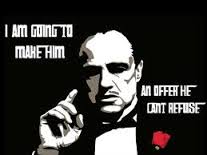
Adblocking – I am going to make you an offer you cant refuse

Italian organised crime started with men ‘offering’ to protect the olive groves of Sicily from the roving gangs of people who ‘might’ burn them down at any point. It was a slightly one sided offer in that they had little choice as to whether accept that or not. As I have been reading and listening to publishers I have started to see some parallels with the Adblocking industry, especially as you delve into the commercial relations behind the scene.

As a publisher, under so many different pressures, probably the last thing you were planning for was a slick salesman roll up and make you an offer you could not refuse. Pay us some money and we can make this ‘adblocking thing’ go away or if you don’t give us a cut, we are going to let the adblock software loose on your site. Of course the publishers are not the only ones being shafted. The customer who signed up to the software may be surprised to find that he or she is seeing Ads again because the publisher paid the protection racket.What you need is a saviour of course and so enter stage left the guys that come and offer the publisher an option to block the blockers. Now of course they are not quite out of the Superman annuals as you have to pay them as well but I guess its better than not getting any ad revenues and they are working to some extent in their interests.

download

Overall the whole landscape is very messy, very challenging and right now seems to be a little too much like the Sicilian olive groves of yesteryear.

Call centre ineptitude from RAC and AA negates good advertising

For many years I have sat opposite brand managers asking us to deliver more sales, conversions and the ‘right kind of customer’. This was often in the face of poor offers in market from those same Brand managers. The privilege of being the client, when asked how competitive a product is for say insurance or mortgages, the answer being, very uncompetitive, but don’t let that stop you. This is daily life for many agency performance planners in the business and is what makes performance remuneration so tricky.

But lets say the offer is good, lets say the creative is great, acquisition is still difficult and customers are hard won. So I want to understand why businesses allow thousands of call centre people to allow potential customers walk with no attempt to keep them or common sense.

I want to talk about my experience with break down cover. Three players in this space. RAC, AA and Green Flag. It is a battle royal and I have worked with two of those three so know how difficult it is to keep up acquisition at a good cost.

So this weekend my son got in my car and turned on the radio and left it like that for 24hours so that the battery became dead, dead, dead. So dead I could not even get under the bonnet to charge the battery(electric switch). So I call the RAC who I have been a customer with for around 7 years. It turns out that my cover did not auto renew because my debit card had changed at the same time I moved home and my address was not updated. This actually is a side issue but they had my number – no text or message to alert me?

Instead the lovely lady on the phone tells me I can renew but I have a surcharge based on my ‘usage’ last year ie called them twice AND a £70 extra charge for sending someone out at the same time. So I said ‘thank you RAC, its been good but you are now losing a customer.’ Again a side issue but there was no attempt to keep me, no discussion, no sweetener, just a ‘OK thanks.’ What a shame. How much media to now replace me?

So I go online to AA and start to book with them, all going well until I click the button ‘are you in a breakdown situation?’ The AA then add £130 pounds to the booking. Angry but in need of support I call the AA to proudly tell them I am leaving the RAC after all these years and I am ready to book for a year upfront for two people, £150 of cover and could they see clear to not adding the charge. No chance. In fact the guy sounded like he enjoyed saying no. And here lies the issue. Their rules suggest that I become a bad customer if I claim the minute I join, but what about if I stay for 7 years, and I would, that’s a minimum 1000 pounds they lost and the opportunity to cross sell, to try and gain £130. It is crazy.

The banks will negotiate overdraft fees, the insurance companies offer discounts but clearly that has not reached the breakdown companies. Worst still is the complete and obvious lack of flexibility, training and initiative that the bosses provide for call centre workers.

Well RAC and AA. I managed to get the bonnet open, and charged the car and now I am going to book with Green Flag and all for £70. Don’t come asking your planner to increase sales when your call centres and commercial practises are so flawed.

My Mediaweek judging experience – take it back to basics

20120910-172245.jpg

I judged my first Mediaweek awards this week. An array of illuminati from media were there (me excluded), from agencies, publishers, creative and media. All of them were senior and full of experience in judging and the industry as well as carrying a good helping of cynicism and sarcasm.

20120921-231352.jpg

Not sure what I expected really, a big old argument over the winner, a load of opinionated, puffed up media types all showing how right they are? I could not have been more wrong. In fact my group, not to mention names, was experienced and senior for sure, a mixture of advertisers, agencies, clients and media owners, all very polite, thoughtful and very insightful.

20120921-231740.jpg

With that comes a very acute ability to judge and to see through bullshit. Discussions around the table were not around disagreements so much as agreement. Of course there were individual opinions and differences but actually what really stood out was the immediate way in which entries that lacked either direction, quality, clarity on accomplishments and results were all found out very quickly.

It was fascinating seeing the entries boiled down to a single 5 minute video, it means you have to nail it and in a clear and succint fashion. Overall the quality was very high indeed but there were a couple that when they ended left the group all staring at each other in bewilderment. It is harder than it looks, sitting in that room watching this finished material it looks easy but I know it is hard from my New Business days. I recall the time we were told to do ‘something different’ in our new biz submission so we decided to send a video as primary introduction. It was slick, showed off the brands and the results we had achieved, it was described by the client as ‘a load of corporate w@@@’ So it is difficult to know what to do. Overall though my advice to entries of the future, knowing that it is being watched by 10 very experienced, sharp, media people would boil down to these few tips:

1. Start with the brief and make sure your video actually answers it and focuses on what the category is looking for, not what you want to shoehorn in.

2. Enter it in the right category!

3. Don’t submit the same video into different categories without adapting to some extent, this was an interesting debate. I think I came out on the side of tailor in some way, a nod of acknowledgement that it was a different brief to the previous you submitted into – not everyone agreed with that though.

4. Make sure results are strong and properly benchmarked – amazing amount of stats used out of context and with no benchmark. You have to remember that judges will either think they are not great stats in context or they are made up and twisted in some way if you dont.

5. Dont over use phrases such as ‘contributed to the overall’ that will deliver a wave of cynicism from these old hacks

6. Create a professional video that looks like you want to win, not one you threw together for your graduate presentation. Can you hear what the people are saying over special effects for instance?

I have to say thought that overall I was really impressed both with the approach and professionalism of both the judges and entries. It was fascinating to see all this great work side by side and even more interesting to hear the judges comments first hand. I was also quietly relieved to see business results front and centre rather than likes, licks and other titbits.