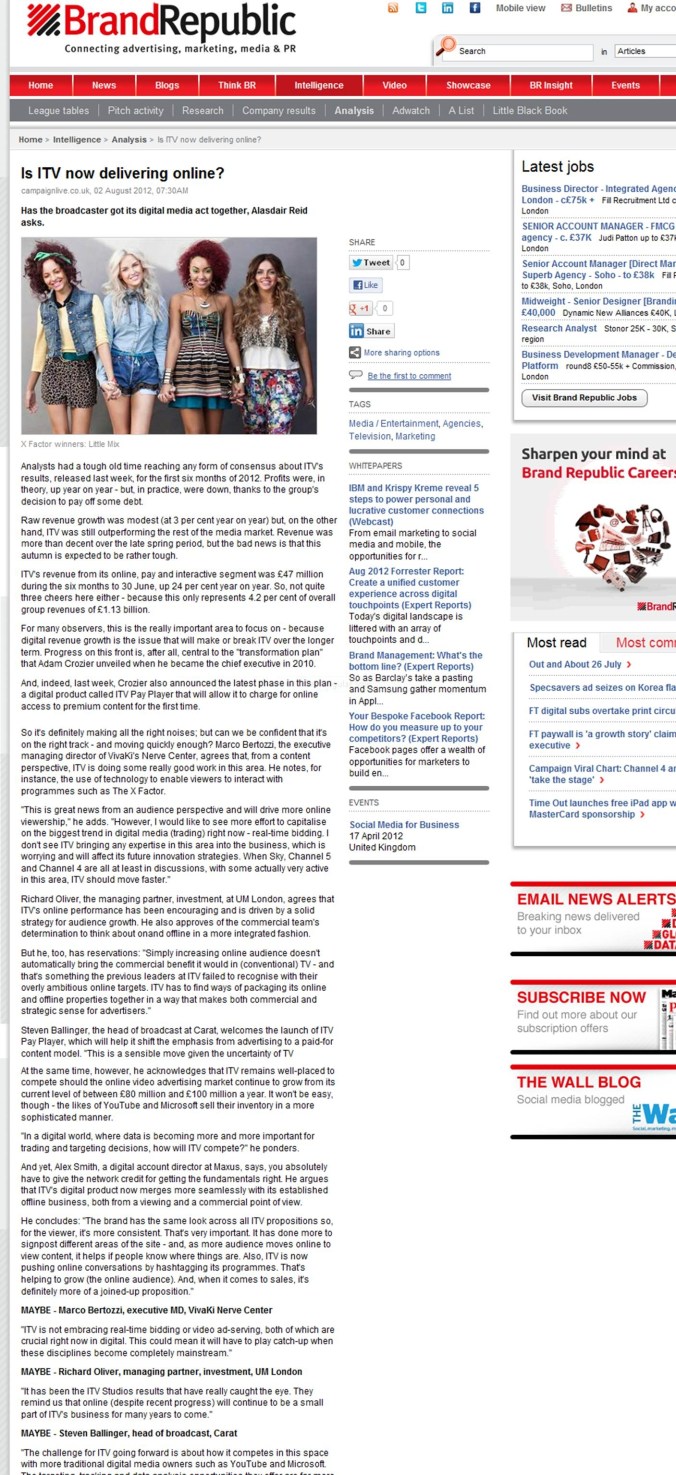
Bertozzi comments on ITV Digital
Bertozzi comments on ITV Digital
Technology killed the admin star.
One of just many debates raging around the new world of programmatic buying and exchanges. Are we seeing the death of the buyer? The death of the seller? Has the world of computers stripped advertising of all its creativity? Lots of big questions and debates but over the last six months, one common thread has become apparent; there is no value in execution in the long term.
Two or three big themes have converged in the last year, they have been around for longer of course but they have been lit up by the tech debate. The first is that in my view too many businesses sold their value on execution and delivery. These are necessities and you can’t not have them but is that where the value is? Is that what you charge more for? I don’t think so, the agency world in particular suffers from focusing a lot on service and delivery and execution over real value add strategy and quality creative thinking.
In itself that is not the end of the world, many advertisers want perfect execution of course, but what it ends up being then is an easily quantifiable, discountable service that becomes very commoditised – tell me the difference between two media agency TV departments? Secondly lets combine that with the fact that the world of Paid, Earned and Owned means that clients are now not only trying to squeeze costs and fees they are starting to see these new approaches as a gateway to spending less. I have just finished doing preliminary judging and of about 40 entrants at least 37 boasted / moaned (not in so many words) that they had little or no budget to make their campaign work.
So we have smaller budgets based on the social buzz doing the heavy lifting for us and we have fees for service and execution being cut – that leaves us with only one alternative – start to charge for ideas and creativity, for strategic guidance so that the execution is less crucial to the revenues. This works more now than ever as to make the social buzz work for you, good ideas and strategy are needed to do it..it is no coincidence that the non traditional media planning and buying teams in agencies are the fastest growing divisions. Big sponsorships, events, social strategy, performance strategy, content, these are where the future lies backed up with technically led brilliant basics.
To gain traction strategically you need to invest in good people. You also need more of them. Investment in the current climate is not straight forward so you need to rebalance the organisation. The investment in time and people from a strategic perspective needs to increase and at the same time you need to make execution more efficient allowing you to free up people and resources to focus on intellectual capital. So Enter the third factor – programmatic buying.
Ask a customer if they want to pay for a load of people bogged down in admin, or people actively thinking about how best to run their business and make it a success, the answer will invariably be the latter, but that’s what we all do in the main at the moment. Clients pay for people and hours spent on too much Admin and not enough thought, this situation needs to change. Technology and programmatic buying/selling is now allowing all companies to achieve efficiencies. Whether it is publishers like the Guardian or agencies through trading desks technology is freeing resource to focus on value rather admin.
Publishers are moving fast now, after a stuttering start, they are moving rapidly, trying to find ways to move more and more into programmatic sales, now with words like premium and brand being attached. They are opening parts of the site, previously sacrosanct such as home pages to the evils of tech. Trading and execution is taking a back seat as Partnerships, strategy, event type words come to the fore – BIG ticket sales are now the focus.
Some recent people decisions are a reflection on that with people like Vevo choosing Partnerships people over sales people and Yahoo re-evaluating structures and there are many more. I am sure The Guardian will be looking to Tim Gentry to help them achieve better margins and a more efficient approach to the market, the signs are there..
So for me the message is clear – we all need to find a way to make money from clients and customers who want to pay less for service and execution and spend less on advertising. Armies of people pushing excel around is not going to be the answer.
The two days ended with a great talk from one of the godfathers of digital – Scott Ferber. Founder of ad.com the worlds most successful ad net and now founder of Videology. The guy is both crazy and unbelievably bright, engaging and down to earth.
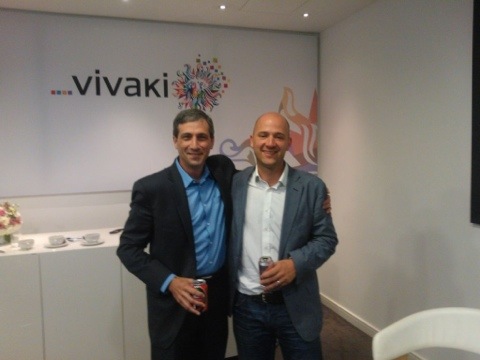
Two tough days of Audience On Demand and VivaKi bonding, I probably did not plan it brilliantly by accepting an invite from Google to take all 28 of us to the IAA Summer ball! There were some tired faces on day two but it was the right thing to do. The team had a great time.
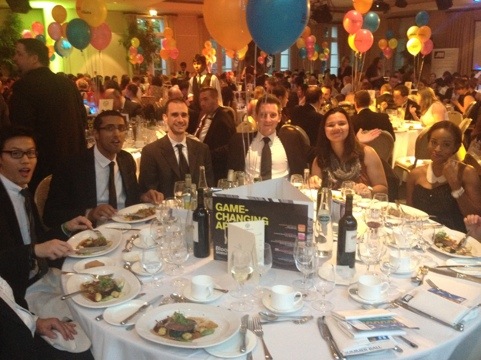
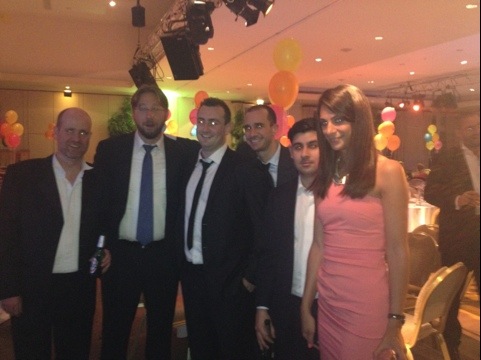
We had people from UK, France, Italy, Dubai, Spain, Germany, Belgium, Netherlands, Sweden and Poland. Too many teams claim to have resource and capabilities in different markets but that means clicking the geo buttons on their DSPs. We have established teams now driving markets forward and it’s exciting to see in action.
There are an amazing amount of similarities between markets, there is a curve of adoption that I believe is reflected in most markets but only where companies are pushing the market. It looks very different if you are a follower. Our teams in Dubai for instance are not pushing they are creating it, I highlight it as the entrepreneurial spirit that makes the people in The Vivaki Nerve Center different.
The two days ended with a panel with Stewart Easterbrook, CEO SMG UK, Matt Roche of Weborama, Ryan Jamboretz of Videology, Jon Slade at the FT and Jason Bigler of Google painted a picture for the markets to take back of a world in which programmatic buying and RTB was going to be fundamental to all their businesses.
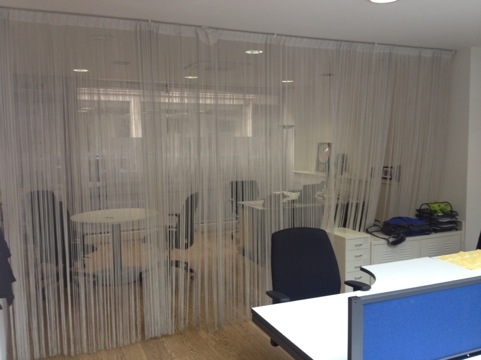
This Monday sees a new home for us all. We have enjoyed being part of the SMG team at Whitfield street but very excited about having our own office. It has been two years and 4 months of hard work that has taken us to this point and it feels like the time is right for expansion. I do need to get rid of the curtains though!
The market is still moving fast with acquisitions and evolutions and indeed people moves. Interesting to see Damian Blackden move to Adnologies this week, showing that data and exchanges are still pulling the talent to them and we continue to meet with a myriad of tech companies all trying to carve out their space.
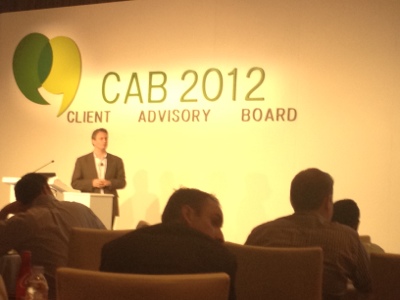
Take a look at the opening keynote from Neal here
The best analogy of the two days was from Neal Mohan who likened the web to the old style stack we would have at home in music and TV. We would layer on more and more pieces of tech, with music systems, game consoles, and more recently the likes of Apple TV and Google TV.
We work hard to make it all appear seamless and sometimes it all works but often it involves getting on your knees and digging around behind the TV to swap plugs and find wires, we all know that experience. The web has been like this generally with a constant stream of extra tech layers to integrate and ad serve and ultimately try and track.
Google have been guilty of this within their own ecosystem with Dart Search, DFA, google Analytics and more recently Invite and Terracent. They have been on quite a journey, the first part of that has been improving the individual products. Dart Search had a 50% dissatisfaction rate which is now down to sub 10% and you can see why. The system improvements have been significant.
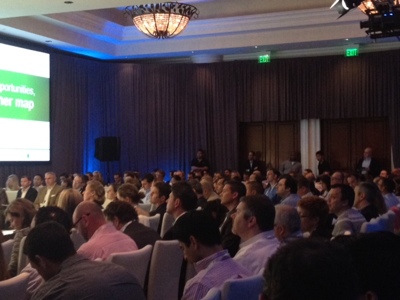
The next stage has been how they work together and this is the real win and the approach that feels like Google are tightening the noose on the competition. The fully integrated stack is something genuinely powerful and will be a big sales point. The inter connections between exchange trading, search, remarketing Ad creation and analytics are going to revolutionise how we buy in both search and exchanges. We are seeing a world where you still have ten devices on your Tv table and yet only one wire and it all just works.
These two days have shown a frictionless web, a world where one tag, one consumer is all we are working with avoiding the dedup issues and discrepancy issues and allowing us to build comms strategies around a true single view. Google have been challenged by the industry to improve and to some it may have come a little too slowly but I believe they have learned their lessons. The Invite 2.0 releases are an example of where they did not want to repeat a Doubleclick scenario.
The chance to discuss with the Product Managers all the new developments both in the sessions and in the bar make this a pretty unique session. Thanks to Google for the Invite.(excuse the pun)
It wont change the world but as an addition to my work blog / scrapbook it is always nice to be asked by the Financial Times for comment. First screen grab introduces the piece, the second fast forwards to my bit. The Link to the whole article is here.
Intro
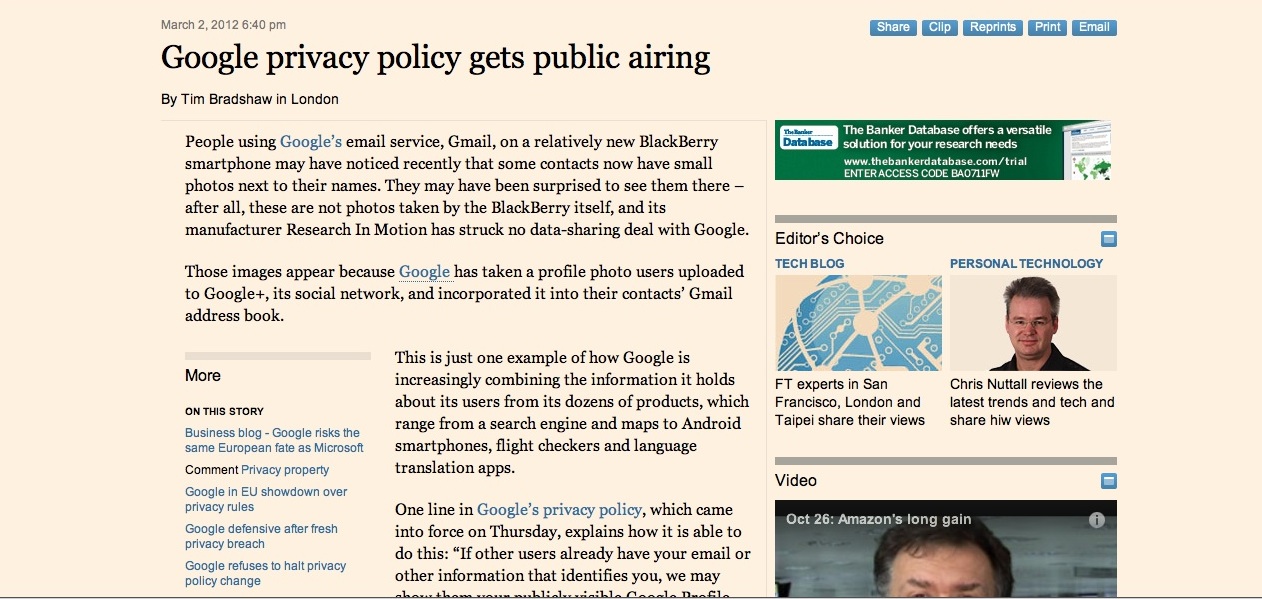
My two pence!

Thanks to Tim Bradshaw for asking me to comment @tim
A good piece in NMA on private marketplaces, great to see the mainstream digital press starting to write more solid coverage on the exchange market. See full article here.


Centralising Retargeting
BY: Paul Silver, Head of Product AOD UK and Geoff Smith, Head of Activation AOD UK
Featured in Exchangewire also here
Retargeting is the core foundation of any performance display campaign. It’s something we all know now, but it’s not something we all knew when we outsourced our display buying to ad networks all those years ago. That’s ultimately because ad networks never disclosed the importance of retargeting whilst they were able to ride the gravy train. However those days are over, and there are several compelling reasons as to why we should all bring retargeting in house today.
Transparency:
Arguably, the greatest output of RTB is that it has created a new marketplace that allows it to be centred on transparency (not 100% complete transparency on every bid request but considerably better than it was previously).
Being in control and accountable of every penny a client spends means we know exactly how much contribution there is from every element of their retargeting programme, and what’s more, so now do our clients. There is no more allowing ad networks to hide behind blended CPA metrics, offsetting the poorer performance of their run of network activity with quick win retargeting conversions. Clients now understand the exact worth of retargeting and precisely how/what needs to be done to a) increase that volume but also b) drive incremental growth.
Lets not forget, in most cases, we also now have insight and transparency into where our ads are being served. Not only is this paramount from a brand safety perspective but also incredibly valuable when we can provide insight to clients that demonstrates which environments convert their target audience more efficiently, how that informs their other cross media planning strategies, and how it disrupts their traditional media planning with fresh ideas.
Price Inflation:
The impact of price inflation from multiple retargeters running on a single media plan is real, it is not just a theory. We know the effect of having to bid for a single user against other bidders. We’ve seen the data, it becomes less efficient. The message we convey to clients is that the situation is akin to brand bidding in the affiliate space a few years ago. Why would you let affiliates obtain standard levels of commission for piggybacking on your marketing investment, by bidding on your brand, whilst also inflating your own CPC costs to access that brand term inventory? It didn’t make sense then and it doesn’t make sense now.
Strategy versus tactic:
By centralising retargeting in house, you immediately remove any element of having to play ‘the ad network game’ which is designed to obtain last click or view attribution. You are actually able to start developing more bespoke, controlled strategies around first party data, integrating it into the wider marketing/comms mix and introducing separate eCRM or cross channel strategies. It becomes an extension to an integrated marketing plan, rather than simply a cheap display acquisition tactic.
User experience:
If there’s one thing that gives retargeting a bad name, it’s when advertisers do it poorly. Retargeting should be used as a reminder of the brand/product/service that a potential customer is considering, rather than giving advertisers the ability to stalk users across the Internet with the same message, no cap on frequency, and potentially showing them the same product that they bought 3 weeks ago. It sounds basic, but we’ve all seen it in action. By taking the retargeting program in house, agencies can help clients ensure that their customer’s user experience remains engaging, consistent and above all else, controlled, increasing brand advocacy rather than damaging it.
Data security:
Lastly, and perhaps most importantly, being in control of client’s first party data is not a simple game of efficiency improvements. There is also the much more serious consideration of client data protection. With publishers being able to place tracking pixels within tracking pixels within tracking pixels, can you honestly say that you know every 3rd party server call being made from your client’s site?
It is not unfair to say that practices from *some* ad networks in the past have included leveraging one client’s dataset to improve performance for another client competing in the same vertical. Why should client A help fuel the performance of client B? It reduces their competitive advantage for the benefit of their competitor’s. It’s clearly efficient for ad networks to do this, and certain agency groups are also now taking this data sharing approach, but who really gains when everyone has the same cookie pool available to them?
Data leakage became a serious issue for the industry last year, and with the e-privacy cloud looming, agencies have a responsibility as much as their clients to ensure consumers are well informed of how cookie data is being used. How confident can you be in your client’s privacy policy if numerous disparate suppliers are still managing elements of your retargeting?
At VivaKi we take this very seriously and ensure that no client data is EVER co-mingled. We also work with clients to give them transparency over which pixels are on placed on each of their sites and what they are used for. When you outsource retargeting, you loose your ability to have a holistic view on how your client’s data is being used and ultimately, you outsource control. In today’s ever-stringent e-privacy environment, that is a dangerous place to be.
I quietly smiled to myself when I saw the announcement that Dataxu had bought Mexad and the press release that went with it. Dataxu buys Mexad. What an interesting start to the year in terms of consolidation. I have had relations with both companies and in both situations I / we were criticised by the companies involved for our strategy. In both cases it boiled down to driving business growth through good old fashion means rather than selling the algorithm dream.
Dataxu first of all was very down on the VivaKi partnership with Google and Invite, first was the usual Google paranoia stuff which I am used to and bored of but the second was whether or not we could succeed by using Invite, considered the lesser DSP apparently by Dataxu compared to their high tech operation. At the time I explained that to grow the marketplace and to grow my business and make a success of Audience On Demand first and foremost was to have the support of a strong partner (and a good one) with resources and scale not just in EMEA but globally. Secondly I needed consistency of offer, the finer points of the algorithm would not be the defining factor. Audience On Demand a year later is the largest Exchange Trading proposition in the world and we are delivering fantastic results and have some very smart people working for us so I feel pretty vindicated in my approach. It is therefore enlightening to now see Dataxu resort to buying Mexad to be able to deliver service and people.
Mike quotes ‘“feet-on-the-street” is becoming a key differentiator for the DSP business, because it’s not just about having the best software, algorithms and access to RTB inventory that determines success in local markets, but understanding local cultures, ways of doing business in specific markets, and the ability to advise and service local marketers and agencies in those markets.
This is exactly what I was explaining all those months ago and it seems Dataxu have also seen some truth in that approach. The other telling thing for me is around the fact that the individual DSPs are finding it hard to get into the agency groups, they have been knocking on the door for some time and the way is blocked for many of them with Invite taking the lion’s share and each of the others taking the smaller share, at least in EMEA. I have said all along that I still see this a very difficult market place for the independent DSPs, not impossible of course and I look forward to working with a number of them as we continue to test and learn, but difficult. Perhaps by buying Mexad they see a quicker way of getting through the doors, although Mexad as far as an agency trading desk is concerned is like outsourcing your TV buying so I suspect those doors, at least in developed markets, will also start to close.
Finally Mexad. I assume that even though they have been bought by Dataxu they will continue to work with multiple DSPs? I have been repeatedly heckled at industry events that working with just one is wrong and is not the way forward, that it is a flawed approach! Anyone who knows how agency land works knows that it is a large education piece and consistency of message is crucial. Audience On Demand is working well because the agency teams understand it, the publishers know we are transparent and consistent and the clients have a team of people who are aligned and focused only on delivering the best results. Perhaps Mexad will find some of the same benefits now it can concentrate on one DSP only.
This world will evolve of course and Audience On Demand will test a number of different DSPs over time, that is what any desk would expect to do, even if we retain a major partner, I hope now that Mexad is tied down to just one they wont find it too strategically difficult to handle after claiming for months that it was the wrong approach!
Aside from that Good luck to all parties and well done!
A couple of thoughts for 2012 and beyond.
There will be many predictions for 2012, these are less predictions as thoughts on what I see around me right now and discussions being had. That is why I have referred to this as ‘watching change’ rather than predicting it. As usual with me its tech heavy but not exclusively an inspired by some recent people I have met lately, more of that for another post.

What do I think we will see changing in 2012?
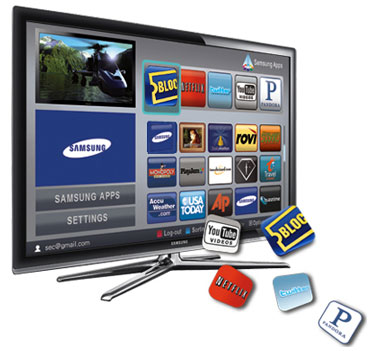
1. The rise of campaigns targeted against connected TVs, there is so much movement in this space and it is happening so quickly, I believe more advertisers will be looking to agencies to deliver more targeted advertising on the TV through connected TVs and set top boxes. Video advertising shown on streamed content on TVs will also increase significantly in 2012. What I find most interesting in this space is that as with mobile there is a lot of talk but I can see things moving faster than anyone predicts. If you look at the Xbox alone, they have more ‘set top boxes’ than Sky, that makes them the most connected organisation in the UK in regards the TV.
2. From an agency perspective the silos of search, exchange trading and buying on APIs will be broken down as we start to use Data Management, targeting and buying across all three of them to drive campaign results. We will all get smarter about talking data as a planning mechanism rather than a list of sites to represent targeting. Where we can combine audience targeting with context and highly dynamic creatives we will hit the bullseye. This process is already well underway but see this accelerate in the next 12 months.
Where do I see the greatest opportunity for improvement?
A. The greatest room for improvement will be in video as we move from a disparate, highly admin intensive channel that is still managing to scale rapidly to a more platform, third party adserved, data driven opportunity for clients. Video has the opportunity to explode in terms of volumes, the use of buying platforms and third party adserving will make that possible and produce better results for advertisers and a more efficient delivery from an agency perspective. I hope AODv achieves this on behalf of the agencies.
Video revenues could increase significantly with this last impetus, it is a shame that it is being held back by some major broadcasters hell bent on protecting the old models and the ‘it has always been like this approach.’ We know how successful these people have been in the past, so I think they should move to a bigger and better learning model.
Technology:
What tech/device will completely transform the way you do business?
Connected TVs, already have become more and more prevalent in shops, the connected TV will bring the social TV experience to the living room that is currently produced by the highly reported two device usage people employ now ie PC on Twitter whilst watching TV. The connected TV and to set top boxes such as Xbox will allow users to genuinely multi task and enjoy a more social experience. On top of that they will of course also be able to access new content that will pull more influence from the linear TV schedule
What technology has transformed us in the last two years?
Life changing is pretty strong but the ability to work in the cloud would be up there, whether its docs in Dropbox or my iPad, iPhone, Apple TV and Airport Express all linked up wireless at home with no need for synching etc. The principle that the devices no longer need to be mega storage devices is a huge shift and the always on, access anywhere approach to tech is an amazing shift.

What do I think we can’t live without now that will be obsolete next year?
The death of the desktop, its all tablets and laptops and as working conditions become more and more mobile the desktop becomes more and more out of date. Of course that wont be next year but as a trend I believe we are starting to see the PC desk top being eroded, as companies no longer want to invest in more and more office space, instead opting for work from home or hot desking lap tops and tablets become the primary device.
General:
What will change specifically in media?
Our organisations are becoming more and more global by nature, the pitches, the advertisers the media properties we spend with and so the nature of new business requires a more joined up and well round global group to answer these challenges. If you don’t do it well you will lose those big international advertisers, more and more focus will go on how we weave our different agency properties together in a meaniful way that gives clients the maximum amount of insights and services with the minimum amount of disruption.
What do we need most to see greater success in 2012?
We are in a transition period where media owners, Ad Nets and Portals are all trying to plan for the future but manage their old business at the same time. As an industry we need to give companies 12 months to allow that change to happen even if it upsets shareholders and the bean counters. Many organisations will take a hit in terms of ad revenues they receive for direct response campaigns direct from agencies and have not seen it returned through the new approaches such as AOD. It does not mean its wrong, it’s just difficult to manage but they have to so they can reshape for the future.
Mobile needs tracking and ad serving badly! Mobile usage is huge, it brings online to offline and offline to online. The world of the web is social, personal, local and mobile and the smart phone ticks all those boxes and yet we can’t seem to bring the advertisers to spend the revenues. This remains what seems an eternal challenge to master.

VivaKi Nerve Center launched Audience On Demand in the US back in 2008, launched in London in 2010. Now the UK’s largest trading desk is looking to add to the team as we grow month on month working with some of the UK’s largest advertisers. We work with Starcom Mediavest, ZenithOptimedia and Razorfish teams and are the most lined up agency group in the UK with full support from the agency brands and our success reflects that.
Paul Silver Heads up the Audience On Demand Product and is one of the most respected people in the industry and he will be joined by the Head of Activation on Monday Geoff Smith, current Head of Technology at MEC, it’s a dream team backed by a number of activation and analyst team members and together we are really making great strides in the market place. If you want to work on private marketplaces, scale plays, strategies across the exchange space then you should contact me or Paul.
Bored at an Ad Network, or worrying about their future? Perhaps at another agency Group but struggling against constant resistance and confusion, maybe in a ‘specialist outfit’ but seeing just how restricting and myopic that can be? Want to work for a team that works openly and collaboratively with publishers then email us..
We look forward to hearing from you!
 Bertozzi's Bytesize