My Mediaweek judging experience – take it back to basics

20120910-172245.jpg

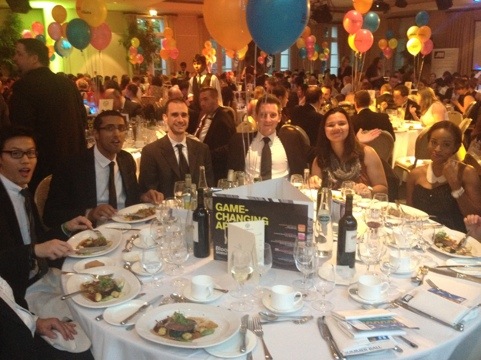
I judged my first Mediaweek awards this week. An array of illuminati from media were there (me excluded), from agencies, publishers, creative and media. All of them were senior and full of experience in judging and the industry as well as carrying a good helping of cynicism and sarcasm.

20120921-231352.jpg

Not sure what I expected really, a big old argument over the winner, a load of opinionated, puffed up media types all showing how right they are? I could not have been more wrong. In fact my group, not to mention names, was experienced and senior for sure, a mixture of advertisers, agencies, clients and media owners, all very polite, thoughtful and very insightful.

20120921-231740.jpg

With that comes a very acute ability to judge and to see through bullshit. Discussions around the table were not around disagreements so much as agreement. Of course there were individual opinions and differences but actually what really stood out was the immediate way in which entries that lacked either direction, quality, clarity on accomplishments and results were all found out very quickly.

It was fascinating seeing the entries boiled down to a single 5 minute video, it means you have to nail it and in a clear and succint fashion. Overall the quality was very high indeed but there were a couple that when they ended left the group all staring at each other in bewilderment. It is harder than it looks, sitting in that room watching this finished material it looks easy but I know it is hard from my New Business days. I recall the time we were told to do ‘something different’ in our new biz submission so we decided to send a video as primary introduction. It was slick, showed off the brands and the results we had achieved, it was described by the client as ‘a load of corporate w@@@’ So it is difficult to know what to do. Overall though my advice to entries of the future, knowing that it is being watched by 10 very experienced, sharp, media people would boil down to these few tips:

1. Start with the brief and make sure your video actually answers it and focuses on what the category is looking for, not what you want to shoehorn in.

2. Enter it in the right category!

3. Don’t submit the same video into different categories without adapting to some extent, this was an interesting debate. I think I came out on the side of tailor in some way, a nod of acknowledgement that it was a different brief to the previous you submitted into – not everyone agreed with that though.

4. Make sure results are strong and properly benchmarked – amazing amount of stats used out of context and with no benchmark. You have to remember that judges will either think they are not great stats in context or they are made up and twisted in some way if you dont.

5. Dont over use phrases such as ‘contributed to the overall’ that will deliver a wave of cynicism from these old hacks

6. Create a professional video that looks like you want to win, not one you threw together for your graduate presentation. Can you hear what the people are saying over special effects for instance?

I have to say thought that overall I was really impressed both with the approach and professionalism of both the judges and entries. It was fascinating to see all this great work side by side and even more interesting to hear the judges comments first hand. I was also quietly relieved to see business results front and centre rather than likes, licks and other titbits.

Is this the 2nd most successful paid for social network?

20120824-151426.jpg

In the last three weeks I have responded a couple of times to Tweets regarding social media. One was entitled ‘would you pay for social media’ and it got me thinking that when we talk about social we often forget Flickr. Then I see a tweet about the way most of the mobile Apps for Google+ and Facebook are evolving into a series of rich images to scroll through and again I think to myself what a whopping missed opportunity Flickr was and how a lack of foresight led it to be a photo repository for the average user.

Flickr has 50m registered users, pretty good but when compared with what it could have been! It was bought for $35m dollars in 2005 by Yahoo, it seems so cheap and in terms of what it could have been, a steal! I think the timing of the purchase was unfortunate with Yahoo in some of its biggest disarray in terms of position in market anbd future strategy as well as FB etc coming to town. Back then Flickr had a function to bring people together to ‘chat’ around subject matter photos – the equivalent of a ‘Hang-out’ at the time I guess. Basically what Flickr lacked was someone who could see the future and how social and sharing was going to be HUGE.

Would you pay for social media? I do every year when Flickr say to me that if I ever want to see my photos again I better pay up! That is one of the best social media payment models in the business no? Now of course I resent the ransom note every year but begrudgingly admit that they do a job, they hold this for me, allow me to share it, although their god awful privacy controls are difficult to fathom, normally when you want to send a single photo you send people everyone of your private photos!

I notice that Flickr has started to adapt, new interface, new controls and a far more user friendly interface, but they need to do more, they need to create an easy way to share, comment, bring in friends, let people announce things, set up environments for events and..oh is that not Facebook? I would like to see a ‘hang out approach’ on videos you want to share, invite them live and so on, the opportunities are endless and this is what makes me realise what a terribly, terribly big waste of an opportunity it has been thus far. It is however not too late in my mind.

There has been some debate about their revenues, conservative at $50m ranging upwards helped by Getty Images, Advertising on billions of impressions and other partnerships so it is a good business from the outside, I will be intrigued to see if the most successful pay-for-play-social-media-platform in the world can continue to adapt and grab the new opportunities before it is resigned to being a bloody good attempt at a social network from 2005.

Venture capital – are you a write off?

Over the last few months I have been spending more time talking with Venture Capital firms as we start to launch VivaKi Ventures in EMEA and I have to say it has been fascinating. On top of that I have been talking with individuals who have working in multiple start ups. If I am honest I am struck by the combination of instinct, nous, luck, crowd mentality and incredible returns and losses the VCs work off.

Information is extremely varied and disparate but overall it appears that the funds do a number of things, they are looking to make sure they have some ‘skin in the game’ in different sectors – we must be in mobile, we must be in video etc, sometimes buying into companies that from the outside appears misguided – Groupon to the punter on the street just appeared crazy but that did not stop anyone investing. Then we have this emotional crowd mentality where people in the investment community get excited and invests illogically based on sentiment, not dissimilar to the city swings we see on share prices.

In times of financial ups and downs investment firms are then trying to recoup the best returns, again, perhaps not always thinking straight in IPO situations, one of the views on Facebook was that the institutional investment firms had cash, it was making no returns through any conventional financial methods whether the stock market or banks and so the money was burning a hole in their pocket. An IPO like Facebook and others was a great opportunity to hit those return goals.

After all that there is the general rule of thumb that anywhere between 30 and 50% of companies will be complete write offs. I got thinking about that, and in discussions on that subject it struck me how blase they were about it. It is not working, cut it. You may be an owner, founder, an employee in these companies working hard and caring very much whilst backing you is a company that may one day wake up and say – lets pull the plug. It feels like that is an easy thing for them to do, when they are balancing that decision with high returns of 30x somewhere else. It is very matter of fact and shows just how hard it is to be a successful start up, especially in such difficult times.

I know for sure that there are good VC firms and less good in terms of caring for their investments but they all for sure know that they can walk away from companies easily as it is all built into the maths.  Good luck to everyone who starts their own business or joins a start up. It is a brave world.

Agencies and publishers are polarising structures based on the perfect storm

Technology killed the admin star.

One of just many debates raging around the new world of programmatic buying and exchanges. Are we seeing the death of the buyer? The death of the seller? Has the world of computers stripped advertising of all its creativity? Lots of big questions and debates but over the last six months, one common thread has become apparent; there is no value in execution in the long term.

Two or three big themes have converged in the last year, they have been around for longer of course but they have been lit up by the tech debate. The first is that in my view too many businesses sold their value on execution and delivery. These are necessities and you can’t not have them but is that where the value is? Is that what you charge more for? I don’t think so, the agency world in particular suffers from focusing a lot on service and delivery and execution over real value add strategy and quality creative thinking.

In itself that is not the end of the world, many advertisers want perfect execution of course, but what it ends up being then is an easily quantifiable, discountable service that becomes very commoditised – tell me the difference between two media agency TV departments? Secondly lets combine that with the fact that the world of Paid, Earned and Owned means that clients are now not only trying to squeeze costs and fees they are starting to see these new approaches as a gateway to spending less. I have just finished doing preliminary judging and of about 40 entrants at least 37 boasted / moaned (not in so many words) that they had little or no budget to make their campaign work.

So we have smaller budgets based on the social buzz doing the heavy lifting for us and we have fees for service and execution being cut – that leaves us with only one alternative – start to charge for ideas and creativity, for strategic guidance so that the execution is less crucial to the revenues. This works more now than ever as to make the social buzz work for you, good ideas and strategy are needed to do it..it is no coincidence that the non traditional media planning and buying teams in agencies are the fastest growing divisions. Big sponsorships, events, social strategy, performance strategy, content, these are where the future lies backed up with technically led brilliant basics.

To gain traction strategically you need to invest in good people. You also need more of them. Investment  in the current climate is not straight forward so you need to rebalance the organisation. The investment in time and people from a strategic perspective needs to increase and at the same time you need to make execution more efficient allowing you to free up people and resources to focus on intellectual capital. So Enter the third factor  – programmatic buying.

Ask a customer if they want to pay for a load of people bogged down in admin, or people actively thinking about how best to run their business and make it a success, the answer will invariably be the latter, but that’s what we all do in the main at the moment. Clients pay for people and hours spent on too much Admin and not enough thought, this situation needs to change. Technology and programmatic buying/selling is now allowing all companies to achieve efficiencies. Whether it is publishers like the Guardian or agencies through trading desks technology is freeing resource to focus on value rather admin.

Publishers are moving fast now, after a stuttering start, they are moving rapidly, trying to find ways to move more and more into programmatic sales, now with words like premium and brand being attached. They are opening parts of the site, previously sacrosanct such as home pages to the evils of tech. Trading and execution is taking a back seat as Partnerships, strategy, event type words come to the fore – BIG ticket sales are now the focus.

Some recent people decisions are a reflection on that with people like Vevo choosing Partnerships people over sales people and Yahoo re-evaluating structures and there are many more. I am sure The Guardian will be looking to Tim Gentry to help them achieve better margins and a more efficient approach to the market, the signs are there..

So for me the message is clear – we all need to find a way to make money from clients and customers who want to pay less for service and execution and spend less on advertising. Armies of people pushing excel around is not going to be the answer.

AOD Summit – 2012

The two days ended with a great talk from one of the godfathers of digital – Scott Ferber. Founder of ad.com the worlds most successful ad net and now founder of Videology. The guy is both crazy and unbelievably bright, engaging and down to earth.

20120714-201018.jpg

Two tough days of Audience On Demand and VivaKi bonding, I probably did not plan it brilliantly by accepting an invite from Google to take all 28 of us to the IAA Summer ball! There were some tired faces on day two but it was the right thing to do. The team had a great time.

20120715-063733.jpg

20120715-063911.jpg

We had people from UK, France, Italy, Dubai, Spain, Germany, Belgium, Netherlands, Sweden and Poland. Too many teams claim to have resource and capabilities in different markets but that means clicking the geo buttons on their DSPs. We have established teams now driving markets forward and it’s exciting to see in action.

There are an amazing amount of similarities between markets, there is a curve of adoption that I believe is reflected in most markets but only where companies are pushing the market. It looks very different if you are a follower. Our teams in Dubai for instance are not pushing they are creating it, I highlight it as the entrepreneurial spirit that makes the people in The Vivaki Nerve Center different.

The two days ended with a panel with Stewart Easterbrook, CEO SMG UK, Matt Roche of Weborama, Ryan Jamboretz of Videology, Jon Slade at the FT and Jason Bigler of Google painted a picture for the markets to take back of a world in which programmatic buying and RTB was going to be fundamental to all their businesses.

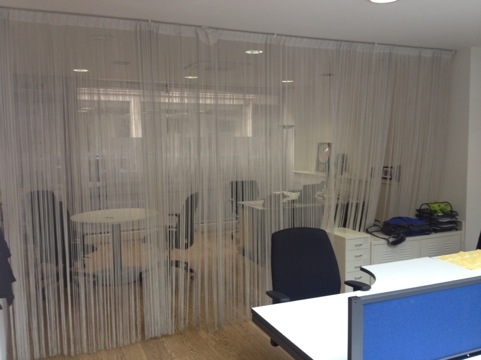
This Monday sees a new home for us all. We have enjoyed being part of the SMG team at Whitfield street but very excited about having our own office. It has been two years and 4 months of hard work that has taken us to this point and it feels like the time is right for expansion. I do need to get rid of the curtains though!

20120717-104512.jpg

The market is still moving fast with acquisitions and evolutions and indeed people moves. Interesting to see Damian Blackden move to Adnologies this week, showing that data and exchanges are still pulling the talent to them and we continue to meet with a myriad of tech companies all trying to carve out their space.

Business photography

A few photos from the last few weeks on the road! Instead of my usual stuff I thought I would let the pictures tell the story!

20120622-165714.jpg

20120622-165735.jpg

Damian Burns doing his usual top class client service, another Damian in the background being less professional.

20120622-165750.jpg

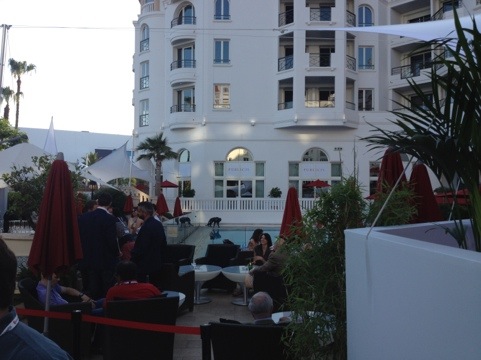
Mark Ronson at the Microsoft Party in Cannes – a very cool session

20120622-165811.jpg

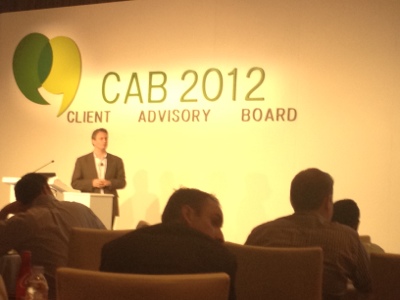
Neal Mohan of Google setting the scene at the start of the Client Advisory Board Meeting in LA

20120622-165839.jpg

An amazing view of the beach at Dana Point, a beautiful jog first thing

20120622-165907.jpg

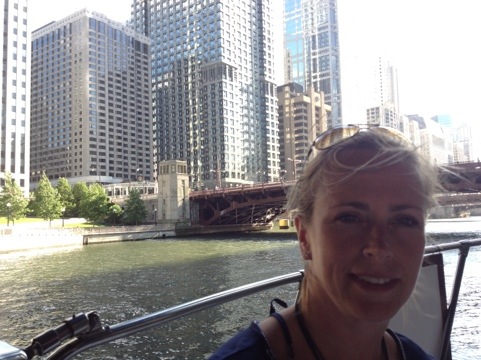
Tracey Scheppach of SMGx and VNC fame on the water in Chicago with HQ just behind

20120622-165917.jpg

Beatriz and Sara from Spain and Italy talking RTB (Not)

20120622-165934.jpg

20120622-165951.jpg

20120622-170003.jpg

20120622-170026.jpg

Google Client Advisory Board – frictionless web

20120606-145233.jpg

Take a look at the opening keynote from Neal here

The best analogy of the two days was from Neal Mohan who likened the web to the old style stack we would have at home in music and TV. We would layer on more and more pieces of tech, with music systems, game consoles, and more recently the likes of Apple TV and Google TV.

We work hard to make it all appear seamless and sometimes it all works but often it involves getting on your knees and digging around behind the TV to swap plugs and find wires, we all know that experience. The web has been like this generally with a constant stream of extra tech layers to integrate and ad serve and ultimately try and track.

Google have been guilty of this within their own ecosystem with Dart Search, DFA, google Analytics and more recently Invite and Terracent. They have been on quite a journey, the first part of that has been improving the individual products. Dart Search had a 50% dissatisfaction rate which is now down to sub 10% and you can see why. The system improvements have been significant.

20120606-150158.jpg

The next stage has been how they work together and this is the real win and the approach that feels like Google are tightening the noose on the competition. The fully integrated stack is something genuinely powerful and will be a big sales point. The inter connections between exchange trading, search, remarketing Ad creation and analytics are going to revolutionise how we buy in both search and exchanges. We are seeing a world where you still have ten devices on your Tv table and yet only one wire and it all just works.

These two days have shown a frictionless web, a world where one tag, one consumer is all we are working with avoiding the dedup issues and discrepancy issues and allowing us to build comms strategies around a true single view. Google have been challenged by the industry to improve and to some it may have come a little too slowly but I believe they have learned their lessons. The Invite 2.0 releases are an example of where they did not want to repeat a Doubleclick scenario.

The chance to discuss with the Product Managers all the new developments both in the sessions and in the bar make this a pretty unique session. Thanks to Google for the Invite.(excuse the pun)

Google Zeitgeist 2012 – my highlights

OK for those who clicked on the link looking for content here it is!

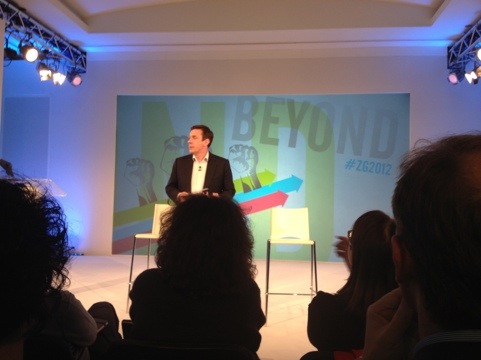
I genuinely don’t know where to start. Google Zeitgeist is simply the premier event on the Calendar bar none. It is a collection of amazing brains and characters (me excluded of course) and hugely influential businessmen, politicians and this year revolutionists!

We started with Politics and Niall Ferguson who painted very eloquently and fluently a view of the economic crisis we are in. He basically highlighted a few key issues about our current financial issues in the Eurozone. Click Here to watch

1. We have complete financial inter-dependencies but very few political

2. The politicians have chosen procrastination as a strategy

3. None of the major financial leaders have learnt from the crashes of the past

4. The Germans work the least of everyone in the Eurozone and are always on holiday

As an aside he was an amazing speaker and everyone in the crowd was raptured by what he had to say, but the end result of it was that we are in some trouble but at a point where we could move towards recovery but not without some decisive action and he fears that not enough of that is actually occurring.

Greece – George Papandreu – Ex Prime Minister of Greece

See the whole video here

http://www.youtube.com/watch?v=SW99H1uYP88&feature=relmfu

George was both positive about what Greece held and yet concerned about the mis-management of the country. I believe that he was overly positive about the mindset of the population when it comes to work, claiming Greece is the hardest working country in the Eurozone – ummm not so sure. I have Cypriot inlaws and they dont describe a country being run with sweat, blood and tears!

Sir Martin Sorrell had us all reconsidering everything we had just heard by saying that everything in life was cyclical and that we should basically ‘get over it and move on!’ He explained that the world had changed and that growth was no longer from the usual suspects and we had to look to RApple Russia and China with the example that Apple was selling 20% of its products to China.


Enough about politics – lets talk about the fact that 100 thick people working together is better than 100 clever people not working together! The afternoon was an amazing demonstration of clever people talking and inspiring you to think. Matt Ridley explained that to make a mouse we have thousand of people working together from the oil to the plastic to the factory and yet no one knows how to make a mouse, they know only their bit.

Dan Ariely talked about cheating and the complex inter relations between how we act and our moral code. They noted that people who had been asked to remember the ten commandments and then given a cheating experiment, almost no one did! Click here for the whole video however he explains that the world has a few big cheaters, many many little cheaters. He discovered that when people were given the opportunity to cheat for something one step removed from cash ie for a token you then change for a dollar, people were a lot more comfortable lying. He used the analogy of taking a pencil from work – you would take a pencil but would you take 50cents from the petty cash? Fascinating examples based around how we justify actions.

He was such a truly inspiring speaker – definitely watch the video on this one. The final suggestion is that we should confess regularly as it resets our moral compass!
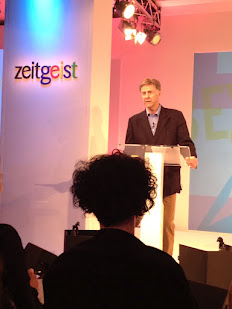
An Inspiring speaker

My favourite presentation of the whole event was Ranulph Fiennes, truly brilliant presentation that showed what a legend the man is, how he has overcome so many problems, health challenges and pushing his body to the extreme. Watch his video here, it is worth 20 minutes of your life. Click here to watch it. He showed incredible courage and tenacity and that age should not slow us down, he was about to head off on another expedition and deliver yet another record ( and beat the Norwegians!). The class line of the presentation was when he described them listening to the radio one minute a day and they heard that Britain had gone to war. When he asked his colleague with who – ‘Charlie replied – Oh I did not catch that – he goes on to say that in the following week when the radio refused to work they argued about who we could have gone to war with..’of course we assumed it was the French!’

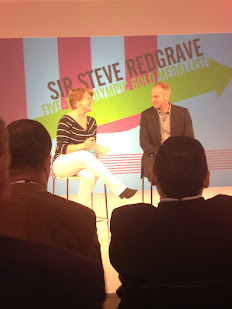
This is what I love about Zeitgeist the variety of thoughts and personalities. Steve Redgrave and his achievements or the man who ran 350 miles in one go or 50 marathons across 50 states, these people simply inspire.
That evening we all mingled and discussed the days events. Music from Paloma Faith, Maria Aragon and Ed Sheeran created a spectacular show for us all that evening.


The night ended with a small group in a back room at The Grove. It reminded me of The Breakfast Club as it became a very open and revealing emotional roller coaster of a conversation, I think we all felt that it was a very particular evening and I felt like I got to know a few people that much better than usual. That said it kept us up until 4am which was not ideal although par for the course!
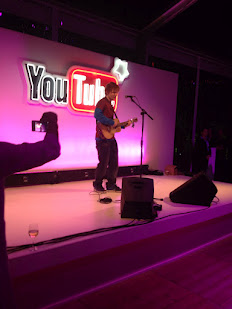
The second day started with a run along the canal, a beautiful and peaceful 30 minutes of sweating, dying and swearing not to drink again! The day contained some seriously interesting tech presentations, my favourite was from Boston technologies and their Big Dog. You want to see something pretty scary then watch this video. One of the lead scientists talked us through the work they are doing on robotic intelligence. Watch here.

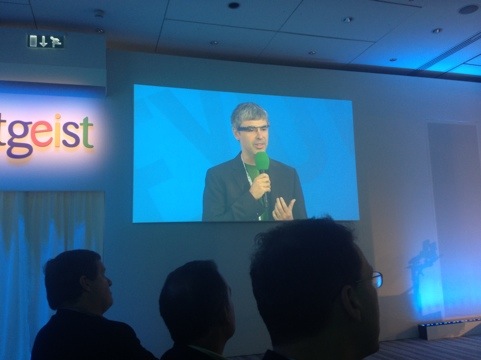
The incredible power of robots was a theme that afternoon with the leap forwards in medical robotic surgery being highlighted alongside the above. It does leave you wondering where this all leads, the Google self drive car, robots etc show us a society that is moving towards a world of cyber beings and I believe sooner than anyone thinks. As if we did not need more evidence then Google demonstrated their new Google Glasses where basically a simple device worn like glasses becomes your entire technical needs for photos, email, maps, etc. Larry kindly presented those for us!

Take a look at this video here.
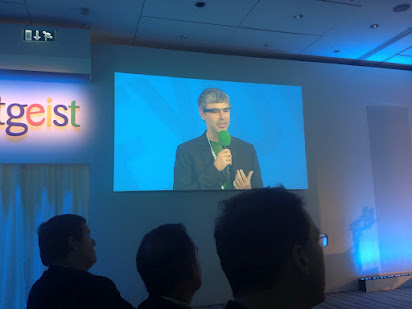
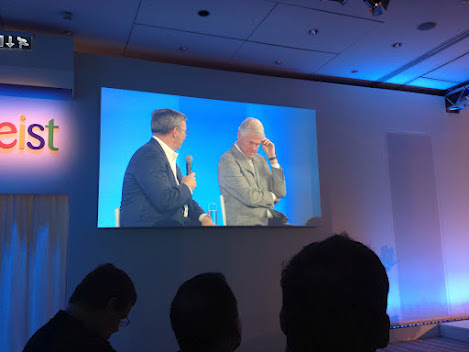
Larry talked about how he sees the world with Eric Schmidt and took questions from the audience. He is a hugely smart guy if not the all round entertainer when it comes to these stage events and so although very interesting I think we were really by now all waiting for the final act. Bill Clinton.
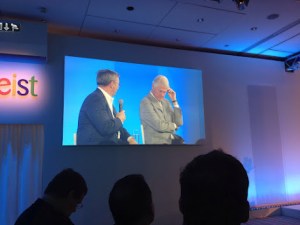
Bill came on and the first thing that struck me was how much older he was in the flesh or perhaps than I remember him, still tall and big but nt quite the force you might imagine. He started slowly, talking about his work and foundation in a very measured and thoughtful way but he started to wind up in the last ten minutes or so. You started to get glimpses of that steal and energy he was famous for and a passion that clearly is still there. It was an incredible stage, to have watched this man on television and then have him just a few feet away was a privilege and one only Google is able to deliver in this special annual event.

The whole event was as ever slick, well organised and inspiring. I thought this year it was more serious but it had depth and made you think hard about the world we live in, that is what made this one of the most interesting I have been to. The event is unsurpassed by anything else around and I am grateful to have been invited.

Creating change – it is not all plain sailing

20120531-152600.jpg

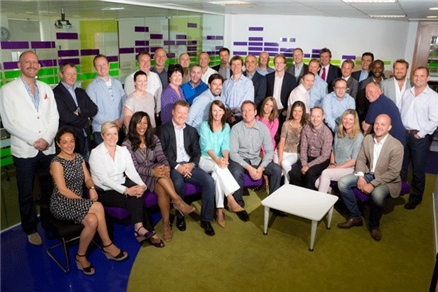
Two days in Chicago at the VivaKi Nerve Center Management meeting and one thing really struck me, that change even when it is really needed is pretty tough. Key to getting through it though is by having a plan and sticking to it. The VNC started in 2008 and we were laughed at, Curt Hecht who leaves us this month was there at the start and he recalled some of the comments at the time. That plan though has been sturdy and continues to be at the core of everything we do and it is resistant to country whims and individual blocks and that change we are bringing can not be stopped now.

VNC was a slow burn Internationally but in recent times things have accelerated rapidly. Over the last two days we have had people from the VNC from US to Australia and everywhere in between and each person was ringing the bell on the old models, it is time to step up and be prepared to change. Only two years ago we had VNC in US, UK, Dubai and Spain. Add to that now Italy, France, Germany, Australia, China, Russia and more to come, amazing growth.

Trouble with change is that it unsettles and some people don’t want it and are willing to slow things down and say ‘it’s not like that here’ and excuses to that effect. The encouraging thing though is that those people are becoming far and few between now and most people have started to embrace. I met recently with Maurice Levy and it was clear where he expects to see development, what areas should be moving faster and that is the biggest encouragement of all when it comes from the top.

Change your mind or change the people was a phrase mentioned by someone recently and I agree. I have always loved change, it is so exciting and creates so much opportunity so I assume everyone will but I am afraid that is not always the case. The VNC over the last two days has presented some amazing work and propositions and it is no wonder it has been copied by most of the other groups – whether it was market leading Partnerships, the worlds first and largest trading desk, driving innovation through The Pool, VNC has lead and shown the people laughing behind their hands that in fact it has become a blueprint.

The work we are doing with our agencies is moving so fast in many many markets and the ambition in the room has been palpable so expect to see more and more from this group over the coming weeks, months and years.

See you Chicago, it has been a pleasure (apart from your terrible airport).