We have reached a new level of self harm in digital measurement

ImageAh the Ads are on – cup of tea anyone?

Digital media will eat itself then be sick all down us. Viewability is the latest craze to hit those who must have historically worked offline with frustrated metrics and now want to take it out on digital. When I moved to digital in 2000 we beat our chest with just how much we could measure. We could measure every time an Ad was shown! Every time someone clicked on it! Every time someone bought something! On and on it went, glory times. Until we realised that just because we could measure it, it was not necessarily a good thing.

Digital tracking issues started with no reach and frequency metrics! Everyone has been scrabbling to replicate the TV world. I am often asked how we measure brand metrics – well we can look at certain key numbers like engagement etc but ultimately if you want to track brand engagement then measure it with a survey, just like you do on every TV campaign. As we have evolved so have our measurement approaches but we are entering a new era of self harm. Viewability.

I am not even going to get into the fact that the tech is ill tested and nascent and needs some really thorough analysis. Or that the measurement can be carried out by any number of different companies each with a different way of tracking, so no consistency whatsoever. No lets look at what we are doing to the industry vs the offline world.

Could someone explain to me how marketeers (and / or agencies) are starting to nail digital on something like viewability and yet TV and Press are sat laughing at our complete stupidity. The TV market has it sorted. They came up with a plan 40 years ago, they got everyone to buy into it. Ratings, indexes, context, reach, frequency and a brand survey. Nuff said everyone liked it, pretty simple – lets not dig too much further or upset the nice little market place we have going. Otherwise how can you explain that in digital there are people clamouring to only pay for viewable impressions when a multi billion pound TV marketplace trades off people leaving the room, making tea, talking, texting on Twitter when the Ads come on. Press? Lets not go there.

If we are not careful in this digital business of ours we are going to measure ourselves into the ground. In TV the metrics are broad and deliver against some key criteria that they plan against, the industry has made it simple for advertisers to spend money and not question the fact that a 20,000 person panel in the US powers $65b TV market . Viewability is a classic example where we are setting a bar so high vs the other the channels because we can. For those who are challenging the industry from an advertiser perspective – should then turn the spot light on their other media expenditures. I would ask that we take some time to establish some very clear guidelines and transitions and not go in like a bull in a china shop just so we can show off at the next pitch. Lets do things right, for the good of the industry, not just the next sell.

Is this the 2nd most successful paid for social network?

20120824-151426.jpg

In the last three weeks I have responded a couple of times to Tweets regarding social media. One was entitled ‘would you pay for social media’ and it got me thinking that when we talk about social we often forget Flickr. Then I see a tweet about the way most of the mobile Apps for Google+ and Facebook are evolving into a series of rich images to scroll through and again I think to myself what a whopping missed opportunity Flickr was and how a lack of foresight led it to be a photo repository for the average user.

Flickr has 50m registered users, pretty good but when compared with what it could have been! It was bought for $35m dollars in 2005 by Yahoo, it seems so cheap and in terms of what it could have been, a steal! I think the timing of the purchase was unfortunate with Yahoo in some of its biggest disarray in terms of position in market anbd future strategy as well as FB etc coming to town. Back then Flickr had a function to bring people together to ‘chat’ around subject matter photos – the equivalent of a ‘Hang-out’ at the time I guess. Basically what Flickr lacked was someone who could see the future and how social and sharing was going to be HUGE.

Would you pay for social media? I do every year when Flickr say to me that if I ever want to see my photos again I better pay up! That is one of the best social media payment models in the business no? Now of course I resent the ransom note every year but begrudgingly admit that they do a job, they hold this for me, allow me to share it, although their god awful privacy controls are difficult to fathom, normally when you want to send a single photo you send people everyone of your private photos!

I notice that Flickr has started to adapt, new interface, new controls and a far more user friendly interface, but they need to do more, they need to create an easy way to share, comment, bring in friends, let people announce things, set up environments for events and..oh is that not Facebook? I would like to see a ‘hang out approach’ on videos you want to share, invite them live and so on, the opportunities are endless and this is what makes me realise what a terribly, terribly big waste of an opportunity it has been thus far. It is however not too late in my mind.

There has been some debate about their revenues, conservative at $50m ranging upwards helped by Getty Images, Advertising on billions of impressions and other partnerships so it is a good business from the outside, I will be intrigued to see if the most successful pay-for-play-social-media-platform in the world can continue to adapt and grab the new opportunities before it is resigned to being a bloody good attempt at a social network from 2005.

‘The Motorola Dynatac 800x – The whole was far greater than the sum of its parts

An excellent guest blog from Danny Hopwood – Director of Product AOD UK on Exchangewire mobile evolution

In 2011, mobile saw spend reach $3.9 billion globally and 2012 is expected to hit $6.2 billion. “This is the year of mobile,” most will say. It is here – and I think everyone may have felt a little underwhelmed by it.

There hasn’t been a massive parade, no free USB sticks shaped like an iPhone, and certainly no trophy taking the shape of a gold encrusted Motorola Dynatac 8000x (made famous by Gordon Gekko) engraved with “we did it”. Furthermore, mobile spend didn’t overtake TV spend.

However we have seen HTML5 become more important and we have seen businesses built around mobile, ad networks open up mobile inventory, DSP’s for mobile specifically come into existence, such as Strike Ad, and VC investors say, “I need a mobile start-up – stat!” CB Insights confirmed that it has reported on 102 mobile VC deals in 2011, and within those, any company with a photo or video-focus saw up to 30% of those deals.

It’s been a pretty exciting few months. Technology continues to develop and proliferate, with the likes of NFC (Near Field Communication) and 5G testing. Adfonic’s second quarter AdMetrics report shows that iOS saw its market SOV decrease from 45% in Q1 to 34% in Q2, whilst Android’s share increased from 38% to 46% over the same period. UDID’s are no more on iOS, and it looks as though Apple will roll out their own tracking tool. Cookies probably won’t come to mobile in the way we imagine for Android, or other devices for that matter. Fingerprinting scares me, as there still seems to be no regulatory authority behind it and no one seems to want to step up to the plate. There have been a number of articles highlighting both the benefits and the concerns around device fingerprinting. If you’re not familiar with fingerprinting, it’s a process in which a user’s device settings are collated and then assigned a unique ID – much like a cookie – to use for tracking purposes. These settings can range from brightness settings to browser settings, time zone and fonts. It requires many more data points and therefore is not as easy for the consumer to opt out of. Until we see a regulatory company behind device fingerprinting I don’t believe it will get the seal of approval from the wider industry.

I feel mobile has a lot of potential, and I don’t think we have even scratched the surface yet. Currently mobile is simple, it’s certainly the way I speak about mobile within AOD. We keep it simple because it is.

I hear all sorts of industry “fixes” to solve areas of retargeting. For example, one solution making the rounds at the moment is to merge various different tracking systems like UDID and cookies (on available devices), fingerprinting, ad server log files and campaign data to give a nearly accurate view of a user across devices. This is an example of great innovation, but also potentially another layer of danger to privacy and it’s not reliable enough. What if UDID is removed from the rest of the platforms and cookies follow suit? The fixes don’t have enough longevity to provide reliability.

This highlights my qualms with mobile. Despite achieving a sustainable mobile market in terms of spend; we haven’t quite achieved what mobile is really capable of achieving. I say we, because I think it’s important everyone realises no one tech provider, or genius in a basement, is going to solve this for us.

Mobile, though, can be activated at scale, delivering performance and acting as extensions to your campaigns. We do have to be honest on its capabilities presently and stop trying to complicate it. If someone were to be dedicated enough to read five articles on mobile, it would become apparent very quickly that mobile is simple.
AOD was the first agency trading desk to launch mobile, and we see it working incredibly well, but I can see what else it could do if it had the component parts. I think there are four ways to solve these issues:

Formats
Formats are still pretty limited on RTB mobile for now (300×250, 320×50, 468×60, 728×90). Some vendors have more, but if you want scale you have to go for the lowest common denominator. They do the job, but I think they need to be able to do more. HTML5 will help to answer this, but I still see creative agencies sending over flash files hindering the adoption of HTML5.

Digital Creative Houses
On the topic of HTML5, I hope we see more companies like SOMO (Gareth Davies of SOMO recently wrote a piece on mobile), Sencha’s HTML5 tools, the IAB’s ORMMA and MRAID projects and Celtra. These companies will speed up HTML5 adoption and clients’ mobile understanding.

I can’t help but think that if a creative agency wanted to revolutionise themselves and start with a great initial footing in the market they would opt for HTML5 only; ensuring they spread the message to all clients, agencies and publishers of the benefits. It might be hard initially, but you could see the long-term benefits in being the first creative outfit to do it and commit to it.

Client/Advertiser Adoption
A more powerful and easier route of HTML5 adoption would be if it came from the clients themselves. They need to take the plunge, it’s not even a plunge it’s a big fluffy mattress of improved creative output, design flexibility, richer executions and easier implementation. You can still back it up with Flash, but a mobile creative in HTML5 is going to start to make this industry push the boundaries and innovate on what we have already done. I have seen this start to happen, and quite recently helped a client to holistically adopt HTML5 for all their online activity.

We Are Going to Have to Make This Market
Mobile advertising was supposed to provide a connection to that constant consumer companion. Many will say it does and that their technology can pin-point users to five metres away. I believe the only ones that can do this are the carriers within their respective countries. I’m not aware of carriers that have been doing this, but I hope they do. This is the “we” part of my earlier point. There are many stakeholders in this industry who all hold very important parts to the mobile market. These stakeholders take shape in advertisers, agencies, publishers, carriers and technology companies.

Each one of these stakeholders is trying to carve out their own piece of the pie. They have a right to as they got to the solution more quickly than others, but they only have the solution for their specialism. I don’t expect O2/Vodafone/T-Mobile to come up with a DSP. I expect them to find a solution to allow their carrier GPS signals to be used for geo-targeting, within another DSP in real time.

I also don’t expect publishers to make mobile inventory available at cheap prices through RTB. I expect them to make it a profitable revenue stream for themselves, but also to help rectify the issues with targeting that mobile currently has. They are in an advantageous position to help; they just need to start focusing on it. I am in no way belittling what innovation has already been accomplished by many publishers; I just know there is much more to be done.

On the tech side of industry, I think it’s a bit cloak and dagger. Platforms are everywhere and everyone can do everything – but we all know what is possible and what is achievable with the current state of technology and infrastructure. We need to demystify the market and start to talk honestly about what is and isn’t possible. My favourite example at the moment is geo-fencing. geo-fencing is only possible with a Wi-Fi connection, and even then, accuracy diminishes the further the device is from the Wi-Fi spot. To my knowledge, latest figures pinned Wi-Fi penetration at 73% of all UK households. Fantastic! It’s growing and it’s in the household, but what use is a Wi-Fi connection for local targeting to the mobile advertising market if someone is sitting at home on the internet? So when a vendor is asked if they can geo-fence, they will say “yes”, but they need to be honest that is based on Wi-Fi coverage that is household-based and not carrier networks.

We need this level of penetration on a street level while users are outside of their homes. Admittedly, the Olympics forced the UK’s hand, and the resultant underground Wi-Fi project at least begins to bring this to stations, but it’s still not street level.

Companies within our industry, and probably more outside of it, have these answers and these capabilities. We just need to start working together to join them up. O2/T-Mobile/Vodafone could open up their GPS signals to a DSP, publishers could pass more information on registration data or location in the bid request. We could remove the need for the cookie and fingerprinting all together on mobile!

It might be too much to expect from the mobile market, and I’ll admit I’m glossing over a few big questions around businesses, allowing their specialisms to become part of something else.

I am not ignoring areas like privacy or consumer consent, far from it; it’s only with agreement on what the potential of this market is, when all the components come together, that we can answer this subject.

The Motorola Dynatac 8000x had many components to it, but the whole was far greater than the sum of its parts. I think we could learn a lot from this logic. Motorola did, and launched the first commercial mobile. I believe that if we got our collective heads, and our businesses, together we could do the same for mobile, and have a gold encrusted Motorola Dynatac 8000x with “we did it” engraved on it.

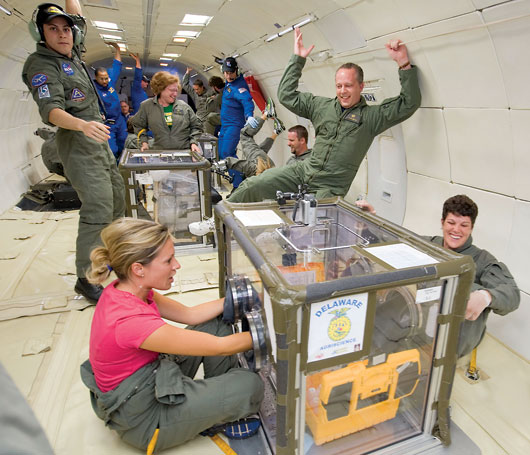
I only recruit from NASA – you?

Image

Well I say that, in actual fact I have recruited two people into the Head of Product roles from within our agency group, NASA did not really come into it, although I am sure some people would claim it! It is something I am asked all the time – where do you recruit from? What type of people should we hire? Will my Head of adserving do? 

One thing I am sure about is that I fear the return to the days of when search took off and they became a hugely overpaid, under experienced, high churn group of individuals, around 2005 it was a merry-go-round of people in the search teams with each agency ignoring their best search strategies and allowing us all to  bid up the price endlessly. It was partly this factor that led to search teams not being as efficient as they could have been since staff costs got out of hand. There is a danger of us returning to those days within the exchange space, but at the same time I believe we have more choice, on the basis you are a little more open minded.

As I said at the top a common question is what type of people do you employ, I struggle to answer that. Looking round the team we have people from adserving, mobile DSPs, agency, Data, and so on, so yes of course they all have some common DNA but that is not the key. Curiosity is the key, the desire to want to learn, to want to look under the bonnet and see what is happening and to do it all the time not once a month. Everyone in the team has that, and in my opinion that makes them different from the majority. Too many digital planner buyers have become a little too process driven and not inquisitive enough. They are not questioning the numbers, they are not trying to work out a different way, or challenge a target, too much is paper pushing and and that is why the new generation of people, as much tech as media are different BUT because you work with tech does not make you an immediate candidate.

When I interview I want to see passion and interest, I want to see a history of someone who likes the ecosystem and has been reading about it before they even got the job, I want them to know all about the space, without really knowing all about it because the one thing they lack is working experience. Come in and challenge us, come in and want to understand more. We don’t mind what your background is, just show us that you don’t just want a job in this new space because you think you should.

I have seen some really good candidates, often those who are actually working in competing trading desks, we have never employed one. Too many of them looked like they fell into it rather than wanted it.  So for those starting to recruit the interview recipe to grow a team is curiosity plus desire sprinkled with a big dollop of instinct (perhaps the key ingredient at the end of it all).

Audience One Demand is always happy to receive CVs and always on the look out if you want to fire them over.

Confessions of a ….@Digiday leave the National enquirer to do the gutter press

I read today’s confession of an Ad Tec Executive and it leaves me a little uncomfortable with this whole series. It is not the information that it hands over, I am sure some is correct, and I am sure some of the practices are true but there is a big but..who are these people?

Are they reputable, have they been offended by some one or something, were they any good? Let’s face it there are plenty of people who talk about things that you would not listen to and take seriously. I think it is a little gutter press and I think that is a shame, this is a trade site not a gossip site, not sure we need to have this kind of reporting. 

Every post I see from ‘anon’ is one to ignore in my opinion and so these whole pieces lack credibility. Brian covers some good stuff and agree with much of his approach but this stuff leaves me cold. I keep getting told I am too opinionated and get into trouble but I would rather that than these anon posts from people with axes to grind.

All change at The VivaKi Nerve Center

The one consistent in life is change (I think there is a more eloquent phrase) but it is true and I am excited to be in the heart of that change. Curt has been a great leader but everyone moves on at some point and our team is really strong and we are excited about VNC 2.0. Below is the release that went out yesterday, exciting times all around.

CHICAGO,  4/12/12 – VivaKi CEO Jack Klues today announced that Kurt Unkel has been named President of the VivaKi Nerve Center. Unkel assumes responsibilities from Curt Hecht, who moves to a new role at The Weather Channel. Unkel will report into Frank Voris, global chief financial officer for VivaKi. Rishad Tobaccowala, chief strategy and innovation officer of VivaKi, will serve as advisor to Unkel and the Nerve Center leadership.

Prior to assuming the role of president, Unkel had been EVP/general manager of Audience on Demand™ (AOD) – one of the Nerve Center’s fastest growing practices and largest revenue-drivers.  Today the practice services 350+ clients and manages over 15,000 daily campaigns across display, search, video, mobile and social.

Unkel has been a member of Publicis Groupe for more than a decade and among the Nerve Center’s first employees. Prior to joining the Nerve Center, Unkel created and led digital strategy, investment, analytics and ad operations teams across Publicis Groupe, with a special focus on General Motors (GM). Unkel resides in Detroit and will be based there.

“Curt Hecht has built a strong foundation for the VivaKi Nerve Center, and Kurt Unkel is just the right person to drive our vision forward,’ said Klues. “Kurt has shown great leadership in building and developing AOD from one of the first agency-led ad trading platforms with two clients and three employees to a world-class practice that has been replicated in markets all over the world, and leads the competition.”

“The Nerve Center is comprised of some of the sharpest minds in digital and tech,” said Publicis Groupe Chairman and CEO Maurice Lévy. “With Kurt at the helm, we look forward to more aggressively pursuing new opportunities in arenas such as data, mobile, social and technology.”

Unkel and the Nerve Center are supported by a seasoned leadership team, including Doug Kofoid, who is EVP of product development. Kofoid is an operations expert and co-author of several Nerve Center products, including AOD Social.  The Nerve Center will leverage his expertise more broadly across the globe in the coming months.

Sean Kegelman has been named EVP of partnerships, and will continue to lead global partnerships and create new opportunities with companies like Google, Microsoft, Yahoo, AOL, Facebook and others for the Nerve Center and the VivaKi agencies it supports.

Marco Bertozzi has been elevated to executive managing director of Nerve Center EMEA, focusing on continued expansion of the Nerve Center throughout the region.  Co-founder of The Pool, Tracey Scheppach will continue to explore engagement models of the future while serving as EVP/innovations director for VivaKi.

The Nerve Center leadership team also includes Pradeep Ananthapadmanabhan, who continues to serve as chief technology officer for the Nerve Center and Project Olympic; Ken Wiesman, who leads Finance and Barb Jobs, who continues to lead Talent.

The Nerve Center was formed in 2008 to provide tools, technology and offerings that give VivaKi agencies and their clients an edge when it comes to digital media and marketing solutions. The Nerve Center currently employees more than 250 employees worldwide, with a presence in  Australia, China, France, Germany, India, the Netherlands, Spain, United Arab Emirates, United Kingdom and the United States.