Rubicon 2nd Annual Agency Trading Desk / Adweek questionaire

The latest Adweek Europe – Rubicon 2nd Annual Trading Desk panel was preceded by a questionaire covering growth, strategy and the odd personal question! The panel showed again that there is no slowing in the programmatic business although everyone is approaching it slightly differently. The most extreme being Xaxis who have moved away from being an ATD and becoming more an Ad Network.Image

 

SEARS: What flavor ice cream best describes your management style?

BERTOZZI: Cookies and cream – you have to take the crunchy and the smooth.

SEARS: On average in the EMEA market — out of each $1.00 spent on media (all media, not just digital) by one of your advertisers, how much today is spent on automated or programmatic channels?

BERTOZZI: $0.04. Definitions of programmatic vary wildly so making comparisons between organizations can be difficult.

SEARS: What will this number be in 2015?

BERTOZZI: $0.08

SEARS: Describe how most media (all media, digital + non-digital, non-programmatic media) is bought and sold today.

BERTOZZI: Planning and buying is still largely a non-automated business in the context of digital exchange trading. All channels use technology to facilitate processes — DDS in TV as an example. The true interaction of buyer and seller through a tech platform is limited to Search, API work across Facebook, Twitter and LinkedIn, etc. and exchange trading.

Planning is still being driven by offline systems that set the picture to be interpreted online. The shift to programmatic means advertisers are creating portraits in real data that we can immediately execute across the digital ecosystem. The Data advertisers own online and CRM data, combined with publisher data and the tech to join them up will drive the next stage of data planning.

SEARS: Tell us the about the EMEA operations of VivaKi:

BERTOZZI: VivaKi is the global leader in digital advertising solutions working with Publicis Groupe agencies to help them and their clients navigate the evolving and chaotic media landscape. We focus on the three areas of Addressability, Dynamic Interaction and Data. Our EMEA operations span 17 markets and are delivered through a combination of people on the ground locally, supported by a central Activation Centre based in Amsterdam and regional leaders of our Platform and channels.

SEARS: Please tell us:

SEARS: Percentage increase, managed budget (media spend) 2013 vs. expected 2014 for EMEA:
o BERTOZZI: 70%

SEARS: How many employees are there in EMEA?
o BERTOZZI: We have a total of 90 people working across 17 markets in EMEA

SEARS: What countries are you entering in 2014?
o BERTOZZI: We realized very aggressive growth plans for 2013 launching two regional Activation Centers — firstly in Amsterdam to scale AOD across EMEA with the launch of an Activation Center in Singapore towards the end of 2013 to drive growth of AOD across Asia Pacific.

We have seen significant growth through the Activation Centers and have a number of further market launches lined up this year. In addition we are also planning to expand the number of markets across UAE through our Activation Center in Dubai.

SEARS: What are VivaKi AOD’s three biggest initiatives in EMEA for 2014?

BERTOZZI:

1. 2013 saw us implement aggressive global growth plans with rapid expansion across a number of markets and 2014 will see continued investment in developing these markets into programmatic leaders. Every market from London to Moscow is on a curve of programmatic sophistication and so we are running at different speeds across each of them. Education of agencies, publishers and shared knowledge through the AOD Platform helps everyone accelerate.

2. We are launching a major development of VivaKi Verified, our proprietary process that rigorously reviews all media, data and technology partners across client critical needs to ensure the highest level of brand safety, consumer privacy and client data protection. We will create our own Quality index across every one of our URLs and as an example will combine leading data suppliers in the area of viewability. This will continue to provide reassurance for advertisers as well as a whole new way of targeting campaigns day-to- day.

3. SkyScraper is our Groupe data warehousing proposition — a single data store with 95% of Publicis Groupe spend data, adserving data, DSP data and third party data. This is an infrastructure we have been working on for a number of years and will become very much front and centre of operations in 2014 as we continue to grow out data sophistication.

SEARS: By 2015, what percentage of total media spend in the EMEA region across your holding company will be programmatic?

BERTOZZI: We estimated at around $0.08.

SEARS: To reach a higher adoption of direct order automation and use of the programmatic channel, what are the major impediments to overcome?

BERTOZZI: I believe that there are many companies who are pushing for direct deals / programmatic premium or whatever the latest buzz word is. I actually don’t think things have moved forward much in 12 months. The idea of private market places has moved forward very fast and is a large part of what we do in AOD, but the idea of a single IO line item being delivered to a single media owner at a set CPM is less prevalent.

There still needs to be tech development and alignment. For example there have been a couple of occasions where AOD wanted to push a large block of spend across some premium publishers and we could not get the money away as the publishers were not ready to accept it. Part tech issues, part inventory.

SEARS: How are RFPs used between your operating agency clients and your trading desk? What does a “Programmatic IO” or a “Programmatic RFP” look like?

BERTOZZI: I think we are in danger of building this unique process and infrastructure around programmatic. We need to remember this is still planning and buying and ultimately starts with an advertiser and a brief. Initially briefs are focused on our clients’ challenge and it is our job to build out a strategy that answers that. The tools and techniques we use vary, real-time data instead of offline static data etc. but the goal is the same.

As we work with advertisers we work on deeper and deeper strategies that move away from a line item to a platform for their digital advertising. The sooner we do that, the better the results.

SEARS: What should top comScore publisher CROs do to build their direct order automation and programmatic selling with your trading desk and operating agencies?

BERTOZZI: First of all every publisher needs to break down their own siloes. It is vital that they set up their internal adservers to manage the sale of inventory to the best bidder, not carve off inventory to direct sales and then pump the rest out. We as buyers in programmatic should compete with their internal teams for the best of the best.

Publishers need to align inventory and creative product development with the programmatic space from the outset. Start to shape the business around it early in the planning cycle so the company slowly evolves over time.

Publishers need to know their data intimately; they need to value it so they can have discussions with a real stance on how they think they stack up versus the market and where possible have evidence to back it up.

Employ the right talent to be able to do all of this. There are still too many companies with the wrong balance of people calling the shots. Agency trading desks, independent trading desks and others are all tooling up in this space so if publishers don’t they will be at a disadvantage.

SEARS: Why is direct order automation so important? Is it important?

BERTOZZI: Being able to combine a Publisher’s first party data, with advertiser data across premium inventory is going to be very important for this business to evolve. Managing where and how spend is delivered has always been important to advertisers but I believe there is still a lot of hype in this space and mainly generated by those with the most to gain.

SEARS: What countries in the EMEA region are the leaders and laggards in programmatic?

BERTOZZI: There are no laggards; there are countries that live with different pressures to others and those that have a particular client base. We have seen the UK and France expand rapidly. This time last year we were all bemoaning Germany but we have seen considerable expansion there as well now.

We are expanding with new markets, all hungry to be part of the revolution which is very exciting, but in every market we have to take our time and move as fast as market conditions allow, all the time educating and demonstrating benefits.

Tell us a bit more about you:

SEARS: If you could choose a movie star to be the global head of your trading desk, who would you choose and why?

BERTOZZI: That’s easy. It would need to be a superhero. Let’s keep it simple and call it Superman. They have to fly around a lot, be able to resist the slings and arrows of the industry but never tire and want to change the world for the better! The X-ray vision would come in useful to see through the bullshit.

SEARS: If you could travel for pleasure anywhere in the world, to a place you have never been, where would you go?

BERTOZZI: There are too many places, but somewhere remote, with sea and mountains, and ideally somewhere without a connection so I can for once switch off from the emails!

SEARS: If you were trapped alone on a desert island and needed to choose one ad holding company CEO to accompany you ( other than your own holding company CEO), which CEO would you pick and why?

BERTOZZI: That would have to be John Wren, for rather obvious reasons!

SEARS: What is your favorite restaurant in the world?

BERTOZZI: It has to be the crazy, authentic restaurant in my home town of Cesena that I have been eating at all my life.

– See more at: http://www.mediabizbloggers.com/rubicon-project/Marco-Bertozzi-of-Publicis-VivaKi—-The-Jay-Sears-Interview.html#sthash.SeUTbeJa.dpuf

 

Ladbrokes – Stop thief!

It has been a while since a company has demonstrated behaviours that have left me both gobsmacked and fuming. Ladbrokes has just demonstrated itself as one of those companies that we should highlight at every conference on data privacy, and I sure will from now on.

So I opened a Ladbrokes account at some point with a plan to lose some money on the Grand National. It will not surprise anyone to know that I did not read any of the terms and conditions, lets face who does? In the past that has never bothered me until now.

So first thing that happens is that Ladbrokes email me to say that my account has been inactive and they are going to charge me for the fact I am not betting but it is still open. The email goes like this:

‘We recently wrote to you about an Administrative Fee which would be applied to your Ladbrokes account.

The Fee has now been taken from your account and was calculated as either £2 (or currency equivalent) or 5% of the balance on the date at which your account became inactive, whichever is greater. When calculating the charge, we have included balances from all wallets (including poker, casino etc). The Fee itself has been taken from the Sportsbook wallet and this may result in a negative balance if funds were held elsewhere.

If your account retains a total positive balance a further Fee will become due on the 1st day of every subsequent month.’

The first thing is the account is at zero and they still took the fee, so that is breaking their terms and conditions. Of course the obvious reaction is annoyance about the fact they are charging me for not using the account, but let’s say they have costs to maintain the infrastructure and we accept that. So I decide that I would like to close the account, that after all is what they are pressing me to do right? 

I write to their support services and ask to close my account. The response is as follows:

Dear Mr Bertozzi,
 
‘Thank you for your self exclusion request.
 
I can confirm that you have now been self excluded for 6 months. As you did not state a specific exclusion length, we have excluded you for the minimum period
 
You can extend your exclusion by any length, up to a maximum of 5 years, at any time. Simply reply to this email stating the length of time for which you wish to be excluded. Please note that 5 years is the maximum period we offer and we are unable to offer an indefinite period of exclusion. Please keep us updated regarding any changes to your contact details so we can continue to enforce this exclusion.
 
By entering into this self exclusion, you hereby release all companies from within the Ladbrokes group of companies, their officers and employees from any liability or claims whatsoever in the event that you fail to comply with this voluntary self exclusion scheme, including circumstances where you attempt to open and/or actually open a new account notwithstanding your self-exclusion, whether or not you have notified Ladbrokes you are self excluded.’
 
You what? Self exclude myself? No there seems to be a misunderstanding, I want to close my account, I want my data removed thanks a lot. I send a note to that effect. The response back from Ladbrokes is as follows:
 
‘Dear Mr Bertozzi,
Thank you for your e-mail regarding permanent account closure.
 
Unfortunately we do not offer permanent self exclusion the maximum that we offer is 5 years.
 
You can extend your exclusion by any length, up to a maximum of 5 years, at any time. Simply reply to this email stating the length of time for which you wish to be excluded. Please note that 5 years is the maximum period we offer and we are unable to offer an indefinite period of exclusion. Please keep us updated regarding any changes to your contact details so we can continue to enforce this exclusion.’
 

???? What? Now I feel totally violated. I can’t delete my details, I can’t remove myself from your database? I am totally shocked by this, in this climate of data invasion the idea that a major company is refusing to delete my details seems totally incongruous, even NSA is having to be more open and transparent about what data it collects and keeps. To me this is totally unacceptable and is what gives the data and online industry a bad name and has to be stopped. We hear all the time about how gambling advertisers have a less than above board to approach how and where they target consumers, but clearly it does not stop there.

 
I am not an expert on data privacy at this level, would welcome feedback from any experts on this, and please retweet my blog to raise as much exposure as possible on this issue. But this can’t be right?
 
I want my data back Ladbrokes. 

Benefits of the Unified stack, a byline for Google / Think Insights

Image

As the global leader in digital advertising solutions, VivaKi needs to stay on top of—or ahead of—digital marketing trends. New trends bring new tools, new techniques and new data that VivaKi can use to help its clients. The company’s integrated marketing platform provides it with a unified solution for cross-channel digital marketing, and Executive Managing Director Marco Bertozzi explains why that’s such a big deal for both company and client.

Display advertising has changed dramatically over the years. And with innovation comes complexity. There are more formats, channels and devices than ever before, providing almost countless ways for brands to connect with consumers. This level of opportunity is exciting but also daunting. Fragmentation is a huge issue. Advertisers and agencies need to figure out how to create, launch and manage integrated campaigns efficiently.

At VivaKi, one of the world’s largest media counsel and buying groups, we feel these challenges keenly. To help our clients find effective ways to access and leverage their customer data, we’re turning to technology platforms. But there are many questions we need to ask when evaluating them. Will it make us more efficient? Will it drive a better experience for the consumer? Will it provide more opportunities to reach that targeted customer? Will it deliver better results?

This is where a platform—a unified solution for digital marketing—can be extremely valuable. However, this is not to say that once you’ve committed to a platform, you can set it and forget it. Shifts in the industry will always necessitate adaptation. As your clients’ needs evolve, so does your quest to find the right tools. Recently, for example, this has increasingly involved the practice of retargeting—the idea of driving visitors back to your site with targeted messaging.

As an early adopter of an integrated platform, at scale, we’ve been quite pleased, and the benefits for our clients have been significant. Here I’ve detailed some of the major features we’ve come to value as well as some of the results our clients have experienced because of its implementation. In our case, the solution we’re describing is DoubleClick Digital Marketing.

Multi-channel support. We use the data from search campaigns and from social, display, video and mobile channels to power an extended dialogue with consumers, and this goes beyond using search ad performance to improve results. For example, in any given search campaign, you convert a percentage of leads, but the rest remain visitors who have not bought or done anything. On an integrated platform, reconnecting with these unfulfilled leads is easy because display and search campaigns are on the same platform.

Building brand response. Facebook, YouTube and the like provide a real opportunity for brand building, and we’re now able to seamlessly connect brand activity with lead generation. Consumers are very engaged on YouTube, and an integrated platform makes it possible to reconnect or continue the conversation with this highly engaged audience.

Insights from analytics. Imagine the range of actions people conduct on your site. If you dig into this data and gain understanding from the site analytics, you can then use this information to reconnect consumers. It allows you to turbo-charge the sophistication of your messaging, seamlessly aggregating insights to design creative that’s immediately applicable across the web. One size definitely does not fit all when it comes to campaigns, and advertisers now have the ability to adapt their creative strategy easily and quickly, using a single, unified platform.

Real-time response. The term “real time” is often overused, but it has a specific meaning when applied to the bid process and programmatic buying. Here, recency and frequency are key: The ability to deliver a tailored message to a consumer quickly after a site visit is vital to today’s campaigns. Our platform lets us schedule an ad to run within the first two hours after a site visit. We can incorporate an aggressive call to action, and we can set the frequency at high. The research window is often small—the time it takes a consumer to research car insurance plans online, for instance. That consumer might look at only five sites, with a strong intent to purchase, so it’s important to act quickly and efficiently. Using a single stack has allowed us to bring this to life, providing a new opportunity for advertisers to react fast.

Real-time data. “Real time” also has a specific meaning when applied to generating insights. Take conversion data, for instance; our platform removes the pain point of waiting to reconcile and mash up conversion reports to get a full view of our performance across channels. Because everything is happening on the same platform, we can make up-to-the-minute decisions using real-time conversion information.

Better workflow. Workflow is incredibly important, as is knowledge sharing among teams. The platform brings together so many different disciplines—search, display, mobile, analytics—all working together for a single purpose: the client. The process of using paid search signals and applying them to our bidding activity is seamless and immediate. There’s no cumbersome uploading and downloading to deal with or spreadsheets to manipulate. We now have a single user interface for all of our experts to work with and share across agency teams.

Increased performance. There is now a smarter, easier and faster way to make media-buying decisions. Results are what matters, and our integrated platform has provided us with many new ways to generate insights that drive results. For example, we’ve seen a better than 60% improvement in CPA across our travel and auto advertisers when they have incorporated their paid search signals into their display activity, using display remarketing from search ads. And when we used our stack for the U.K.’s first video retargeting campaign, we smashed all of our KPIs.

In this forever-changing landscape, a common mistake is assuming that merely implementing technology is the answer to everything. In reality, it’s the questions you ask of the technology that make the real difference. Asking the right questions—those that can make you more efficient and provide nuanced messaging for consumers and better results for clients—is a step in the right direction. For us, and many others, choosing an integrated platform that brings together all advertising activity was a good first step.


The professional corporate Twitterer – WTF are they?

I have been on Twitter for some time now and regularly suffer abuse for Tweeting too much by my best friends and colleagues who are still writing on chalk boards, but I am nothing compared to the professional corprorate Twitterers. You can spot them – they all have beautifully turned out glossy corporate photos. They all have a list of things they do as long as your arm normally including some of the following:

entrepneuer

motivator

Alchemist

Disruptor

Public speaker

The one thing they rarely have is any discernible job – company names often missing from their descriptions yet they always have huge amounts of followers, often well over 20K. I have noticed these guys over the last few years because they often follow me. I never follow them back as they usually churn out a range of corporate rubbish that can never be pinned down to any particular sector and are most obviously sent by robots rather than humans. 

After a period of time – I am unfollowed. ALWAYS. The reason is not because my tweets are equally dull (some may disagree) but because I did not follow them and so you are culled. I understand that I guess but who is following them? What are they getting from them and more importantly who are they? How do they get to tens of thousands of followers?

Here are just three gems who have unfollowed me in the last few days. If you have some equally mad corporate twitterers then try and engage them in banter – its not that successful. I think we should start a cull of these strange creatures – if you are one and reading this by all means tell us more!

– New media alchemist & big data forager. Synthesizing, optimizing, analyzing social-mobile-local. AdTech Geek, Foodie, Dog Lover, Music Maker.

– ProfessionalEncourager,#BoomerMomBrandAdvocate,ChristianBloggerSurvivor  #SMGirlfriends#Slumberparty

– Rocket Scientist Re-Engineering Healthcare, Former Aerospace/Defense Exec, Notre Dame PhD, X Tech Ventures CEO, Futurist,

Advertisers need to press the reset button on digital

Agency Trading Desks. Independent trading desks. RTB Networks. Data networks. Managed service Desks. We have significantly added to the ecosystem in the last few years and on balance for the better I think. Of course there are concerns about transparency and who is doing what and the advertiser is being taken for a ride so on, but in totality we now see a more sophisticated digital ecosystem than three years ago which is a good thing.

However with that comes a need for everyone to refocus. There is a whole auditing, pitch consultant business, advertiser organisation business that is focused on Agency Trading Desks. I think part of the issue around Agency Trading Desks is that they are all different. Some are an extension of the agency, some are more akin to a department within an agency, some are out there in the extreme like Xaxis that has changed so significantly that it really no longer sits in the bracket at all and everything in between.

So when it comes to pitches, auditors, advertiser evaluations of the space they obsess with agency trading desks but not the wider market. My business and that of a company like Rocketfuel or Criteo or Quantcast are the same, we do the same. Plenty of people will argue the good and bad of both including me but for now put that aside, fundamentally we are the same, we cook with the same ingredients – the end plate of food looks and tastes different but we do the same. For that reason we compete with these companies, spend that we could argue should go to us goes to those companies and independent trade desks. So for me, we should all be judged the same by advertisers. The same rules should apply, if those rules are based on genuine concerns of an advertiser about their media investments then why would they not?

So why don’t we start with what is asked of us? What do the agencies and advertisers want of us? Lets run through a few:

  • They want to see results line by line with associated cpms, cpc etc
  • They want brand safety – clear controls as to what we are buying
  • They want to know what tech we use and why – and how much does it cost?
  • They don’t want us to create large margins behind set cpas and cpcs etc
  • They want auditing rights on activity
  • They want private marketplaces and innovation with partners
  • They want detailed costs breakdowns

Those are just a selection. Articles in the past have commented on how the ATD is not held accountable but that is a falsehood. The pitch process would argue differently as well as regular reviews with advertisers that question in detail all of these areas, we are constantly evaluated on one level or another including our toughest challengers, the agencies we work with, and rightly so.

Trouble is on any plan spend is going not just to us, but to many of those companies mentioned above and many more in display, video and mobile. These companies are not held to the same standards and I think this should be investigated further. If a guidance paper for instance gets released to advertisers on ATDs, I can guarantee it will ask all those questions above (and more) but why just to ATDs? Any such guidance and evaluations now have to be extended to a wider group of companies and end the double standards.

I sat with a large group of advertisers and time and time again the issue of brand safety was raised. One of the core tenants of AOD is protection, and that is for a good reason, we are advertiser / agency focused, we know what they expect. So why would an advertiser invest in a company that provided no transparency at all? An ad appearing next to inappropriate content is still inappropriate regardless of how it got there. Blind buys should not be acceptable to any major advertiser. Why if you are concerned about how much money AOD makes do you not care about the 50-60% margins being reported in the company accounts of some of the other companies? I could go on but my point is that we cannot attach the ATD to the agency, but rather attach the RTB/programmatic industry to the standards of the agencies and ATDs, at least those like AOD. So I hope to see from the various trade bodies and the like a stance that widens the net of companies that it recommends should be evaluated in this new exciting programmatic world we live in, and avoid people having too much cake and eating it.

Mobile in 2014 – My contribution to The Drum

Image

The full article can be found here.

My contribution focused my view that the disparity between mobile spend and mobile usage is down to the fact that consumers see the mobile as something that makes life easier and advertisers see the mobile channel (wrongly in my view) as not adding much and being very complex.

‘We are all desperate for mobile RTB to be the big winner this year. Mobile spend is on the up, but it is still vastly out of sync with usage and there is a reason for that. The user sees the mobile as a device that makes their life easier, it adds value and is useful. The advertisers see mobile advertising as complex, black box and adding little value. Until we can close that gap we will continue to see mobile drag its feet. Most people like to quote tracking and reporting as the issues, I am not sure it is. Those barriers are being overcome and since the idea of fingerprinting seems to have become acceptable now in all its different forms there is a lot of scope for progress.

As the big players such as Facebook, Google, Microsoft and Twitter start playing seriously in mobile RTB, using persistent identity to join up screens we will see a lot of growth easily delivered. The problem in mobile is that there are so many companies who in the main all do the same up to the last 10 per cent where they each have a USP. That means we have far too many companies knocking on the door, telling tales about each other and leaving advertisers cold. If we can improve on all these areas then we will see growth and 2014 will no doubt be a good year for many and a definitive improvement on previous years.’

The one gadget that won’t fit in your pocket: The Car

This was first published on M and M global  – Link hereImage

CES was dominated this year by a few core themes: the Internet of Things, the Internet of Everything, connected consumers, connected homes, curved screens and wearable tech were all very dominant on the show floor. Amongst all of this noise and buzz I sensed that people were left a little perplexed as to what to focus on, how it would impact them and how overwhelming the issue of data collection and management is for the average person. The slew of apps to download, data to interrogate and the wealth of choices left many bewildered and without clear direction.

The one area of real innovation that stood out for me, with a clear application to our day-to-day life was the development in the automotive area. The connected home moved to the connected car, but more than that, to the green, eco-friendly, self-driving connected and communicative car. The car stands at CES showed us that the future is really here now. It has crept up on us quietly but with great efficacy – even now as I watch a TV Ad demonstrating how a car can park itself, I feel like I am watching Blade runner many years ago, and yet this is reality.

The car is becoming connected through a number of different routes. One of which is the collaboration between car manufacturers with the likes of Apple, Android and Microsoft systems to link your out of car life with your in car life. The approaches between operating systems do differ – Android is powering an in car brain, whereas Apple is using the iPhone as the source of connectivity whereby the car is not connected until your iPhone is plugged in. The battle of the operating systems is like a classic western bar brawl where the fight started in the bar and spilled out onto the street. Apple and Android have of course gone toe-to-toe in the handset space but now the car is the next frontier, and what a huge battle it will be. Android seem to have aligned with Audi right now whilst Apple are in with Honda, Mercedes and Volvo, amongst others.

What can we expect from the connected car? Well first there are all the usual Apps you would imagine, the likes of Twitter and Facebook etc. will all be there, subject to a number of legislation tests to ensure safety, but the really interesting stuff comes from being able to control the car externally and the areas of navigation and communication. Imagine the following scenario – you’re lying in bed on a cold winter’s morning and as you get ready you start your car from the comfort and warmth of your house using an App and make sure the heating is on and the windows defrosted. As you eat breakfast you click on your calendar appointment and open directions for your meeting which you then fire through to your car. The car now has control – the route is planned, the estimated time taken care of and all information to make the journey as seamless as possible is plugged in. Once in the car your journey will be monitored, if there’s a delay the car can e-mail the meeting organiser directly updating them and letting them know when to expect you. Once you are close to your destination the car can search for parking spaces and will guide you straight in with the final twist being the car parking itself and paying for the ticket through a connected link to city parking. You get the idea.

There will be a crazy amount of new apps and software coming out over the coming months and years but my sense is most of them will be additive to our lives, rather than for the sake of it. Travelling to a new city will be transformed by advice, ideas and recommendations for where to go and how to get there. It will be intelligent though, not the user searching, rather the car making suggestions based on your previous preferences and habits. With super accurate GPS you will have micro information piped through to the driver.

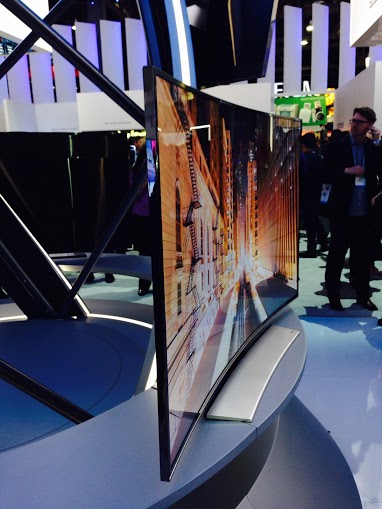
This is what really stood out to me. While TV manufacturers have been creating 80 inch curved TV screens that only one person can watch whilst ideally sitting about two feet away, the automotive business has been creating useful opportunities that will enhance our lives.

We have all heard about the Google self-driving car, it has made a lot of noise over the last few years, but at CES up popped Audi with a self-driving car that was legal in Vegas, as long as it drove itself under the 40mph speed limit. It’s incredible that this has stayed under wraps. Google are themselves testing in Nevada, so soon the Vegas strip will have a number of cars with red number plates (the sign of a self-driving car) cruising up and down. The reality of a truly self-driving car world is still not here but it is accelerating rapidly (excuse the pun) and the idea is to not just create a ‘get home drunk’ vehicle. There are lots of inherent safety features built in to avoid accidents. When everything is automated, what does happen if you fall asleep at the wheel? If the driver doesn’t wake up after a loud buzzer sounds the car will stop, call the police and put the hazard warning lights on. The manufactures have even built in a system to allow the driver an option to avoid red lights as the car is plugged into the city traffic light infrastructure. The trouble is the car will adjust its speed accordingly to help you do this and I am not sure I would be comfortable crawling at 15mph just so I am timed to avoid a red light. It’s a nice idea but it’s up there with the curved TVs in my opinion.

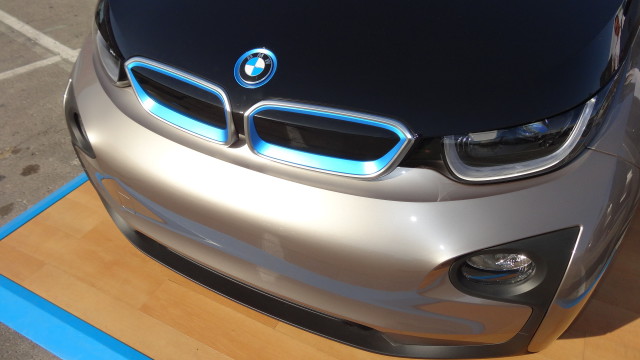
The final element of note from the show floor was the fact that electric is becoming cool. The BMW i3 was a show stopper for many, as well as a Formula One car that could reach 150mph and 0-60 in 3 sec with no accompanying sound. Of course the Tesla is the poster child of eco- friendly travel and even Range Rover are entering the hybrid marketplace. The range of battery power is increasing and combined with technology, as exemplified in the BMW, that constantly evaluates your range and distance to your nearest charging point all ensures you won’t find yourself stranded. I am not sure when it happened but electric seems to have flipped from very uncool to the leading edge of innovation in automotive, all the while being enhanced with better technology lending a supporting arm between engine and driver.

So when you consider what your favourite gadget is, you may in the future find yourself pointing out the window to the car parked outside. We all spend too much time in cars, too many people die as a result of car accidents, so this technology and innovation is really making a difference to our lives and for me that made it all stand out as incredibly valuable in a CES show dominated by connected fridges and curved TVs.

CES : My review of the 2014 show – Just because you can, does not mean you should


This article was first published on The Drum link here

Image


The annual pilgramage to CES this year created quite an impression. The big themes were relentless connectivity and tracking, the concept of the Internet of Everything from Cisco, basically the intersection of humans, objects and technology and finally wearable technology.

These themes provided us with huge opportunity and some not inconsiderable challenges as humans, businesses and marketeers. This year felt a little like companies were connecting things just because they could; objects were transmitting data, even though they did not know what to do with it. As a marketeer you were left scratching your head, knowing that somewhere in all this incredible innovation there was opportunity, but just did not know where to start.

Even as a self proclaimed tech enthusiast I was still overwhelmed by the range of companies that want you to invest from both a money and time perspective in their ecosystems. Although the end result could sometimes be fantastic, such as the house you could entirely control from your phone, the lack of cross system interoperability leaves you wondering if we will be able to cope with the plethora of apps needed to manage all this and whether it will be safe, especially as regards the connected home.

So all that said, I wanted to have a look at some of those big themes and try to eek out the challenges and opportunities for us all whether as a connected consumer or a business trying to benefit from it.

Technology designed for simplicity, creating complexity
CES looks to the future, identifies innovation and on that basis we should embrace all it has to offer us. At the same time it leaves the head spinning, trying to understand how to manage the plethora of ecosystems. Even as things stand we are all coping with the battle of the operating systems, more and more we are being encouraged to package our lives into Apple,Android or Microsoft. Just looking at the art of watching TV we are provided endless choice on how and where to watch content. Roku, Netflix, smart TVs, Apple TV, Chromecast and on and on, but after a few days here you realise that there is more to come, a lot more.

The connected home has allowed companies such as LG, Samsung, ADT, DISH and others to offer the ability to hook up your whole house all the devices talking together. The problem is none of these systems are talking to each other, they are building closed systems. Yes it is incredibly clever but this has to work for us and has to have an element of open source wiring so we can consolidate different streams of data and functionality. Interestingly, companies such as Cisco and Intel may hold the key as they create smaller, faster chips that can go in multiple devices they may help us join the dots a little and perhaps find ways of at least consolidating data into a single dashboard. Apart from complexity of devices and systems there is also a cost perspective, how many different 200 pound devices and systems can we sustain?

Just because you can does not always mean you should. It feels at CES that the technology is coming first and the consumer second in some regards. Let’s take the amazing 4K televisions with this year’s big twist – the introduction of curved screens. People were left a little cold by curved sceens, an innovation that lacked a real consumer demand and required a change in our approach to viewing. The suggestion from excitable sales people was that even on an 80-inch TV you need to sit close to it to enjoy it. That fails on a number of levels – not least big TVs go in big rooms and you dont want to be crowded around a TV like you are warming yourself around a fire. Secondly, I don’t want my kids sat on top of a massive screen. The other relatively important area is that none of the broadcasters have any content that is delivered in 4k. Instead of enhancing, sometimes the viewing experience is diminished – even on good old HD we still don’t have all content delivered in this fashion, so pretty as they were, I would not rush out and buy one.

Similarly with features such as iBeacon from Apple – the idea that you can be fired messages from retailers and merchants as you browse stores sounds great but first you have to download an app from that retailer to be able to receive the messages. I for one do not want 50 Apps on my phone dedicated to retailers, as well as one for the Samsung fridge, cooker, the one for my BMW i3 outside and another for my ADT home security set up. Some how we need to link this together and make it user friendly and applicable.

We need guardians of our data
Data is a word that comes with a very wide remit, but one thing is for sure, we are creating it at a horrifying rate. Wearable technology, the smart home, the Internet of Everything, means this is both a positive and a negative for us all to consider. Imagine sensors on your body or clothes sending data to your health provider, your home consumption data being linked directly to retail stores, home utilities controlling themselves based on weather data, traffic data giving you immediate ways to avoid the latest gridlock. The opportunities are endless. Individuals become nodes on the internet transmitting data constantly to the internet. Much as we focus on the devices, let’s not forget we are being tracked. We will be tracked in every way possible and we have to make our peace with that.

The best example of this was ‘Mother’, an object that sits at home and comes with many small sensors called cookies. You place these cookies anywhere you want to understand what is happening around your home – how often and long are you brushing your teeth, footfall through the door, how much coffee are you drinking… the list is endless. Those cookies then relay all this data back to Mother for you to analyse it. As with many things at CES, there seems to be a lack of clarity on exactly how this will all help, tracking for tracking sake. But at the end what we are doing is passing incredible amounts of data to third party companies. This data is becoming ever more intimate and needs to be carefully controlled. The most important area is the ability to decide what happens to that data – many of the devices do not allow you the opportunity to influence what is happening with it as it gets passed to the company servers. One commentator at CES also pointed out the fact that even among family members or flatmates there should be the ability to have more ownership of your information and set it apart from that of others in the family or home, again something not possible right now.

As with all Wi-Fi data services the final consideration is the ability of hackers and tech thieves to access sensitive data from your life, or indeed in the case of the connected home, be able to easily hack into your ecosystem. These are all solvable issues and should in no way slow progress but as individuals we need to take control and encourage these companies we are entrusting our lives with to help us do that.

Marketing will become evermore native
As I toured the conference floor and we explored all these opportunities I was with a number of advertisers who were expressing their clear concern about how this was going to impact them. We already talk a lot about story telling and content. The proliferation of personal devices and tracking technologies means that each one of these companies – whether it is LG, BMW, Samsung – are all going to want to create their own ways of allowing advertisers to engage with people.

Native advertising is a hot topic but will become increasingly relevant, bringing complexity to marketing and advertising as they have to work across a multitude of different ecosystems and platforms. We already mentioned the iBeacon technology; how will BMW or Audi want to deliver messaging in car to their passengers? The upside for large advertisers is that the more forward thinking may have an opportunity to work directly with tech partners higher up the food chain and scope how they can be integrated closely into this development. But all that requires time, people, cost and the old methods of advertising will become evermore distant, increasing pressure on wholesale reinvention.

The tight rope they will need to walk will be avoiding too much disruption or even intrusion in the consumer’s experience. Tempting as it will be to use the incredible amounts of data available, people will be wary of that and given the intimacy of some of this data will expect it to be treated with respect.

CES is not about advertising but we are reaching a crossroads where marketing and technology will need to work closely together. It currently resides a firm second to technological advancement from a utilitarian perspective. It does however promise much for marketeers as long as they realise more than ever they will need to deliver value. Value can come in many guises, but if you want me to download your app then I need something for that because there will be significant competition.

Mobility technology reaches the car
The big standout this year was the rise of technology in the car. A flurry of launches at CES shows that this event is becoming very popular for car manufacturuers. There seems to be two directions manufacturers are moving in: the open platform based on Android or Apple where your car and phones are linked or proprietory technologies in the cars such as Audi that will turn your car into an intelligent hub. The car becomes the brain, it is able to make decisions based on commands and external data. As an example you could look up directions in the house and send them to the car, the car automatically plots that route using latest data and finds you an optimum route. Perhaps you are heading to a meeting and the car realises you are going to be late so it emails your meeting organiser with your current telemetry showing where you are and how far to go with an ETA.

Since your journey will now be forever linked to the wider net, showing you relevant ads, perhaps for the next coffee house, petrol station or relevant shops to you based on previous journeys will be common place. Cars will also become social – with linkages between you and your friends as we see with recommendations – if you travel to a new town for example your friends recommendations can be presented to you – or even their route for getting there. The opportunities are endless and we will see the car completing the triangle between you, your home and your car.

The final frontier is of course the self-driving car. All we have seen in this space has been the Google work but then up pops Audi and explains they have a self driving car up to 40mph, legal in Nevada. When did that happen? Well it has and even more than that it can find you a parking space, park it for you and if you want you can programme it to avoid red lights by adjusting its speed based on the traffic light data base that it has connected. As we mentioned earlier though that comes with limitations, not least you may find yourself driving very slowly as it seeks to avoid the next red light. I would suggest this is not for driving fans.

Some of this connectivity will be useful though as you can start your car from the comfort of your own home and in winter make sure the windows are defrosted and the seats nice and warm as well as wider beenfits, I can see that being a winner for sure and with some clear upsides for advertisers.

An incredible array of innovation, fantastic product explosion, and an inevitable and unstoppable march towards the Internet of Everything. As marketeers we will have to develop an incredibly open mind to reaching consumers. We will look to these companies to be guardians of our data using the highest level of integrity. As humans we are going to be linked inexoribly to the cloud and as Cisco say ‘be nodes’ of the Internet through our connected homes, cars and objects. There is so much to work out, but the future is exciting and we should embrace it.