A short presentation at the end of last year discussing the merits of RTB in the video space. Its a slightly poorly lit video but you will get the idea! Covers RTB in video, discussion on pricing, optimisation and what we need to do to simplify the ecosystem.
Uncategorized
2013 – A year in review – BertozziBytesize

2013 passed in a blur, the way the industry was evolving and our own business here at VivaKi meant we saw a frenetic pace from start to finish. It seems a world away that VivaKi restructured to be more out facing to the wider Groupe, the question marks on how we would survive and adapt answered by the end of 2013 and the future opportunity laying itself out ahead of us into 2014 is a positive one.
VivaKi now works with more agencies than ever in the Groupe and we have pulled together representatives from all media and creative agencies to work on our Ventures team, our focus as a product, data and services team in Publicis is really bearing fruit now with the incredible data warehousing solution of SkySkraper and the AOD platform now working with all the VivaKi Verified DSPs being accessible to all. The VivaKi data story has evolved at an incredible pace and having road tested on some of the world’s largest advertisers I know we are on to a good thing.
On a personal note the combination of new business, new markets, AOD growth generally and VivaKi representation at some of the major events from Istanbul to Google’s CAB in San Francisco meant that the days remained full to the brim. Just how I like it. The range of events this year has been more varied, I somehow ended up missing the main programmatic season in September but it was great presenting at both Client Advisory Board events for Google, OMMA RTB event, more recently the Future of TV event and a really enjoyable session at Marketing Society in Ireland amongst others. The programmatic bug reached Istanbul at Webit where we talked RTB at their big event as well as a few London sessions and a turn at Festival of Media. As well as industry events we held publisher days in Amsterdam, Milan, Istanbul, Madrid. The pace of change amongst publishers in RTB is significant across the region and these events are important to keep up good dialogue.


As the year progressed I think the most enjoyable trend was one of growth into more creative ways of using programmatic. Audience On Demand spend has leapt forward on the back of brand advertisers moving into the space and seeing the opportunity. Larger formats, the ability to combine data, viewability and fantastic inventory across all channels has opened up a massive opportunity for everyone. Brand advertisers can now see the benefits and are getting behind it, it is so great to see.
VivaKi and Audience On Demand launched three global Activation Centers in Amsterdam, Singapore and Dubai, creating a new way of providing first class product and service to our major advertisers. The Activation Center in Amsterdam now carries campaigns from 10 markets, that is from something we set up in May! The world is adjusting and I am proud of this particular development because we have not just done what we always do, we rewrote the rules and it’s working.
The press has been in overdrive with stories of clients doing everything themselves, taking it in house etc. It has been the busiest I have ever known it. I am sure those themes will continue on into 2014 and we will see some companies either try and do something themselves or use there parties like DSPs to support. People will experiment, as far as I am concerned Audience On a Demand need to have an offering we believe in, we want to work closely with publisher partners and agency partners and then the rest will play out. The scope of what we are building gives me a lot of confidence that we can show advertisers all the reasons they need to work with us. Part of that is transparency and again I am sure there will be more on that. My understanding is that ISBA will be doing more in this space which is great.
The incredible pace of IPOs and sales in 2013 has been mind boggling, lots of the big names have taken the plunge and so I imagine we will continue to see a lot of press and growth from them as they justify their business models, the 60+% margins now all on show in accounts helps to demonstrate how they are running versus our own offerings when talking with advertisers,
Especially those who continue to offer blind, flat cpc, cpm offerings. Finally I think more advertisers are understanding the market now so I hope to see some rules often applied to trading desks, at least AOD anyway, being applied to these companies. That can only be a good thing.
Apparently 2014 is going to be the year that advertisers only pay for Ads that are watched or seen. This is a great step forward, I hope this applies to newspapers and TV and outdoor? I assume it will be since that would be unfair advantage! Perhaps that explains the total imbalance of pounds spent on newspapers vs their share of consumption? I am all for viewability, let’s just agree how and what because we have the answer to why. Many different providers, tech companies, more pivoting than the Royal Ballet makes life complicated for everyone, we need to see a concerted effort to try and create some standards. Talking of standards the Digital Trading Standards Group sprang back to life at the latter end of 2013 which I hope is a good thing. I have been involved for many months and it all appeared to be getting a little out of hand, some common sense and reason has returned to make it something palatable for most so I expect to be seeing and hearing more in 2014. In the same vain ISBA wants to work with some parties to evaluate the whole trading desk area. If they lead then we are happy with that, one thing that will be questioned strongly will be the involvement of an auditor and a main competitor to the trade desks as advisors, that’s not an ideal scenario and should really not involve anyone with skin in the game. That’s for 2014 I guess, it will go on the list of challenges!
All in all though 2013 was a fantastic year, the VivaKi, AOD teams have grown in size and strength and we are working with more advertisers than ever and seen 100%+ growth. I am personally excited to be working closely with markets like Turkey and Eastern European markets that are on a steep trajectory. The leaders of VivaKi across EMEA are shaping the market and doing a fantastic job which gives us great strength and depth.
We enter 2014 with an early flight to CES, the largest most diverse and tech driven conference of the year. VivaKi as ever will be leading their VivaKi Bright Lights agenda, and all of our partners will descend for a 24/7 packed few days. As we move through the year I am sure the POG agenda will accelerate and I think that will be incredibly exciting and I am so pleased to be working through such a mammoth event, a landmark in advertising and media history. It will create opportunity, buzz and of course the world’s largest advertising and media business! I am looking forward to VivaKi involvement throughout.
What else will the year hold for us all?
Less buzz more substance
Transparency debate affecting Independant RTB networks more strictly
Mobile growth on the back of equalisation of all the point solution offerings
RTB becoming all media not just performance with most brand opportunities such as homepage takeovers etcetera becoming the norm
It’s been another amazing year in digital. Thanks to all the VivaKi teams, thanks to all our partners, and basically all the great people we work with across the business. Our agency brands have been incredible as ever at ZenithOptimedia, SMG, LBi, Razorfish and we are really looking forward to 2014.
The T Word @mediatel
What a funny world we live in when representatives from the trade press and trade bodies are happily chirping away at the dastardly trade desks. We are not transparent, we are sitting on hoards of gold, laughing into our hands at the lack of interest that advertisers are showing us. It is a money making extravaganza.
The first thing I would say is those same people were quite happy when their advertisers were throwing good money after bad at media companies with not the slightest inkling about where the money was going or how. No results, no insights, no controls on frequency, absolutely zero brand safety right up to advertising on illegal sites. Oh that’s fine because those companies delivering the Ads are not in an agency group. Even today there is a major RTB Ad Net that revealed in its financials that it makes over 60% margin..is that OK advertisers? Same people, same budgets – totally blind by the way.
Let me explain what we (we being AOD as not everyone is the same) have done, us terrible evil operators – we have brought transparency. Our advertisers know what is media and what is not. We have been stringent in brand safety terms with our VivaKi Verfied process so advertisers can make sure they are not being exposed to bad content. We have frequency controls so that the advertiser does not show their Ad 50 times and thus waste money. Our commercials mean that we are dedicated to finding the right user not managing an arbitrage or variable margin, everything we do is RTB, not upfront buying, not something most of the media companies can truly claim. We do not charge advertisers set cpm or set cpc – are you still accepting that? Well ask yourself why you would in an auction world? Because it is a nice safety net? Well that is your worst media procurement decision yet. No it is because those deals make their providers lots of cash and the advertiser has no idea how much.
I laugh out loud at the suggestion that we are not being scrutinised by auditors. Anyone who commits that to paper has clearly not spoken to anyone who works inside the relevant organisations. It is one of the most common conversations I have between ad hoc meetings and pitches. Have you seen a pitch document recently? No we are scrutinised, perhaps some are not, but we certainly are and I think it mocks the advertisers to say they are not focused on the subject. I know many who are, many.
The Trade desk has challenged the status quo, many of the companies have had to raise their game because they were being faced with a tide of Transparency, unearthing how they were doing business and continue to do so, I am happy with that, I am happy we have changed things. I think it is a shame that there is not more open dialogue on the subject as opposed to people throwing stones from a position of ignorance.
Videonet interview on Programmatic video

Broadcasters are currently resisting the march of programmatic buying and its sub-set, Real-Time Bidding (RTB), as a mechanism for selling their online inventory. While in some cases they may be right to fear it, they should understand that this is the way that most digital inventory is going to be sold, so should try to get ahead of the curve and at least start experimenting with RTB. That is the message from Marco Bertozzi, Executive Managing Director, EMEA, at VivaKi, the independent unit within the Publicis Group focused on addressable and dynamic advertising.
The main objection broadcasters have to selling through online advertising platforms that use RTB is loss of control, he says. “Traditionally they have 110% control over how advertising is delivered and reported, and they have direct deals with agencies. This technology takes away a lot of that control from them. They are uncomfortable with the idea that a platform like our Audience on Demand system would decide which advertisement is shown at any given moment. They are not keen on the idea that one of maybe ten advertisers could take a spot. They want to be the ones that decide which advertisement goes where.”
There are other objections, outlined below, but Bertozzi is convinced they need to put them all to one side and start giving advertisers access to their inventory through systems that use RTB. “The horse is bolting and there is no way anyone is going to get it back into its box. More broadcasters will find that the pressure will start mounting from buyers to engage in this form of advertising.
“Today broadcasters are very reticent to get involved in this area,” he continues. “They can resist RTB and maybe they are right to resist; they know their business better than anyone else. But the question is whether they should get on the front foot with this approach and learn about it, get better insights from it and deliver better commercial returns as a result. Pretty much all digital spend based around delivering an advert into spaces, whether that is a pre-roll or a banner, is going down this road. The broadcasters need to understand that.”
Bertozzi points out that what is happening online today on the laptop and tablet will become increasingly relevant to advertising on television screens as more TV sets are linked to the Internet and set-top boxes also become an extension of the online video ecosystem. He thinks consumers will actually come to expect more personalized advertising, too.
RTB is a process that brings together buyers and sellers of advertising for digital (e.g. online) inventory. It started life in display advertising and is now being used for advertising around online video, including for non-broadcaster premium content.
In very simple terms, when you use RTB a publisher site tells would-be advertisers that someone has entered its website on a particular page. It issues a request for an advertisement. Advertisers can assess whether the user is in their target audience based on various data points, then decide if they want to bid for the advertising opportunities on that page, which could include a pre-roll video advertisement, for example.
As the name suggests, Real-Time Bidding means an advertising platform, acting as a proxy for an agency and their advertising client, can bid on every impression, one by one. This requires a huge amount of automation. Bertozzi says the process of receiving an ad request, matching the user data against campaign requirements, making a bid and then delivering an advertisement takes 30-50 milliseconds, so this is all happening as the webpage loads.
VivaKi provides a service for advertising brands and agencies to plan and deliver their digital/online advertising requirements. It has its own proprietary Audience on Demand (AOD) platform to run at least part of those campaigns through a variety of Demand Side Platforms (DSPs) that in turn use RTB to flag and buy online inventory that could be relevant to advertisers. VivaKi also works direct with publishers and the company pools together consumer data from many first-party and third-party sources into its system so it can make the best possible judgements about who makes a good advertising target.
According to Bertozzi, there are a number of components that make one programmatic buying system better than another and which make AOD stand out from the crowd. AOD leads with its VivaKi Verified process, a dedicated team focused on the verification and evaluation of technology, data and inventory. “It is vital for advertisers to have trust in what their partners are doing in a world full of shiny new objects,” he says.
Then there is the quality of the data. VivaKi works with publishers direct to get first-party data and places more emphasis on this than some companies. The quality of the data, wherever it comes from, is key. Third is the quality of the inventory, so again, it comes down to which publishers you are working with, directly or indirectly. “Viewability and brand safety are crucial from an inventory perspective and VivaKi Verified invests people and time in making sure advertisers can relax,” Bertozzi, declares.
The quality of technologies used by the partner Demand Side Platforms and Ad Exchanges that bring the inventory to the surface in AOD is another difference, VivaKi says. AOD is not wedded to any single Demand Side Platform but has all the big ones plugged in, and clients can choose which ones to use if they want. “No one else has gone to the same lengths to verify and stack-rank the industry’s best data and technology partners,” Bertozzi argues.
He points out that beyond these points, you need to look at the people behind the systems and their experience working in this market. “Audience on Demand launched in 2008 when most other operations were three years from fruition.”
There is a widely held conviction among the supporters of RTB that it increases advertising efficiency because of its better targeting. Bertozzi points out that a company selling mobile phones will bid higher for a 16-34 female who has recently looked at mobiles then an advertiser that just wants to hit 16-34 females. So in an auction-driven open market, each piece of ad inventory should find its true value, with that value determined by how valuable the consumer is to a given buyer at a given time. You can also adjust campaigns as you go, depending on the results from previous inventory purchases.
Bertozzi thinks broadcasters, who can already sell-out their online inventory using direct agency relationships, fear that the only way their pricing can go is down. He acknowledges that in some instances CPM (cost per thousand) rates could fall but in others they will rise because good targeting will make inventory more valuable. Scarcity drives price up. As most broadcasters explain how they are oversold, that should benefit them, he thinks.
“Today an advertiser might want to target a programme that has a high conversation rate for 16-34 year-old men. It could be football but maybe 30% of the audience is actually women. You could instead sell to males and sell to females and I would argue that you could probably get a higher CPM for those specific audiences.”
This is where we start to see the introduction of Dynamic Advertising Insertion (DAI), which splits ad break audiences and delivers different advertising copy to those different audiences. RTB/Programmatic plus DAI are the foundation stones for what could become a major shake-up in television advertising over the next few years.
Bertozzi says some broadcasters are starting to move towards a more data-driven advertising world but usually within their own walled garden and still stopping short of opening their inventory to RTB-based platforms. He points to Channel 4 as a good example.
The UK commercial broadcaster is now selling very specific audiences in their online VOD. “They have enhanced their data insights and are selling those to agencies so they have taken a step towards acknowledging that data will be the thing that informs their inventory,” he explains. “So that is stage one: engaging with data at that level. Stage two is making that data available to more external buying platforms and trading desks as the norm and that is the sticking point today.”
Referring to broadcasters generally, Bertozzi says they might stick at this position for a while but eventually will have to take that second step
Interview on Programmatic Video with Beet.tv and YuMe
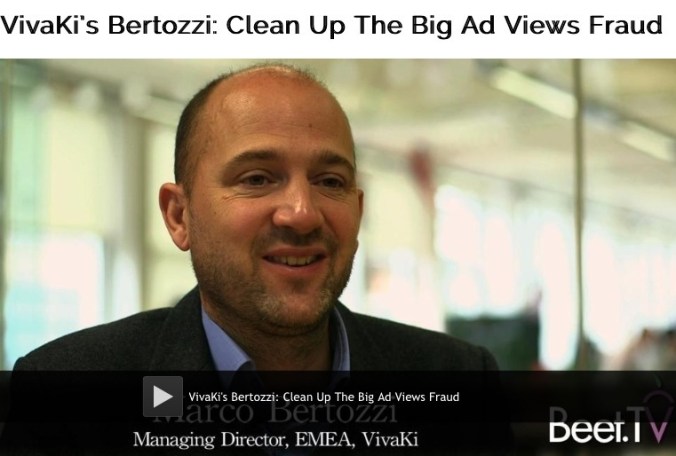
A great chat with Andy from Beet about topics from Fraud, visiblity and how programmatic has evolved in the last 12 months. Always good to be part of the Beet content.
Four years ago today…

I wrote my first blog. I had no idea what I was getting into and where it would lead. It appears that four years later I have written 196 posts, most of them home grown content, I could never have imagined that four years ago I would start writing an average of one a week for four years, but I have loved it. Anyone who blogs regularly knows that it is slightly addictive and becomes a vehicle for venting. The Ad tech space has been a perfect muse and there are so many baddies to talk about!
I think I am perhaps best known for venting although I try and keep it constructive. I have had at least three CEOs complain to my bosses, I have had my bosses complain to me a few times too with an exasperated Head of Comms Europe in Claire Ballard and Global Cheri Carpenter asking me politely to ‘let them know when I intend to publish something contraversial.’ I have had good supporters in Adexchanger, Digiday, Mediatel, Mediaweek, The Drum and others in republishing content. I have also had guest posts from Simon Birkenhead (now famous script writer for Hollywood), Paul SIlver, Danny Hopwood, our new recruits and others.
I have had people in 121 countries read my blogs, every continent and even places I did not know existed, amazing the power of digital and the web to be able to have that kind of reach. After four years, my top charting blog remains – ‘Trading Desks are in for the long haul, not just the sale’ if you want to read it click here. A time when the Ad tech space seemed so much simpler but there was a lot of tension created by the shift in balance of power between Ad Nets, agencies and new tech companies. It was an exciting time.
Anyway, thanks for the readers and support and comments and sharing etc it has been a lot of fun and I hope to continue for many more years.
When did the big media companies give in?
I was really pleased to attend the #IABengage event this year after an absence of probably at least 6 or 7 years. Believe it or not I attended the event because I wanted to hear about something outside of RTB and programmatic. I wanted to widen my knowledge of other things happening in the market and was convinced this would be the event to do it.
The thing that struck me was that every stall and sponsorship was from the RTB and programmatic space. Turn, Videology, Millenial, Tribal Fusion ( exponential) all hogging the floor. Everywhere I turned I saw data and tech companies lining up like a Morocco Souk all offering shiny rows of things that to the outsider all looked the same.
Similarly to Cannes these companies and more besides have been puffing out their chests more and more every year, bigger stalls, bigger sponsorships and bigger parties. I can’t remember the last event I went to whether it be Cannes, CES, IABengage and others where the Adtech companies have not been expanding like helium balloons inflating on Valentines Day. I love the Adtech industry, it’s great they have marched in, hungry to change the world, turning adserving into something sexy and they are right to do it…but
Where the hell are the brands?!! Where are the companies who own inventory, who have invested in content, who have journalists and film makers and production skills – where the hell did they all go? All these companies on show are adservers, when did adservers take over the world? This event was IAB engage, Internet Advertising Bureau, purveyor of all things digital. At the end of the day these companies help an advertiser get their Ad from one place to the next or help an advertiser find a target. They are not the destination, they don’t make anything, they are not creating anything so where are all the companies that do?
I was amazed to not see Yahoo, Guardian, Mail, Viacom, Vevo et etc why are they not at the premier digital event of the year? It’s like the magpies moved in and took over. Microsoft was there but on the whole the place was sadly lacking those brands that at the end of it all are creating a destination and an audience.
We are living through an exciting times right now and there is genuine change going on but let’s make sure big brands and content producers still have a story to tell and a presence to be felt at events like this. Dmexco, ATS and Adtech have the rest covered.
By the way Turner has decided three years too late that it wants to do programmatic – maybe there is an opportunity to sponsor IAB engage in 2014?
Advertiser RTB Desks – Not as easy as it looks

I cant 100% explain the tone or actual words, but it translates along the lines of ‘watch out boys, ALL the advertisers are going to do this RTB thing themselves.’ I hear the message a lot, usually from people in companies that feel they will benefit either way, agency relationship or not. Trouble is there is rarely any proper definition of this phenomena and that leads to falsehoods and scare mongering.
Facts first, an advertiser employing a Mediamath or an Audience Science is not ‘going it alone’ they are merely changing the people they pay to make the work happen, that is going direct, different to going it alone. I would love to write an article about how misguided the rationale is but will save that for another day. Fact is we need to be clear on what we are describing first and foremost because any advertiser who employs a managed service has changed nothing other than the party they are employing, sure, the industry may then be broadening out but thats not a big deal, has happened all through the last couple of decades and big players came and went.
So what does that leave us with? The advertiser who truly does this themselves, I mean employs people who sit in a room? Well first of all, lets look at what needs to happen to deliver a decent offering. At Audience On Demand central to our approach is VivaKi Verified, a team of people who evaluate Tech, Data and Inventory at scale and that is all they do. They are experts, they have expert processes and support the whole operation. When you meet these guys you know they are serious and without them, you have a shaky offering.
But back to the ‘going it alone’ advertisers.
1. The first and most important thing is to hire people to do the work, so you are looking for people interested and experienced in this space. They have to be experienced as your advertiser organisation on the whole would not have people to train them up and mentor them. Those people then need to be inspired, developed, they need to grow as employees, they want to be in an exciting dynamic operation, we know these people, they are demanding. Working in one business, with no peers and little scope for growth will not inspire the best to come and work so you need to find a solution there. If you are lucky enough to hire quality you then have to retain them because if they leave, you wont have a large team to retain knowledge. Final piece in that jigsaw is getting headcount signed off, not easy, what is the rationale exactly as you wont be ‘saving’ money, you will be a cost.
2. OK so let’s say you found the industry RTB expert who wants to come and join, next they need to choose the tech partner, partners. So they do a ‘review’. What does that entail exactly? A few presentations, a load of words on a slide with no way of knowing if they are true or not. Your tech decision is based on a very lightweight approach and has no benchmarks. Even worse you end up choosing lots of different ones and testing and testing. Likelihood is you end up working with one partner. In my day job I am asked a lot about the importance of remaining agnostic, fleet of foot, go where the best tech is. Advertisers want to know we are doing that, but is that practical on a stretched team without expertise? I would challenge it and without scale you cant run different verticals, brands etc to see how DSPs respond so you end up leaning on one partner.
3. OK, so we have a person and some technology. So you start running some campaigns. Feels good to be doing all this in house. One day though you get an email from the boss saying he saw your ad on an unsavoury site. How did that happen, I used all the right tick boxes? Suddenly the pressure descends on how on earth you are going to make sure that does not happen again. Vetting urls needs to occur, ideally upfront, creating white lists and verticals, it has to be ongoing. You need to have that up to date, the tech provider you use cant be trusted to do that. Some DSPs have in their T&Cs that it is simply not their responsibility, so it is now yours. Verification is time consuming, and needs resource to be done well. If you are using multiple partners out their that are not transparent you will have to fix that ASAP because the liability is with you, and you wont be able to demand money back. So best thing to do is do a review of verification providers in the space, there are a lot and they all promise a lot, it is down to you to decide. You could ask a partner for their view perhaps?
4. Now we are in a good place, you have a person, tech x 3, verification process that is ongoing. You now need to develop your inventory outside of standard exchange inventory and into private exchanges, you need to develop partnerships with large players. I would suggest that to be done properly you need a dedicated FTE, you don’t have that to hand so you will need to find some quick wins, otherwise known as average solutions, par with market. As well as inventory we have data that needs verifying – you need to trust the data, source of data, how it is collected etc, that is what we would expect in AOD – beyond that, a strategy around first party data combined with 2nd and 3rd party data to really maximise what you are doing. Ideally would be good to see how a certain data compares based on vertical or business type, KPI type etc, harder for a single advertiser desk. I guess you could ask your partners to fill you in?
5. Campaigns are live. Results are OK, not sure how they compare, but they are OK, you need to optimise though and that takes time, would be good to have some other people to run strategies by though, maybe discuss optimisation strategy, even learn from other countries. Vital to have cross fertilisation in this new space as there are very few experts. Doing a good job takes time. Understanding why something is not working as planned is where things get tougher, you could ask a partner to help?
6. Did you know that DSPs don’t design individual dashboards for you, or cut the data just how you want it to report to the board. They don’t always give you the insights you need so ideally create a solution that you can pull that data into that gives you flexibility – you can licence some software, learn all about it and use that. Maybe the DSP has something it can sell you – is it the best one though? Perhaps worth a review of the market to come to some conclusions. Ideally would be good to talk to some people who have had experience of multiple solutions and look under the bonnet. You could ask a partner to help on that I guess?
This is the tip of the iceberg, running and creating a genuinely Grade A trade desk is not about logging in and pressing go, it is about scale, it is about cross pollination, you need to have support and strength in depth. We have an incredible team in AOD that is able to provide a fantastic proposition to advertisers that is technology agnostic, founded on deep expertise and importantly a team of people focused on results not their VC pressure to extent the number of partners and revenues before sell date or IPO. I am a passionate advocate for what we do and to be honest the wider groups as well, as long as they are showing transparency and not flogging their own tech.
Advertisers may well do this themselves and some do, but what I have seen so far are advertisers who say they do it themselves but really then lean on third parties, no different to using a Trade desk. Perhaps that is the future, that’s not my debate today, its about those who are saying they do it themselves. In my opinion they will end up creating a less good proposition for their business, with less experienced people who even if they stay, fall behind the market place because they are too siloed and lack inspiration from different people. I am proud of what we do and how we do it, I hope that advertisers continue to realise the benefits of that, but watch with interest the ‘DIY’ strategies play out of course. Either way, I reckon there is space in the business for everyone to play in.
The article today from Adage here is talking about how tech companies are going direct to advertisers and agencies need to shape up if they are going to stop that trend. For all the reasons above, I dont see this as a genuine trend. Its a just another chapter, we dont know how it will end, I can tell you though that most of these tech companies are not geared for this and niether are the advertisers. All the benefits above should soon reveal themselves to any advertiser trying to go it alone pretty quickly. Anyway does anyone care – isn’t Google going to take over the world? No probably not, they don’t want the terrible business models we have to endure and niether will all the others.
Vote Bertozzi in The Drum Top 10 shoot out!
I am excited to have made it to the Top 10 of The Drum DigitalDigerati – now there is a final vote, would appreciate your support and vote for me again! It will soon be over and I will stop bothering! The link is here for the vote. Thanks in advance!
Video interview with Italian press after RTB Publisher Day in Milan
Not one of the highest quality videos! This is like Jeopardy – I give the answer, you guess the question! We had 80 people from all of the top Italian publishers to cover issues around RTB and private marketplaces. The market is cautious but definitely progressing well.
 Bertozzi's Bytesize