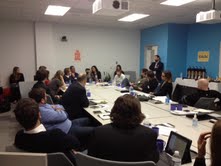
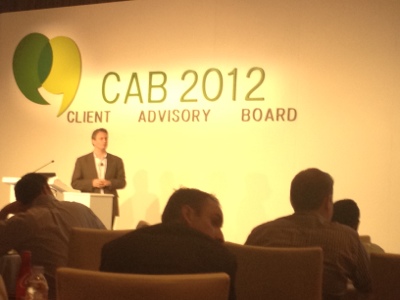
Google Client Advisory Board – frictionless web

20120606-145233.jpg

Take a look at the opening keynote from Neal here

The best analogy of the two days was from Neal Mohan who likened the web to the old style stack we would have at home in music and TV. We would layer on more and more pieces of tech, with music systems, game consoles, and more recently the likes of Apple TV and Google TV.

We work hard to make it all appear seamless and sometimes it all works but often it involves getting on your knees and digging around behind the TV to swap plugs and find wires, we all know that experience. The web has been like this generally with a constant stream of extra tech layers to integrate and ad serve and ultimately try and track.

Google have been guilty of this within their own ecosystem with Dart Search, DFA, google Analytics and more recently Invite and Terracent. They have been on quite a journey, the first part of that has been improving the individual products. Dart Search had a 50% dissatisfaction rate which is now down to sub 10% and you can see why. The system improvements have been significant.

20120606-150158.jpg

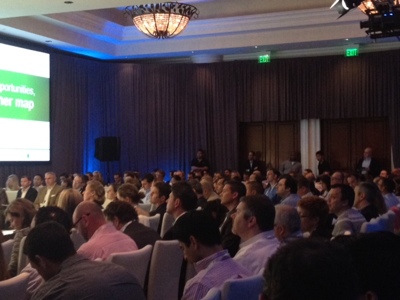
The next stage has been how they work together and this is the real win and the approach that feels like Google are tightening the noose on the competition. The fully integrated stack is something genuinely powerful and will be a big sales point. The inter connections between exchange trading, search, remarketing Ad creation and analytics are going to revolutionise how we buy in both search and exchanges. We are seeing a world where you still have ten devices on your Tv table and yet only one wire and it all just works.

These two days have shown a frictionless web, a world where one tag, one consumer is all we are working with avoiding the dedup issues and discrepancy issues and allowing us to build comms strategies around a true single view. Google have been challenged by the industry to improve and to some it may have come a little too slowly but I believe they have learned their lessons. The Invite 2.0 releases are an example of where they did not want to repeat a Doubleclick scenario.

The chance to discuss with the Product Managers all the new developments both in the sessions and in the bar make this a pretty unique session. Thanks to Google for the Invite.(excuse the pun)

Google Zeitgeist 2012 – my highlights

OK for those who clicked on the link looking for content here it is!

I genuinely don’t know where to start. Google Zeitgeist is simply the premier event on the Calendar bar none. It is a collection of amazing brains and characters (me excluded of course) and hugely influential businessmen, politicians and this year revolutionists!

We started with Politics and Niall Ferguson who painted very eloquently and fluently a view of the economic crisis we are in. He basically highlighted a few key issues about our current financial issues in the Eurozone. Click Here to watch

1. We have complete financial inter-dependencies but very few political

2. The politicians have chosen procrastination as a strategy

3. None of the major financial leaders have learnt from the crashes of the past

4. The Germans work the least of everyone in the Eurozone and are always on holiday

As an aside he was an amazing speaker and everyone in the crowd was raptured by what he had to say, but the end result of it was that we are in some trouble but at a point where we could move towards recovery but not without some decisive action and he fears that not enough of that is actually occurring.

Greece – George Papandreu – Ex Prime Minister of Greece

See the whole video here

http://www.youtube.com/watch?v=SW99H1uYP88&feature=relmfu

George was both positive about what Greece held and yet concerned about the mis-management of the country. I believe that he was overly positive about the mindset of the population when it comes to work, claiming Greece is the hardest working country in the Eurozone – ummm not so sure. I have Cypriot inlaws and they dont describe a country being run with sweat, blood and tears!

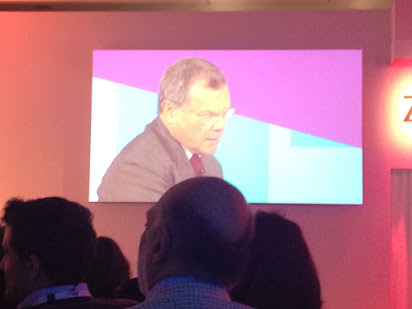
Sir Martin Sorrell had us all reconsidering everything we had just heard by saying that everything in life was cyclical and that we should basically ‘get over it and move on!’ He explained that the world had changed and that growth was no longer from the usual suspects and we had to look to RApple Russia and China with the example that Apple was selling 20% of its products to China.


Enough about politics – lets talk about the fact that 100 thick people working together is better than 100 clever people not working together! The afternoon was an amazing demonstration of clever people talking and inspiring you to think. Matt Ridley explained that to make a mouse we have thousand of people working together from the oil to the plastic to the factory and yet no one knows how to make a mouse, they know only their bit.

Dan Ariely talked about cheating and the complex inter relations between how we act and our moral code. They noted that people who had been asked to remember the ten commandments and then given a cheating experiment, almost no one did! Click here for the whole video however he explains that the world has a few big cheaters, many many little cheaters. He discovered that when people were given the opportunity to cheat for something one step removed from cash ie for a token you then change for a dollar, people were a lot more comfortable lying. He used the analogy of taking a pencil from work – you would take a pencil but would you take 50cents from the petty cash? Fascinating examples based around how we justify actions.

He was such a truly inspiring speaker – definitely watch the video on this one. The final suggestion is that we should confess regularly as it resets our moral compass!
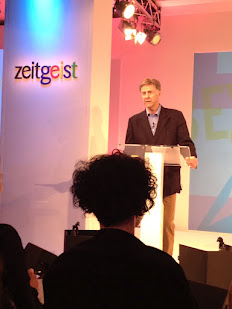
An Inspiring speaker

My favourite presentation of the whole event was Ranulph Fiennes, truly brilliant presentation that showed what a legend the man is, how he has overcome so many problems, health challenges and pushing his body to the extreme. Watch his video here, it is worth 20 minutes of your life. Click here to watch it. He showed incredible courage and tenacity and that age should not slow us down, he was about to head off on another expedition and deliver yet another record ( and beat the Norwegians!). The class line of the presentation was when he described them listening to the radio one minute a day and they heard that Britain had gone to war. When he asked his colleague with who – ‘Charlie replied – Oh I did not catch that – he goes on to say that in the following week when the radio refused to work they argued about who we could have gone to war with..’of course we assumed it was the French!’

This is what I love about Zeitgeist the variety of thoughts and personalities. Steve Redgrave and his achievements or the man who ran 350 miles in one go or 50 marathons across 50 states, these people simply inspire.
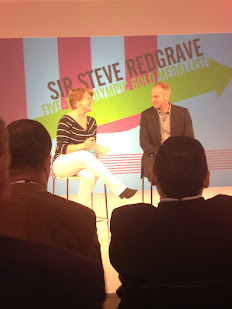
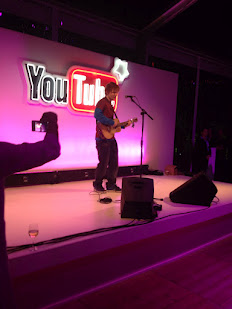
That evening we all mingled and discussed the days events. Music from Paloma Faith, Maria Aragon and Ed Sheeran created a spectacular show for us all that evening.


The night ended with a small group in a back room at The Grove. It reminded me of The Breakfast Club as it became a very open and revealing emotional roller coaster of a conversation, I think we all felt that it was a very particular evening and I felt like I got to know a few people that much better than usual. That said it kept us up until 4am which was not ideal although par for the course!
The second day started with a run along the canal, a beautiful and peaceful 30 minutes of sweating, dying and swearing not to drink again! The day contained some seriously interesting tech presentations, my favourite was from Boston technologies and their Big Dog. You want to see something pretty scary then watch this video. One of the lead scientists talked us through the work they are doing on robotic intelligence. Watch here.

The incredible power of robots was a theme that afternoon with the leap forwards in medical robotic surgery being highlighted alongside the above. It does leave you wondering where this all leads, the Google self drive car, robots etc show us a society that is moving towards a world of cyber beings and I believe sooner than anyone thinks. As if we did not need more evidence then Google demonstrated their new Google Glasses where basically a simple device worn like glasses becomes your entire technical needs for photos, email, maps, etc. Larry kindly presented those for us!

Take a look at this video here.
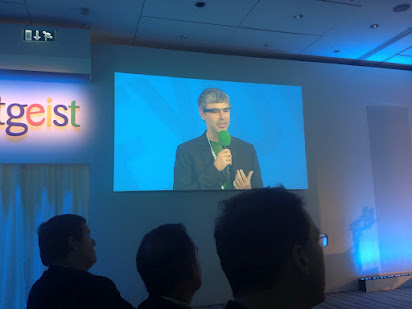
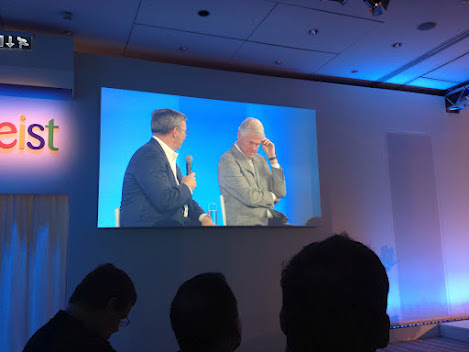
Larry talked about how he sees the world with Eric Schmidt and took questions from the audience. He is a hugely smart guy if not the all round entertainer when it comes to these stage events and so although very interesting I think we were really by now all waiting for the final act. Bill Clinton.
Bill came on and the first thing that struck me was how much older he was in the flesh or perhaps than I remember him, still tall and big but nt quite the force you might imagine. He started slowly, talking about his work and foundation in a very measured and thoughtful way but he started to wind up in the last ten minutes or so. You started to get glimpses of that steal and energy he was famous for and a passion that clearly is still there. It was an incredible stage, to have watched this man on television and then have him just a few feet away was a privilege and one only Google is able to deliver in this special annual event.

The whole event was as ever slick, well organised and inspiring. I thought this year it was more serious but it had depth and made you think hard about the world we live in, that is what made this one of the most interesting I have been to. The event is unsurpassed by anything else around and I am grateful to have been invited.
AOL may have had it right all along!

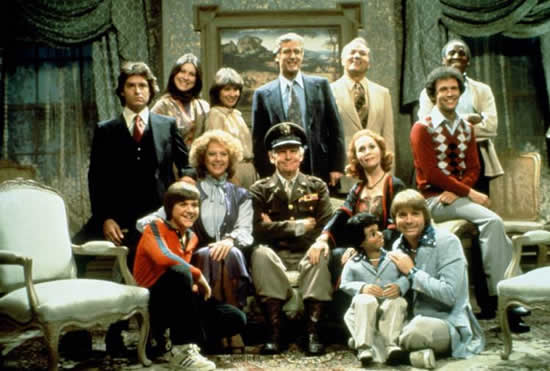
Does anyone remember the sitcom from the US called ‘Soap’? It was about a mad bunch of individuals who were pretty dysfunctional. At the start of each episode there would be an introduction recapping the previous episodes. That summation was invariably confusing and left you having no idea what was going on. The image below may jog your memories for those of you over 37 I am guessing.

The Soap cast

Confusion reigned.

Why am I writing about that? Well recently through a combination of my own experiences and reading the press I have been thinking that in the world of tech, social and mobile we are experiencing something similar. To recap;

– Google and Apple were good friends, admirers even until Google started to like phones..and music..and books, now Apple does not like Google so much and is not keen on using their search tool on their phones.
– Twitter and Google liked playing together as Big brother Google helped the new boy get a bit of traffic, now the new boy has grown up he has decided he does not need Big brother anymore so cut the rope.
– Facebook and Google were colleagues and admired each other until Google started to like this social media thing and Facebook got the hump with that, they too have decided they want to keep their people to themselves.
– Twitter and Facebook enjoyed each others company for a while until Facebook liked the look of the Twitter approach and changed their updates accordingly, this has meant of course that they will not share anymore and never the twain shall meet
– Lets not forget some other long distant cousins! Yahoo and Facebook have not crossed swords too much in the playground until Yahoo decided Facebook had copied a lot of their IP and are now contemplating suing so that will be the end of that friendship
– Samsung and Apple have just had an all out fight all over the globe and frankly not seen eye to eye for some time!
– Even the lovely and friendly Amazon has had to get dragged into the cat fight with its entry into the tablet market which annoyed Apple who promptly stopped their Kindle App from being e-commerce enabled – surely no one falls out with cuddly Amazon?

All of this squabbling leads me to see a future where we have one of the most siloed ecosystems we have ever known. Years after we criticised AOL for its wall garden approach to media we find ourselves with more walled gardens than we know what to do with and as consumers that is the honest truth.

We are edging towards a world where Facebook, Apple, Amazon, Google, Twitter and beyond will all be managing their own ecosystems and not allowing us as advertisers or consumers to mix and match and join up all of the platforms. It is a frustrating development as a consumer as it would be nice if Facebook and Twitter could find a way of working together. It would also be a better Google search experience if we could find results from not just G+ but also the other social media players.

As I have written about before it gets worse when you move to looking at the tech marketplace with our homes being divided into either an Android home, Apple home, Microsoft home or Samsung home, we have to make a decision and stick too it as we can’t get all our toys to play nicely together.

I am not sure how this will play out, but it is messy and not particular user / consumer friendly in my view and probably going to get worse as these Big 5 getter bigger and stronger.

Inspired by the Big 5 in Palo Alto

Inspired by the big 5 – A week in San Francisco.

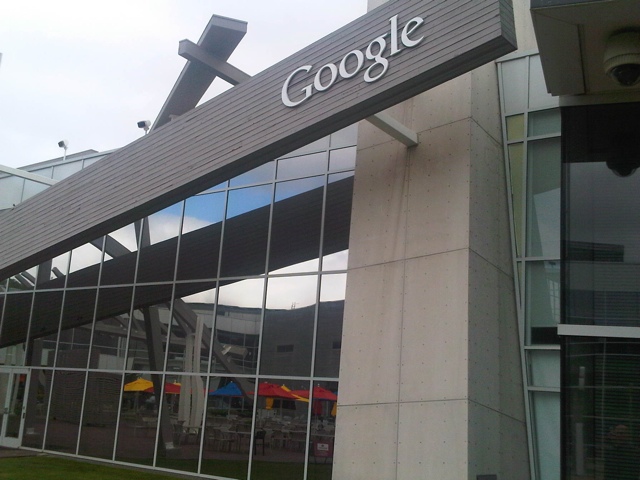
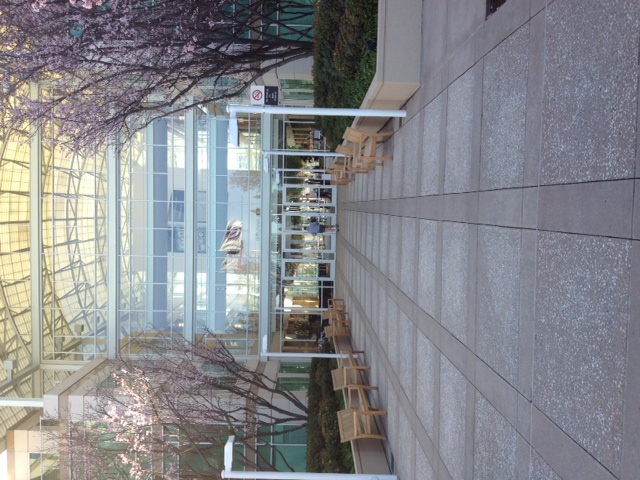
There is something genuinely special about San Francisco and Palo Alto. A place that if you are into digital you can’t help but feel excited about when you go there. First time you go it’s about going to the offices – Google HQ, Facebook, Apple etc and the famous locations attached like Mountain View or Cupertino. I have talked in previous blogs about the offices, they are a little disappointing, they are often deathly quiet and in the case of a Google a little battered and worn out, no it’s not what they are like inside.

The thing that strikes you is the scale, huge complexes, small towns in the case of Google, the meccas of those now famous names that come with such financial status and dominance and yet still have their young founders somewhere in those buildings. You can’t help marvel at that scale after so few years of history. In that mix though you feel a sense of tension between hanging onto that founder spirit and the relentless burden of financial success and expectation, something Facebook will start feeling acutely post IPO.

Palo Alto itself comes with this air of amazing entrepreneurship. Much was mentioned of Sandhill Road, where all the VCs are based, I had not considered that even VCs like to cluster, I guess I thought they would be isolated, each one trying to find the golden nugget but I suppose they are like everyone else and like to chew the fat on whether x company or y company is of interest. Fascinating I thought that at every one of the meetings we had this week, Pinterest was mentioned, it is crazy how that company has come from nowhere to being on the end of every sentence and judging by my Twitter feed, tweet, I would imagine that those investors are all eyeing that company up with much interest.

Dreams are made in this place and you can’t help admire it and be mesmerised at the immense foot print of these companies. As we walked into Apple you remind yourself you are walking into the most valuable company in the world, staggering what has happened there, or Facebook with its 100b price tag on its head and yet Facebook is still very lean, 3000 employees in US vs a Microsoft of 70,000, that paints a picture and it’s one of Facebook needing to recruit fast to cop with the demand for its products and insights.

The reason for the trip was to bring the VivaKi Nerve Center to the wider Publicis group and let them come together and meet with these amazing digital beacons. A fascinating few days as the Saatchi’s and Leo Burnetts came together to discuss and learn how we can all work together more effectively with these leading digital companies of the world. This new world of social by design has revolutionised the media and creative approach from a ‘bowling ball’ approach where a carefully aimed ball was fired at the consumers and hope to hit a few of them to the ‘pinball effect’ where you send the content into the mix and watch it get fired around.

There were some revealing debates about social and where it fits creatively and who is driving those conversations, we have as clients some very sophisticated marketeers and those who are more tentative but all of them are becoming more global, more scaled and more digital and it is the role of The Nerve Center to help our group capitalise on our amazing partnerships to be able to respond to those trends in a material way.

So as a marketeer who do you care about? Google, Facebook, what about Amazon? Apple and Microsoft will all lay claim to be the companies you need to work with, there are others of course but after a week here you start to consider exactly who are you missing if you work with these companies? The issue comes with knitting these companies together, in the last few years the rivalry has been intense with various fissures opening up between the companies and that’s where organisations like Publicis and The Nerve Center come in. When you sit opposite a Google or an Apple, they often hold many of the cards and yet all of them want to see the whole picture and the agencies hold those cards and they want to learn from us, so it’s a hugely valuable position to be in and one we must exploit on behalf of our clients if we are to get the most from an Apple or Facebook.

Based on this trip and my time at CES I can’t help feel this sense of a more and more closed world vs Open. Facebook’s mission statement is all about connectivity and openness which felt strangely at odds with their restrictions on how we as companies can track anything or the fact that their content can’t be found on Google search. Apple seemed very happy to sit and not want any sort of cross fertilisation, they felt that their billion devices is a big enough footprint for anyone. Everywhere you turn we are organising into silos, TV platforms with Samsung, Apple etc, social platforms controlling their data tightly, not an issue for consumers, harder for advertisers.

That said, when you see the power of YouTube, Facebook’s scale and social by design capabilities, Google from search to display to G+ combined with Microsoft and Xbox/Kinect or Apple’s incredible footprint through hardware it’s hard sometimes to imagine that a global client needs to go much further a field to reach and engage with their audiences. These companies are uniquely global, consistent and so as a global brand you can work on the same platform across multiple markets which will be an important offering of the future.

The days of media schedules with 40 sites on them have to be dwindling or dead, the specialism of tech press or context led site lists can not be totally recreated but you can go a long way towards that same effect through audience buying, targeted Facebook work, Search and so on. These companies and platforms could be the media plan, if only the advertisers themselves could organise in the same global fashion. They don’t right now, but they will and they will want agencies who understand and have very grown up deep relations with these companies and that is the aim of our Partnerships team at VivaKi and VivaKi Ventures which aims to keep us wired to the new start ups as well.

This week was about that, it was about saying lets work out how we can work together and not on the premise of spend and price but intellectually and strategically work to create the media and technical solutions of the future. My last meeting was at Mountain View with Google and what they are working on is mind boggling and makes you realise that although there are many companies out there with great marketing decks and some very bright people, they are dwarfed by what’s going on in this company.

And above all as I sat delayed by 4 hours I thought what an incredible part of the world this is and how inspirational these companies are both person ally and professionally. I also thought that I am working for the most forward thinking organisation in the advertising and media industry and one which is full of very smart people all looking at this business through different eyes and that is fantastic. VivaKi Nerve Center.

Dataxu buys Mexad – Mathmen just went back to Madmen

I quietly smiled to myself when I saw the announcement that Dataxu had bought Mexad and the press release that went with it. Dataxu buys Mexad. What an interesting start to the year in terms of consolidation.  I have had relations with both companies and in both situations I / we were criticised by the companies involved for our strategy. In both cases it boiled down to driving business growth through good old fashion means rather than selling the algorithm dream.

Dataxu first of all was very down on the VivaKi partnership with Google and Invite, first was the usual Google paranoia stuff which I am used to and bored of but the second was whether or not we could succeed by using Invite, considered the lesser DSP apparently by Dataxu compared to their high tech operation.  At the time I explained that to grow the marketplace and to grow my business and make a success of Audience On Demand first and foremost was to have the support of a strong partner (and a good one) with resources and scale not just in EMEA but globally. Secondly I needed consistency of offer, the finer points of the algorithm would not be the defining factor. Audience On Demand a year later is the largest Exchange Trading proposition in the world and we are delivering fantastic results and have some very smart people working for us so I feel pretty vindicated in my approach. It is therefore enlightening to now see Dataxu resort to buying Mexad to be able to deliver service and people.

Mike quotes ‘“feet-on-the-street” is becoming a key differentiator for the DSP business, because it’s not just about having the best software, algorithms and access to RTB inventory that determines success in local markets, but understanding local cultures, ways of doing business in specific markets, and the ability to advise and service local marketers and agencies in those markets.

This is exactly what I was explaining all those months ago and it seems Dataxu have also seen some truth in that approach.  The other telling thing for me is around the fact that the individual DSPs are finding it hard to get into the agency groups, they have been knocking on the door for some time and the way is blocked for many of them with Invite taking the lion’s share and each of the others taking the smaller share, at least in EMEA.  I have said all along that I still see this a very difficult market place for the independent DSPs, not impossible of course and I look forward to working with a number of them as we continue to test and learn, but difficult. Perhaps by buying Mexad they see a quicker way of getting through the doors, although Mexad as far as an agency trading desk is concerned is like outsourcing your TV buying so I suspect those doors, at least in developed markets, will also start to close.

Finally Mexad. I assume that even though they have been bought by Dataxu they will continue to work with multiple DSPs? I have been repeatedly heckled at industry events that working with just one is wrong and is not the way forward, that it is a flawed approach!  Anyone who knows how agency land works knows that it is a large education piece and consistency of message is crucial. Audience On Demand is working well because the agency teams understand it, the publishers know we are transparent and consistent and the clients have a team of people who are aligned and focused only on delivering the best results. Perhaps Mexad will find some of the same benefits now it can concentrate on one DSP only.

This world will evolve of course and Audience On Demand will test a number of different DSPs over time, that is what any desk would expect to do, even if we retain a major partner, I hope now that Mexad is tied down to just one they wont find it too strategically difficult to handle after claiming for months that it was the wrong approach!

Aside from that Good luck to all parties and well done!

2012 Watching change and the future

A couple of thoughts for 2012 and beyond.

There will be many predictions for 2012, these are less predictions as thoughts on what I see around me right now and discussions being had. That is why I have referred to this as ‘watching change’ rather than predicting it. As usual with me its tech heavy but not exclusively an inspired by some recent people I have met lately, more of that for another post.

What do I think we will see changing in 2012?
1. The rise of campaigns targeted against connected TVs, there is so much movement in this space and it is happening so quickly, I believe more advertisers will be looking to agencies to deliver more targeted advertising on the TV through connected TVs and set top boxes. Video advertising shown on streamed content on TVs will also increase significantly in 2012. What I find most interesting in this space is that as with mobile there is a lot of talk but I can see things moving faster than anyone predicts. If you look at the Xbox alone, they have more ‘set top boxes’ than Sky, that makes them the most connected organisation in the UK in regards the TV.

2. From an agency perspective the silos of search, exchange trading and buying on APIs will be broken down as we start to use Data Management, targeting and buying across all three of them to drive campaign results. We will all get smarter about talking data as a planning mechanism rather than a list of sites to represent targeting. Where we can combine audience targeting with context and highly dynamic creatives we will hit the bullseye. This process is already well underway but see this accelerate in the next 12 months.

Where do I see the greatest opportunity for improvement?
A. The greatest room for improvement will be in video as we move from a disparate, highly admin intensive channel that is still managing to scale rapidly to a more platform, third party adserved, data driven opportunity for clients. Video has the opportunity to explode in terms of volumes, the use of buying platforms and third party adserving will make that possible and produce better results for advertisers and a more efficient delivery from an agency perspective. I hope AODv achieves this on behalf of the agencies.

Video revenues could increase significantly with this last impetus, it is a shame that it is being held back by some major broadcasters hell bent on protecting the old models and the ‘it has always been like this approach.’ We know how successful these people have been in the past, so I think they should move to a bigger and better learning model.

Technology:
What tech/device will completely transform the way you do business?
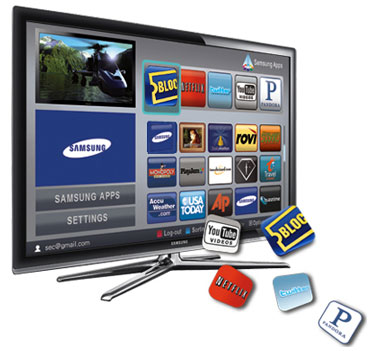
Connected TVs, already have become more and more prevalent in shops, the connected TV will bring the social TV experience to the living room that is currently produced by the highly reported two device usage people employ now ie PC on Twitter whilst watching TV. The connected TV and to set top boxes such as Xbox will allow users to genuinely multi task and enjoy a more social experience. On top of that they will of course also be able to access new content that will pull more influence from the linear TV schedule

What technology has transformed us in the last two years?
Life changing is pretty strong but the ability to work in the cloud would be up there, whether its docs in Dropbox or my iPad, iPhone, Apple TV and Airport Express all linked up wireless at home with no need for synching etc. The principle that the devices no longer need to be mega storage devices is a huge shift and the always on, access anywhere approach to tech is an amazing shift.

What do I think we can’t live without now that will be obsolete next year?
The death of the desktop, its all tablets and laptops and as working conditions become more and more mobile the desktop becomes more and more out of date. Of course that wont be next year but as a trend I believe we are starting to see the PC desk top being eroded, as companies no longer want to invest in more and more office space, instead opting for work from home or hot desking lap tops and tablets become the primary device.

General:
What will change specifically in media?

Our organisations are becoming more and more global by nature, the pitches, the advertisers the media properties we spend with and so the nature of new business requires a more joined up and well round global group to answer these challenges. If you don’t do it well you will lose those big international advertisers, more and more focus will go on how we weave our different agency properties together in a meaniful way that gives clients the maximum amount of insights and services with the minimum amount of disruption.

What do we need most to see greater success in 2012?
We are in a transition period where media owners, Ad Nets and Portals are all trying to plan for the future but manage their old business at the same time. As an industry we need to give companies 12 months to allow that change to happen even if it upsets shareholders and the bean counters. Many organisations will take a hit in terms of ad revenues they receive for direct response campaigns direct from agencies and have not seen it returned through the new approaches such as AOD. It does not mean its wrong, it’s just difficult to manage but they have to so they can reshape for the future.

Mobile needs tracking and ad serving badly! Mobile usage is huge, it brings online to offline and offline to online. The world of the web is social, personal, local and mobile and the smart phone ticks all those boxes and yet we can’t seem to bring the advertisers to spend the revenues. This remains what seems an eternal challenge to master.

Balancing short term demands with long term strategy

As the digital landscape evolves so the companies within it have to adapt as well, but actually we all live in a short term world. Both publishers and agencies have their work cut out for different reasons but all too often good strategic decisions are being strangled by short term demands. This challenge has never been more obvious than right now.

I have been talking daily to organisations both in our group and externally about how we plan and adapt for the future, we can all see the major digital portals for instance having to sit and scratch their heads a little about dealing with the here and now but planning for the future. Take a Yahoo or a Microsoft, they have both embraced the new world of exchanges and yet somehow want or need to protect their network offerings, the two don’t sit easily in reality. As strategies they should be rewarded in their approach of embracing the exchange world, but instead they are under pressure to deliver their targets based on a 2010 estimation, when the world was entirely different. Was it that different? Were we not all talking about exchanges etc back then? Well yes we were but the spend was not backing up the rhetoric, 2011 is a different story. Audience On Demand, as the biggest exchange trader in the UK has accelerated incredibly, and that growth is having an impact. Look at Specific Media who but a year ago was recruiting staff and buying Myspace and a few short months later is making redundancies, that’s how quickly things move.

We are though at a juncture, and it’s for that reason we need some patience from the bean counters. 2010 did not properly represent the Exchange growth, 2011 is closer to the truth but 2012 will be big. As the long tail of Ad Nets is absorbed into the more focused addressable media hubs and digital consolidation continues, the likes of the Yahoo or Microsofts will begin to see the benefits of the exchange infrastructure and will be able to let go of the old DR network approach. They will start to reap the spends that once went to the Ad Nets, but this time via exchanges.

It is refreshing to see the strategy Yahoo are playing out in the us. There was an article today in fact on this in Adage – click here. They are going to take a hit in the US with their strategy of blocking the Ad Nets, Criteos and others from buying their inventory. Yes short term that is going to hurt them, longer term its a great move and will pay back undoubtedly. We are seeing a significant adjustment in the digital ecosystem.

Agencies are evaluating just as fast, less from a revenue perspective, more from a structural perspective. If you designed an agency today, would you do it the same? I doubt it and yet the upheaval required sometimes makes people think twice and come up with a number of reasons why they should not do something even though in the longer run it makes perfect sense. This requirement to change however on agencies and publishers comes from a number of key trends;

consolidation of digital, we have all seen the stats that show the big digital companies control a huge percentage of the total spend and audience, even within the exchange space you are dealing with a few big partners. I believe that clients are starting to see a new digital landscape that is not 40 sites on a plan. They are realising that actually they can achieve almost all they need with API buying, Audience On Demand and Search, its a shift, everyone is looking for scale and efficiencies.

Globalisation of media and advertising. Most pitches are becoming global, not all, the recent in for ZenithOptimedia of RBS proves that, but many are. As such as the clients think more globally then they look to the agencies to do the same, and the more you think like that the more the scale partners of Yahoo, Google, Microsoft, Facebook etc become important to them and us.

Commoditisation drives value. This is an interesting development for me. Years of being told by Microsoft and Yahoo etc that their inventory is ‘premium’ has rarely been backed up by any real insight except their own research. Now we have commoditisated huge swathes of inventory through DSPs and exchanges we are being able to see what value inventory has and what performs. We see the volumes of money we spend with these companies through the DSPs and what eCPM we pay for them, none of this is determined by a person or a power point slide or negotiation. Tech has decided, results have decided and demand has decided and the patterns are very interesting indeed. After millions of pounds of spend through Audience On Demand we now see the true value of inventory and yet it has never been more commoditised.

Technology is in fashion. Of course tech has always been in fashion but never more so than now. It has been developed for agencies in a meaniful way. Demand Side Platforms for exchange trading, Bid optimisation platforms for search and API buying, these things have been designed to help us drive efficiencies and improve performance and we really see the opportunity now. It’s brutally competitive though and VivaKi have decided to work with the best partners and then develop tech that links all those partners up providing an interface to work with, this we see as the great opportunity, if you then add that to new streamlined teams and workflow, you have a heady mix that can deliver fantastic performance and service.

So where does that leave us? It leaves us with a lot to do and we need more people to take up the challenge and either drive the change through their organisations or give the people who have to do it a break so they can work through this transition. The end result though is the ship has sailed, the change is underway and we need to embrace it or become a dinosaur.