Online video – time to fast forward. Paul Silver’s perspective

Time for @thepaulsilver to write his second post for my blog and today he covers the video marketplace and what needs to happen to realise the potential that is clearly there.

Online Video – time to fast forward

Online Video is at an interesting place. It’s poised to accelerate digital spending over the next few years. But it’s stuttering somewhat. Given the time of year, this is not about predictions, but what needs to change if Video is to fulfil its promise.

Planning

Advertisers and agencies alike need to change their planning mentality when it comes to Video. Rule number 1, it is not TV so why plan like it is?
Video planning is still dominated by replicating a TV spot buy online. In a world where we now have the ability to address and optimise at scale, why create a plan that is not suited to the strengths of the medium? The Video industry needs to embrace the move to programmatic, audience led buying. There are new ways to reach and engage audiences; TV targeting models simply are not transferable.

We also need to define premium. Advertisers (rightly so) are sensitive about content and environment but to the detriment of innovation. It seems to be a belief that only long form broadcaster content is deemed premium. Id argue that reaching & captivating your precise audience and demonstrating engagement and interaction would be a premium buy? I’m not discounting the value of broadcaster content, but it should sit within a blended schedule that really maximises audience reach and the ability to optimise.

Personalising

A lot of our research from The Pool suggests users want a different online experience, different from TV. All the more reason why we should not be repurposing a TV strategy online. Users want personalisation, they want more relevancy. Our research has shown that if ads are more relevant, users are more engaged. Users understand the web economy; if they need to be exposed to advertising in exchange for content, they want it more tailored. This is another reason why innovation is needed. A change in the way we serve ads, using data (in the same way we do for Display) to customise creatives on the fly. We simply have to.

Measurement

Speaking of optimising brings me onto a fairly contentious subject: No one knows how to measure video. Over the past few months I’ve had a lot of dialogue and conversation with those within the video space and the feeling i’m getting is we buy long form content because it dovetails nicely with our TV spot buying schedules. This would then assume that it’s a reach and frequency game against an audience. However, when we start looking at reaching a precise audience, using actual data, the goalposts move. Buyers look at clicks. Clicks are the worst metric to evaluate as a measure of success for Video. Users who click are a) from a certain type of environment and tend to be a consistent type of demographic and b) are not being subjected and impacted by your advertising. Video is truly about upper funnel engagement. Regardless of whether it’s on your mobile, desktop, tablet, connected TV. Those that do click also drive, invariably, terrible bounce rates. What about connected TVs? We are already accessing inventory within these platforms. Do we expect users to start clicking on TVs??

The problem is that there is not a common currency. And whilst there is not a 100% robust methodology to bridge TV to Video using a GRP, we should be evaluating success on engagement and cost per engagement. If that happens within long form content, short form content, it should not matter. You’re reaching your audience and optimising to engagement. If ITV, et al can outperform all else on a cost per engagement model then great.

Buying

Video is still dominated by the old guard approaches to trading. There is a fear to change and innovate and often it is misplaced, perceived fear. Video publishers look at the display space with the excess volume of inventory and fear that Video will become a race to the bottom. This is not the case. You remove UGC out of the equation and you have a model that is prime for biddable trading. You have constricted supply with an increasing demand for that inventory. Anyone knows this will lead to increased pricing. Addressable video is about improving relevancy for the advertiser and rewarding the publisher appropriately. With improved relevancy and reduced wastage means less ads required to make the impact. Less ads at higher yield means a better user experience. A better user experience means more returning visitors. And then the process repeats itself.

Trading Video over a table is not the future digital model. It will become platform based. It will become technologically enabled. But as to the reasons above, this isn’t a bad thing. It doesn’t mean prices race to the bottom. Change is happening and it’s a positive thing which needs to be embraced. At Audience on Demand we are 100% committed to making the Video space more efficient, more scalable and ultimately more rewarding for publisher and advertiser alike.

Paul Silver, Head of Product, AOD UK
@thepaulsilver
2012 Watching change and the future

A couple of thoughts for 2012 and beyond.

There will be many predictions for 2012, these are less predictions as thoughts on what I see around me right now and discussions being had. That is why I have referred to this as ‘watching change’ rather than predicting it. As usual with me its tech heavy but not exclusively an inspired by some recent people I have met lately, more of that for another post.

What do I think we will see changing in 2012?
1. The rise of campaigns targeted against connected TVs, there is so much movement in this space and it is happening so quickly, I believe more advertisers will be looking to agencies to deliver more targeted advertising on the TV through connected TVs and set top boxes. Video advertising shown on streamed content on TVs will also increase significantly in 2012. What I find most interesting in this space is that as with mobile there is a lot of talk but I can see things moving faster than anyone predicts. If you look at the Xbox alone, they have more ‘set top boxes’ than Sky, that makes them the most connected organisation in the UK in regards the TV.

2. From an agency perspective the silos of search, exchange trading and buying on APIs will be broken down as we start to use Data Management, targeting and buying across all three of them to drive campaign results. We will all get smarter about talking data as a planning mechanism rather than a list of sites to represent targeting. Where we can combine audience targeting with context and highly dynamic creatives we will hit the bullseye. This process is already well underway but see this accelerate in the next 12 months.

Where do I see the greatest opportunity for improvement?
A. The greatest room for improvement will be in video as we move from a disparate, highly admin intensive channel that is still managing to scale rapidly to a more platform, third party adserved, data driven opportunity for clients. Video has the opportunity to explode in terms of volumes, the use of buying platforms and third party adserving will make that possible and produce better results for advertisers and a more efficient delivery from an agency perspective. I hope AODv achieves this on behalf of the agencies.

Video revenues could increase significantly with this last impetus, it is a shame that it is being held back by some major broadcasters hell bent on protecting the old models and the ‘it has always been like this approach.’ We know how successful these people have been in the past, so I think they should move to a bigger and better learning model.

Technology:
What tech/device will completely transform the way you do business?
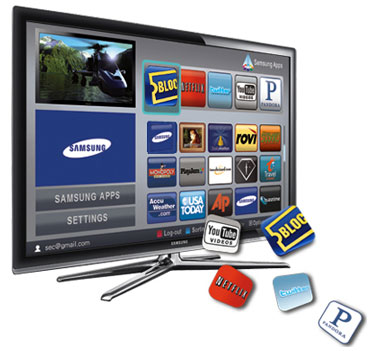
Connected TVs, already have become more and more prevalent in shops, the connected TV will bring the social TV experience to the living room that is currently produced by the highly reported two device usage people employ now ie PC on Twitter whilst watching TV. The connected TV and to set top boxes such as Xbox will allow users to genuinely multi task and enjoy a more social experience. On top of that they will of course also be able to access new content that will pull more influence from the linear TV schedule

What technology has transformed us in the last two years?
Life changing is pretty strong but the ability to work in the cloud would be up there, whether its docs in Dropbox or my iPad, iPhone, Apple TV and Airport Express all linked up wireless at home with no need for synching etc. The principle that the devices no longer need to be mega storage devices is a huge shift and the always on, access anywhere approach to tech is an amazing shift.

What do I think we can’t live without now that will be obsolete next year?
The death of the desktop, its all tablets and laptops and as working conditions become more and more mobile the desktop becomes more and more out of date. Of course that wont be next year but as a trend I believe we are starting to see the PC desk top being eroded, as companies no longer want to invest in more and more office space, instead opting for work from home or hot desking lap tops and tablets become the primary device.

General:
What will change specifically in media?

Our organisations are becoming more and more global by nature, the pitches, the advertisers the media properties we spend with and so the nature of new business requires a more joined up and well round global group to answer these challenges. If you don’t do it well you will lose those big international advertisers, more and more focus will go on how we weave our different agency properties together in a meaniful way that gives clients the maximum amount of insights and services with the minimum amount of disruption.

What do we need most to see greater success in 2012?
We are in a transition period where media owners, Ad Nets and Portals are all trying to plan for the future but manage their old business at the same time. As an industry we need to give companies 12 months to allow that change to happen even if it upsets shareholders and the bean counters. Many organisations will take a hit in terms of ad revenues they receive for direct response campaigns direct from agencies and have not seen it returned through the new approaches such as AOD. It does not mean its wrong, it’s just difficult to manage but they have to so they can reshape for the future.

Mobile needs tracking and ad serving badly! Mobile usage is huge, it brings online to offline and offline to online. The world of the web is social, personal, local and mobile and the smart phone ticks all those boxes and yet we can’t seem to bring the advertisers to spend the revenues. This remains what seems an eternal challenge to master.

Vivaki Nerve Center launches The Pool video lane

When I started in the Vivaki Nerve Center I had quite a few things on my to do list. One of the most exciting was getting ‘The Pool’ live.

The Pool is a vehicle through which we would bring together advertisers and publishers to participate in a project that would shape the market in whatever field it is concerned with, drive future facing ad formats and hopefully drive revenue on both sides. It was designed to be objective, a consensus approach but based in consumer insight. The Pool started in the US with fantastic results, if you want to read more about it, click here

Video advertising is the subject of choice. Why is that? Well there are some fundamental factors that lead video to be an ideal Lane in any country. Firstly we all know its growing hugely, unstoppable and more and more quality content is migrating to the web which is not being followed by advertising pounds. That leads to the next couple of issues. The ability of publishers to monetise has been difficult due to the constant erosion of pricing and lack of research to prove it works and secondly it’s a chaotic ad market in terms of formats. If you work on the basis of 50-60% of TV ad pounds go against a 30sec Ad it’s easy to ramp up investment rapidly. Anyone who has done video advertising knows there are too many formats, too many creative approaches and publishers all have their own model. The Pool aims to solve that.

Tomorrow sees the launch to all the major publishers in the UK of The Pool Lane 1 in the UK, Long form video. Vivaki Nerve Center with close collaboration from ZenithOptimedia and Starcom will be aiming to get publishers on board with the project to find the single best Ad format for video across a range of categories of results. Once on board we will work through field research and with the help of clients to identify the winning Ad format.

It’s an exciting project and I hope very high profile, the end result should be a win for the publishers, a win for the advertisers and a win for the agencies in the Vivaki groupe. I hope by the end of this there will be a model that becomes second nature to planners and allows scalable spend in video which has to be a good thing.

I will then be turning my spotlight on mobile. Mobile suffers similar issues if not worse and needs to have a greater industry focus put upon it. The levels of spend in mobile display are appalling when compared with the time spent on mobile devices so I hope in 2011 The Pool approach will drive some great new learnings for mobile.