Creating change – it is not all plain sailing

20120531-152600.jpg

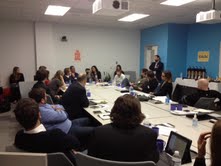
Two days in Chicago at the VivaKi Nerve Center Management meeting and one thing really struck me, that change even when it is really needed is pretty tough. Key to getting through it though is by having a plan and sticking to it. The VNC started in 2008 and we were laughed at, Curt Hecht who leaves us this month was there at the start and he recalled some of the comments at the time. That plan though has been sturdy and continues to be at the core of everything we do and it is resistant to country whims and individual blocks and that change we are bringing can not be stopped now.

VNC was a slow burn Internationally but in recent times things have accelerated rapidly. Over the last two days we have had people from the VNC from US to Australia and everywhere in between and each person was ringing the bell on the old models, it is time to step up and be prepared to change. Only two years ago we had VNC in US, UK, Dubai and Spain. Add to that now Italy, France, Germany, Australia, China, Russia and more to come, amazing growth.

Trouble with change is that it unsettles and some people don’t want it and are willing to slow things down and say ‘it’s not like that here’ and excuses to that effect. The encouraging thing though is that those people are becoming far and few between now and most people have started to embrace. I met recently with Maurice Levy and it was clear where he expects to see development, what areas should be moving faster and that is the biggest encouragement of all when it comes from the top.

Change your mind or change the people was a phrase mentioned by someone recently and I agree. I have always loved change, it is so exciting and creates so much opportunity so I assume everyone will but I am afraid that is not always the case. The VNC over the last two days has presented some amazing work and propositions and it is no wonder it has been copied by most of the other groups – whether it was market leading Partnerships, the worlds first and largest trading desk, driving innovation through The Pool, VNC has lead and shown the people laughing behind their hands that in fact it has become a blueprint.

The work we are doing with our agencies is moving so fast in many many markets and the ambition in the room has been palpable so expect to see more and more from this group over the coming weeks, months and years.

See you Chicago, it has been a pleasure (apart from your terrible airport).

All change at The VivaKi Nerve Center

The one consistent in life is change (I think there is a more eloquent phrase) but it is true and I am excited to be in the heart of that change. Curt has been a great leader but everyone moves on at some point and our team is really strong and we are excited about VNC 2.0. Below is the release that went out yesterday, exciting times all around.

CHICAGO,  4/12/12 – VivaKi CEO Jack Klues today announced that Kurt Unkel has been named President of the VivaKi Nerve Center. Unkel assumes responsibilities from Curt Hecht, who moves to a new role at The Weather Channel. Unkel will report into Frank Voris, global chief financial officer for VivaKi. Rishad Tobaccowala, chief strategy and innovation officer of VivaKi, will serve as advisor to Unkel and the Nerve Center leadership.

Prior to assuming the role of president, Unkel had been EVP/general manager of Audience on Demand™ (AOD) – one of the Nerve Center’s fastest growing practices and largest revenue-drivers.  Today the practice services 350+ clients and manages over 15,000 daily campaigns across display, search, video, mobile and social.

Unkel has been a member of Publicis Groupe for more than a decade and among the Nerve Center’s first employees. Prior to joining the Nerve Center, Unkel created and led digital strategy, investment, analytics and ad operations teams across Publicis Groupe, with a special focus on General Motors (GM). Unkel resides in Detroit and will be based there.

“Curt Hecht has built a strong foundation for the VivaKi Nerve Center, and Kurt Unkel is just the right person to drive our vision forward,’ said Klues. “Kurt has shown great leadership in building and developing AOD from one of the first agency-led ad trading platforms with two clients and three employees to a world-class practice that has been replicated in markets all over the world, and leads the competition.”

“The Nerve Center is comprised of some of the sharpest minds in digital and tech,” said Publicis Groupe Chairman and CEO Maurice Lévy. “With Kurt at the helm, we look forward to more aggressively pursuing new opportunities in arenas such as data, mobile, social and technology.”

Unkel and the Nerve Center are supported by a seasoned leadership team, including Doug Kofoid, who is EVP of product development. Kofoid is an operations expert and co-author of several Nerve Center products, including AOD Social.  The Nerve Center will leverage his expertise more broadly across the globe in the coming months.

Sean Kegelman has been named EVP of partnerships, and will continue to lead global partnerships and create new opportunities with companies like Google, Microsoft, Yahoo, AOL, Facebook and others for the Nerve Center and the VivaKi agencies it supports.

Marco Bertozzi has been elevated to executive managing director of Nerve Center EMEA, focusing on continued expansion of the Nerve Center throughout the region.  Co-founder of The Pool, Tracey Scheppach will continue to explore engagement models of the future while serving as EVP/innovations director for VivaKi.

The Nerve Center leadership team also includes Pradeep Ananthapadmanabhan, who continues to serve as chief technology officer for the Nerve Center and Project Olympic; Ken Wiesman, who leads Finance and Barb Jobs, who continues to lead Talent.

The Nerve Center was formed in 2008 to provide tools, technology and offerings that give VivaKi agencies and their clients an edge when it comes to digital media and marketing solutions. The Nerve Center currently employees more than 250 employees worldwide, with a presence in  Australia, China, France, Germany, India, the Netherlands, Spain, United Arab Emirates, United Kingdom and the United States.

Why Paying to skip video Ads undervalues what we do

My Opinion piece in NMA this week on the new Skipit service,  link here but behind a paywall

Image

In December 2003 a version of skippable Ads opened, it was called the M6 Toll road. Designed to make life easier for drivers they were offered the chance to pay a small fee and skip the bad traffic on the normal M6. Surely it is better to pay a couple of quid and get a luxurious stretch of tarmac without delays than have to sit in traffic for hours, especially when we are so time poor? Well the reality appears not. Demonstrating we are not as time poor as we thought. The toll road traffic has consistently fallen since opening, showing that perhaps paying to avoid inconvenience or bad experiences is not as high up on our agenda as some would have us believe.

And that is my view of the new format from Skipit where you can pay 10 cents to skip an Ad. You can build up credits through other means, by liking an Ad or interacting on some level with an advertiser, which I feel equally uncomfortable with.

Let’s stick with the principle of paying to skip an Ad though. Really? I am intrigued as to which Ad is going to push a person over the edge and make them sign up to an account. I find the idea of idly watching some content and then deciding ‘enough is enough, I am going to go to all the trouble of signing up to an account just to avoid a couple of minutes of Ads’ a stretch. As my colleague Paul says, perhaps it will improve completion rates as people are forced to establish the real cost of sitting through an Ad? Perhaps this system will improve performance on average Ads as people realise that it is not a big deal to watch them as long as they are engaged with the content.

Also, this isn’t going to pave the streets with the Gold that publishers might be expecting. To make this a meaningful revenue stream would require LOTS of video content being consumed outside of YouTube and the BBC. Recent Comscore research tells us this isn’t true. Google accounts for nearly 30 million uniques, the BBC accounts for nearly 7.5 million and VEVO (which again has most of its volume within YouTube) accounts for over 11 million. Consumers would also need to be willing to dip their hand in their pocket time and time again. Lastly, the rollout of such an initiative is unlikely to sit within the premium long form content owners. This is important considering the video Ad lengths which dominate the short form content space; am I really going to pay to skip 10/15 seconds of Ads being played on content that I am not really that engaged with anyway?

Now there are skippable Ads and skippable Ads. This approach is the caveman’s club vs. the surgeon’s scalpel where Google’s skippable Ads are the more sophisticated. Their approach is to incentivise advertisers to improve the quality of Ads by penalising bad creative; surely that is the right way round, not giving money to a publisher who carries bad Ads that people don’t want to see? VivaKi’s The Pool and their ASq® format offers users a chance to choose the Ad they want to watch, the impact on completion rates, engagement and memorability is considerable and encourages our advertisers to constantly see their video creative as something that should receive the same level of attention as their TV ads, but differently and with the end goal of their content being chosen over content from another advertiser.

Our job in this business is to make people realise that Ads pay for content, that Ads should be as high quality as possible, and that advertisers need to create content people want, whether that is an Ad or a short film or whatever. Paying for likes, watching an Ad to get something, all these models are blunt instruments and undervalue what we do. They are not what we should be aspiring to. 

My Media Week

My Media Week: Marco Bertozzi

Hayley Pinkerfield, 21 March 2012, 3:15pm

This week Marco Bertozzi, managing director EMEA for the VivaKi Nerve Center, visits Spain, plays squash with Greg Grimmer, and teeters on the wrong side of The Thin Blue Line. Link here

 
Image

Monday

Every day starts pretty much the same as every other day, and has done for the last two years. Baby cries, cats miaow, I wake up and reach for the BlackBerry or iPhone to check what my US colleagues have been emailing about through the night, or to see how late people have been out and posting messages from all corners of Soho Land.

From that point in though, every day is very different. Which is a good thing, as variety is one of the things I enjoy most about working at the VivaKi Nerve Center.

I start today by catching up with Publicis’ global Google lead Simon Birkenhead to discuss what’s going on across the business. In fact, today is a day of meetings with our global partners, as I later met up with our new global lead from Microsoft, Nicole. It’s a tough gig understanding such a complex business and I wish her luck.

An afternoon of calls and a couple of quick meetings, then it’s off for my weekly punishment in the form of a personal training session.

Tuesday

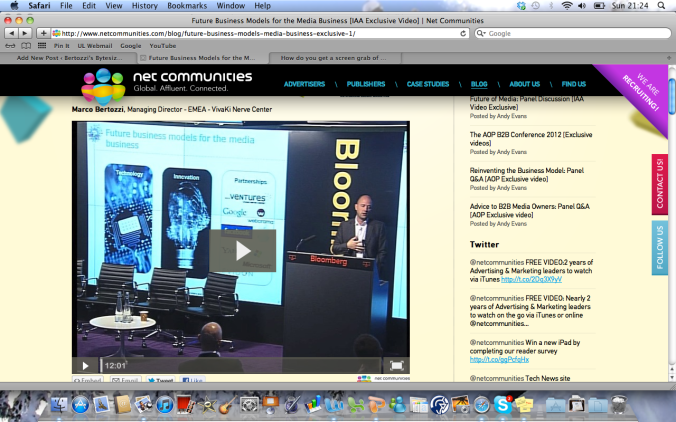
I am down to present at an IAA event on the ‘Future of Media’. I expected it to be a relatively small affair, but it turns out to be a big event in a grand venue at Bloomberg (I make a mental note to thank my head of communications, Claire, for the heads-up.)

I think it goes OK, although I might have alienated all of the women in the audience when I described women as waste in the context of a specific audience targeting example – I was misunderstood!

Jump on my scooter to have a catch-up with Steve King, worldwide chief executive of ZenithOptimedia, which always turns out to be an interesting and entertaining discussion.

After about a year of organising, I finally managed to have a quick lunch with Chris Mellish of Razorfish. As well as working with ZenithOptimedia and Starcom MediaVest Group, the Nerve Center works closely with Razorfish and Digitas, and it’s always good to hear what they are up to.

Later on, I also catch up with Olivia Yabsley who runs content for Digitas, to round out the group in a day.

With a couple of client sessions fast approaching on the world of exchanges and some prep for our regular EMEA AOD (our proprietary addressable media capability) call, I sit quietly at my desk and nail some work before home time.

Wednesday

A sickeningly early start – I’m up and out of the house by 4.30am to go to Madrid with my boss Curt Hecht, global chief executive of the VivaKi Nerve Center.

We have a full day of meetings with the management of VivaKi, ZenithOptimedia, Performics and Starcom MediaVest Group, to go through the VivaKi plans. The Spanish guys are always open and enthusiastic and a pleasure to work with, they also lay on a great lunch in the office. It makes our spread look pretty shoddy.

We’re close to launching the results from the UK rollout of The Pool, a global research project to identify the industry’s optimal online advertising model, and I share progress with everyone. The results are in line with the other markets, which is hugely encouraging.

So six hours later, we run for the airport and get back on the plane. I have done a lot of travel over the last two years and it is still enjoyable, but I guess one day it will drag. I never enjoy being away from my wife and child too much though.

Thursday

A morning thrashing Greg Grimmer at squash. Sorry, I should say getting a thrashing from Greg Grimmer. This week, however, I have bought a new racket and trainers – so his days are numbered.

Later today, the UK leads for AOD Activation, Geoff Smith, and AOD Product, Paul Silver, and I have our monthly catch-up with the ZenithOptimedia and SMG trading guys. It is usually part presentation, part piss-take of each other. Mauricio Leon and John Baylon are not wallflowers, so you have to give as good as you get!

We’re celebrating today as AOD has achieved an incredible milestone and delivered 100 billion impressions. And that’s just in the US and UK. No mean feat given it didn’t exist at the beginning of 2008.

In the evening I head to the leaving do of my good friend Phil Christer, who has recently moved to Google. Phil has kept me sane on many occasions and I know he’ll do great things in his new job.

Friday

Today does not start brilliantly. I am pulled over by two police motorbike riders who have been tailing me for the last mile. Shame I hadn’t noticed them in my mirrors sooner because I realise I’ve just performed some of my most reckless scooter-riding of the last few years.

Mounting a pavement, running a very close amber/red, doing 40mph on Tottenham Court Road, with some weaving thrown in, all mean I am up the creek.

After immense contrition from me and puppy-dog eyes, they unbelievably let me off. I get into work pretty happy and thankfully things pick up after that.

I have a good catch-up with Iain Jacob of Starcom MediaVest Group around the VivaKi Nerve Center and SMG progresses across the wider EMEA region. It’s important to make sure that we are lined up with the senior agency regional and global leads as we expand in terms of products and scale.

Lunch is with our tech partner on Audience On Demand video (AODv) and another expansion discussion as AODv rolls out into more European countries. Creating publisher uptake of this new way of buying video is top of the agenda.

It’s a great lunch, but I’m glad to leave – the downstairs of Navarros always smells of bleach. A productive afternoon of clearing emails and a bit of Twitter banter and my week ends with a very cautious scooter ride home. I’m determined not to get pulled over by the police again – well, at least for a couple of days.

Inspired by the Big 5 in Palo Alto

Inspired by the big 5 – A week in San Francisco.

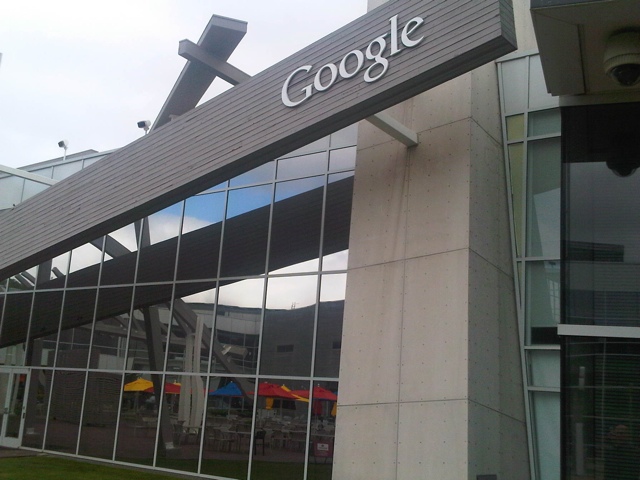
There is something genuinely special about San Francisco and Palo Alto. A place that if you are into digital you can’t help but feel excited about when you go there. First time you go it’s about going to the offices – Google HQ, Facebook, Apple etc and the famous locations attached like Mountain View or Cupertino. I have talked in previous blogs about the offices, they are a little disappointing, they are often deathly quiet and in the case of a Google a little battered and worn out, no it’s not what they are like inside.

The thing that strikes you is the scale, huge complexes, small towns in the case of Google, the meccas of those now famous names that come with such financial status and dominance and yet still have their young founders somewhere in those buildings. You can’t help marvel at that scale after so few years of history. In that mix though you feel a sense of tension between hanging onto that founder spirit and the relentless burden of financial success and expectation, something Facebook will start feeling acutely post IPO.

Palo Alto itself comes with this air of amazing entrepreneurship. Much was mentioned of Sandhill Road, where all the VCs are based, I had not considered that even VCs like to cluster, I guess I thought they would be isolated, each one trying to find the golden nugget but I suppose they are like everyone else and like to chew the fat on whether x company or y company is of interest. Fascinating I thought that at every one of the meetings we had this week, Pinterest was mentioned, it is crazy how that company has come from nowhere to being on the end of every sentence and judging by my Twitter feed, tweet, I would imagine that those investors are all eyeing that company up with much interest.

Dreams are made in this place and you can’t help admire it and be mesmerised at the immense foot print of these companies. As we walked into Apple you remind yourself you are walking into the most valuable company in the world, staggering what has happened there, or Facebook with its 100b price tag on its head and yet Facebook is still very lean, 3000 employees in US vs a Microsoft of 70,000, that paints a picture and it’s one of Facebook needing to recruit fast to cop with the demand for its products and insights.

The reason for the trip was to bring the VivaKi Nerve Center to the wider Publicis group and let them come together and meet with these amazing digital beacons. A fascinating few days as the Saatchi’s and Leo Burnetts came together to discuss and learn how we can all work together more effectively with these leading digital companies of the world. This new world of social by design has revolutionised the media and creative approach from a ‘bowling ball’ approach where a carefully aimed ball was fired at the consumers and hope to hit a few of them to the ‘pinball effect’ where you send the content into the mix and watch it get fired around.

There were some revealing debates about social and where it fits creatively and who is driving those conversations, we have as clients some very sophisticated marketeers and those who are more tentative but all of them are becoming more global, more scaled and more digital and it is the role of The Nerve Center to help our group capitalise on our amazing partnerships to be able to respond to those trends in a material way.

So as a marketeer who do you care about? Google, Facebook, what about Amazon? Apple and Microsoft will all lay claim to be the companies you need to work with, there are others of course but after a week here you start to consider exactly who are you missing if you work with these companies? The issue comes with knitting these companies together, in the last few years the rivalry has been intense with various fissures opening up between the companies and that’s where organisations like Publicis and The Nerve Center come in. When you sit opposite a Google or an Apple, they often hold many of the cards and yet all of them want to see the whole picture and the agencies hold those cards and they want to learn from us, so it’s a hugely valuable position to be in and one we must exploit on behalf of our clients if we are to get the most from an Apple or Facebook.

Based on this trip and my time at CES I can’t help feel this sense of a more and more closed world vs Open. Facebook’s mission statement is all about connectivity and openness which felt strangely at odds with their restrictions on how we as companies can track anything or the fact that their content can’t be found on Google search. Apple seemed very happy to sit and not want any sort of cross fertilisation, they felt that their billion devices is a big enough footprint for anyone. Everywhere you turn we are organising into silos, TV platforms with Samsung, Apple etc, social platforms controlling their data tightly, not an issue for consumers, harder for advertisers.

That said, when you see the power of YouTube, Facebook’s scale and social by design capabilities, Google from search to display to G+ combined with Microsoft and Xbox/Kinect or Apple’s incredible footprint through hardware it’s hard sometimes to imagine that a global client needs to go much further a field to reach and engage with their audiences. These companies are uniquely global, consistent and so as a global brand you can work on the same platform across multiple markets which will be an important offering of the future.

The days of media schedules with 40 sites on them have to be dwindling or dead, the specialism of tech press or context led site lists can not be totally recreated but you can go a long way towards that same effect through audience buying, targeted Facebook work, Search and so on. These companies and platforms could be the media plan, if only the advertisers themselves could organise in the same global fashion. They don’t right now, but they will and they will want agencies who understand and have very grown up deep relations with these companies and that is the aim of our Partnerships team at VivaKi and VivaKi Ventures which aims to keep us wired to the new start ups as well.

This week was about that, it was about saying lets work out how we can work together and not on the premise of spend and price but intellectually and strategically work to create the media and technical solutions of the future. My last meeting was at Mountain View with Google and what they are working on is mind boggling and makes you realise that although there are many companies out there with great marketing decks and some very bright people, they are dwarfed by what’s going on in this company.

And above all as I sat delayed by 4 hours I thought what an incredible part of the world this is and how inspirational these companies are both person ally and professionally. I also thought that I am working for the most forward thinking organisation in the advertising and media industry and one which is full of very smart people all looking at this business through different eyes and that is fantastic. VivaKi Nerve Center.

The importance of centralised re-targeting – An AOD view.

Centralising Retargeting
BY: Paul Silver, Head of Product AOD UK and Geoff Smith, Head of Activation AOD UK
Featured in Exchangewire also here

Retargeting is the core foundation of any performance display campaign. It’s something we all know now, but it’s not something we all knew when we outsourced our display buying to ad networks all those years ago. That’s ultimately because ad networks never disclosed the importance of retargeting whilst they were able to ride the gravy train. However those days are over, and there are several compelling reasons as to why we should all bring retargeting in house today.

Transparency:
Arguably, the greatest output of RTB is that it has created a new marketplace that allows it to be centred on transparency (not 100% complete transparency on every bid request but considerably better than it was previously).

Being in control and accountable of every penny a client spends means we know exactly how much contribution there is from every element of their retargeting programme, and what’s more, so now do our clients. There is no more allowing ad networks to hide behind blended CPA metrics, offsetting the poorer performance of their run of network activity with quick win retargeting conversions. Clients now understand the exact worth of retargeting and precisely how/what needs to be done to a) increase that volume but also b) drive incremental growth.

Lets not forget, in most cases, we also now have insight and transparency into where our ads are being served. Not only is this paramount from a brand safety perspective but also incredibly valuable when we can provide insight to clients that demonstrates which environments convert their target audience more efficiently, how that informs their other cross media planning strategies, and how it disrupts their traditional media planning with fresh ideas.

Price Inflation:
The impact of price inflation from multiple retargeters running on a single media plan is real, it is not just a theory. We know the effect of having to bid for a single user against other bidders. We’ve seen the data, it becomes less efficient. The message we convey to clients is that the situation is akin to brand bidding in the affiliate space a few years ago. Why would you let affiliates obtain standard levels of commission for piggybacking on your marketing investment, by bidding on your brand, whilst also inflating your own CPC costs to access that brand term inventory? It didn’t make sense then and it doesn’t make sense now.

Strategy versus tactic:
By centralising retargeting in house, you immediately remove any element of having to play ‘the ad network game’ which is designed to obtain last click or view attribution. You are actually able to start developing more bespoke, controlled strategies around first party data, integrating it into the wider marketing/comms mix and introducing separate eCRM or cross channel strategies. It becomes an extension to an integrated marketing plan, rather than simply a cheap display acquisition tactic.

User experience:
If there’s one thing that gives retargeting a bad name, it’s when advertisers do it poorly. Retargeting should be used as a reminder of the brand/product/service that a potential customer is considering, rather than giving advertisers the ability to stalk users across the Internet with the same message, no cap on frequency, and potentially showing them the same product that they bought 3 weeks ago. It sounds basic, but we’ve all seen it in action. By taking the retargeting program in house, agencies can help clients ensure that their customer’s user experience remains engaging, consistent and above all else, controlled, increasing brand advocacy rather than damaging it.

Data security:
Lastly, and perhaps most importantly, being in control of client’s first party data is not a simple game of efficiency improvements. There is also the much more serious consideration of client data protection. With publishers being able to place tracking pixels within tracking pixels within tracking pixels, can you honestly say that you know every 3rd party server call being made from your client’s site?

It is not unfair to say that practices from *some* ad networks in the past have included leveraging one client’s dataset to improve performance for another client competing in the same vertical. Why should client A help fuel the performance of client B? It reduces their competitive advantage for the benefit of their competitor’s. It’s clearly efficient for ad networks to do this, and certain agency groups are also now taking this data sharing approach, but who really gains when everyone has the same cookie pool available to them?

Data leakage became a serious issue for the industry last year, and with the e-privacy cloud looming, agencies have a responsibility as much as their clients to ensure consumers are well informed of how cookie data is being used. How confident can you be in your client’s privacy policy if numerous disparate suppliers are still managing elements of your retargeting?

At VivaKi we take this very seriously and ensure that no client data is EVER co-mingled. We also work with clients to give them transparency over which pixels are on placed on each of their sites and what they are used for. When you outsource retargeting, you loose your ability to have a holistic view on how your client’s data is being used and ultimately, you outsource control. In today’s ever-stringent e-privacy environment, that is a dangerous place to be.