Interview with Jay Sears on automation, programmatic and more!

Original version posted here on http://www.mediavillage.com

Jay Sears, Senior Vice President Marketplace Development of Rubicon Project discusses advertising automation with Marco Bertozzi, Global Chief Revenue Officer of Publicis’ Performics as part of a series of buyer conversations on the topic.


JAY SEARS: What do you read to keep up with politics, art and culture?

MARCO BERTOZZI: Almost all of my reading comes from a combination of Twitter and Sunday newspapers! What I follow on Twitter outside of the adtech and performance worlds represents my interests and is the fastest way for me to keep up. Sunday newspapers are my break from staring at screens and I take in some good old print for my news and views.

SEARS: What do you read to keep up with friends?

BERTOZZI: The most useful app to keep up with friends was Newsle, now owned by Linkedin. It sends you an email every time any of your friends are featured — especially useful for work friends. Outside of that Instagram and Facebook bring in baby pictures!

SEARS: What do you read to keep up with the advertising technology industry?

BERTOZZI: I read all the usual trade magazines, I watch TED talks on tech which is always fascinating, and of course Twitter again. You may be getting the idea by now that Twitter helps me navigate most things!

SEARS: What’s your favorite commercial of all time?

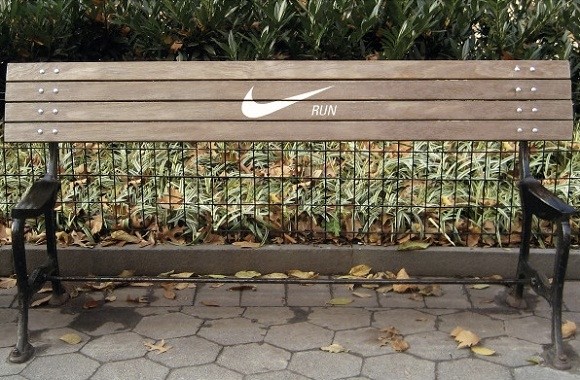
BERTOZZI: In past years I have said the Black Current Tango ad. But every time I see the ad from Nike with the park bench that has no seat, but on the back rest it says Just Do It I think, “Wow, that’s great!”
SEARS: With regards to advertising automation, what are the three biggest trends you expect to impact companies in 2016 and 2017?

BERTOZZI:

  1. The biggest area of opportunity is around data driven shifts away from IOs into direct deals using programmatic pipes (PMP), and that requires heavy use of a data strategy (data warehouse, DMP).  We know now what it takes to be successful with programmatic, and data is foundational along with the knowledge and algorithms for optimization, attribution and planning.
  2. Survival of the fittest in the ad tech space. They are coming under increasing competition and it’s hard to sustain at the rate they have seen. Many agencies and advertisers are trying to consolidate their tech.
  3. Automation of once called “offline” channels is going to boom in the next three years with TV at the forefront. Historically the broadcasters and platforms have been accused of being laggards but I see that changing and I believe we are going to see a hockey stick of activity in the addressable TV space. Whether it is Sky or Dish or NBC, everyone is now looking to play in automation and targetable linear and VOD ads.

SEARS: With regards to advertising automation, what are the three most overblown topics that you wish would just go away?

BERTOZZI:

  1. Complexity and how many people use it as an excuse for not learning new skills and terminology. It is a personal bug bear that so many people want to hide away from what is the biggest shift in our industry since TV. I would say though to be measured, there are still too many people focused on the “what” and “how” and not enough on the “why.” That is fair and we should fix that in ad tech land.
  2. The question, will all media be automated? This is a non-topic now; it is fundamentally clear that we are on our way to that end result. Every channel is moving in that direction and there is no way to stop it. We have to embrace change and maximize the sophistication with which we approach it.
  3. Ad-blocking debates. We will solve this as an industry and it will bring a far improved web and mobile experience. We need to stop talking about it and start doing something about it. We should never have a panel that does not have solutions and examples of solutions, not just more talk.

SEARS: Describe your company or division and then tell us the three most common issues with which you help clients with respect to advertising automation and programmatic trading.

BERTOZZI: Performics is a Publicis Media global agency brand while at the same time it is the performance arm of the other four networks, providing a best in class performance marketing offering to each of those agencies. We are focused on the relentless pursuit of results!

I believe that we are experiencing the same as many other companies, which is the issue of such a fast-paced market place as regards technology. We are simultaneously delivering best in class programmatic solutions while trying to make sure we keep up with the latest technology and building for a data-led future.

The three issues are:

  1. Education needs to be prioritized for every agency. Through the power of the Publicis Media practices from Data, Technology and Innovation as well as Research and Insights we have a very strong machine to help us with this but it is still a daily requirement.
  2. All media should be and will be able to be traded programmatically, however the reality is not always as good as the promise. There are still issues of delivery through the supply chain of premium publishers and tech, where IOs are not always delivered or delivered in full. Where technical issues arise there are often a number of parties to manage.
  3. Being able to work with and around the walled gardens of some of our largest media partners will come more and more front and center as advertisers invest more in data strategy and DMP activation. This new approach will ask more and more questions of the walled gardens and want them to open up a little so an advertiser can get a view of the whole ecosystem.

SEARS: Tell us about your company or division.

BERTOZZI:
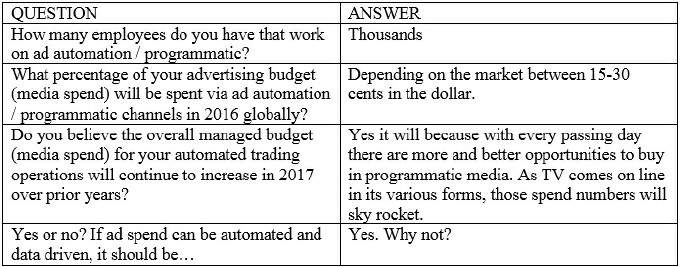
SEARS: The majority of ad technology companies have struggled (relatively small, unprofitable or both). Of the poor performers, what are the commonalities between them that have contributed to this weakness?

BERTOZZI: The three biggest mistakes I see them make are that they are unable to differentiate from the competition and, connected to that, they don’t understand their competition. Without differentiation you have a spray and pray approach and hope something sticks, rather than knowing where to target. The second and related point is that they are not sure what they are; they come with a menu of options without going deep on any of them, almost hoping we will work it out for them. Finally I would say that not over-promising and making sure you deliver what you say you’re going to deliver is vital.

SEARS: A smaller handful of ad technology companies has achieved scale and performed better than the rest. What are the commonalities between them that have contributed to this relative strength?

BERTOZZI: The opposite of the above. One addition: people. People who are able to build strong relationships and develop trust very quickly will always win out in the end, when combined with the opposite of my list of mistakes.

SEARS: Do we live in a “tale of two cities” where Google and Facebook win almost everything, advertisers are dictated to and other media companies fight for the scraps?

BERTOZZI: To some extent that may be the case. I would say that some of the competition that publishers have always experienced is just consolidated, but it doesn’t mean it wasn’t there before. In that consolidation the question is whether or not that then makes life harder or not for publishers, or just easier for buyers. The market is evolving, however, and there is a lot of spend moving away from very poor, non-transparent ad networks where fraud and lack of transparency have been an issue. The time has never been better for publishers to stake their claim to provide quality inventory and encourage advertisers to invest in them.

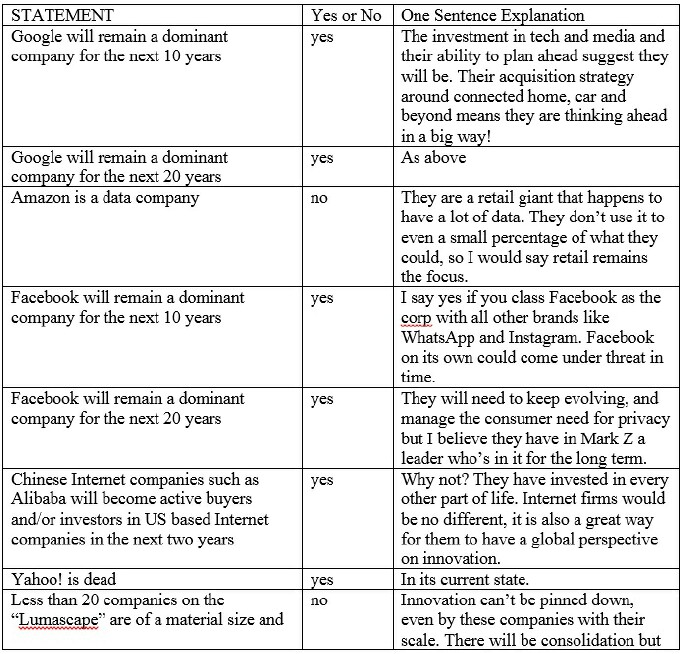
SEARS: Please answer the following statements yes or no.

BERTOZZI:
SEARS: If you owned a yacht, what would you name it?

BERTOZZI: Angelina! If I owned a yacht, it would likely be my second biggest pleasure in my life, so it makes sense to name it after my first.

SEARS: A young family member has come to you seeking career advice. They must choose one of the following careers: ad agency executive, ad tech executive, company marketing executive or ice cream shop owner on the French Riviera. Which career path do you recommend and why?

BERTOZZI: Company marketing. I say that because it’s the broadest and applies to all the others. If you become smart in marketing you can apply that to all the other jobs and improve them or grow them. Of course in the world of the chief marketing technologist I would encourage them to get smart on the tech side of the business while they’re at it!

SEARS: What is your favorite restaurant in the world?

BERTOZZI: Impossible!

SEARS: Thanks, Marco!
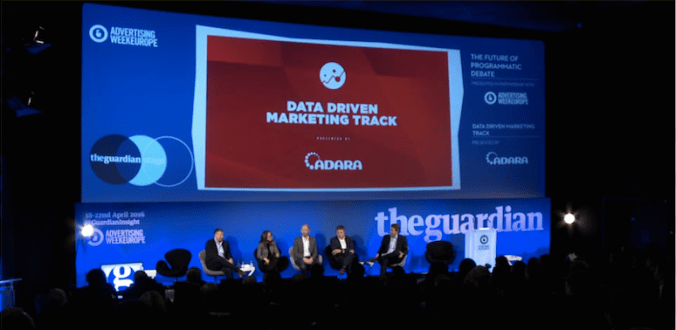
My video interview with @Google ‘Think with innovators’ series

My interview with the Google series ‘Think with innovators’ looking back over my career and laying out some of the learnings. It brought back some great memories!

Original article here

For Marco, innovators often tend to be lone, disruptive voices, whose biggest challenge is persuading the majority that change is a good thing, and that the outcome of that change will be positive for both agency and clients alike. In his many years of advancing the digital agenda, he says there has been no bigger challenge than the introduction of Programmatic, starting in 2009. “If you look back, there were whole businesses that did not believe this was the future,” he remembers, “but at every organisation now there are big advocates for Programmatic who all have a common thread of trying to change how the business has always worked.” In driving that change, Marco recalls that there were no short-cuts, as he spent years “literally going door to door” in an effort to educate colleagues and clients about the power of the new technology.


Innovation is in your DNA. I think you can learn some of the skills that are required, but it goes back to ‘what motivates you?’ The motivation to innovate comes from within.

Marco Bertozzi, Global Chief Revenue Officer, Performics


“My definition of innovation in the context of a large media group is really this concept of the ‘intrepeneur’,” says Marco. “Really this means trying to drive change, trying to change what people have always been doing, trying to invent new things within the structure of a big organisation.” Having earned his stripes as an ‘intrApreneur’ at VivaKi and at Performics, Marco now takes time out to share his experiences with the next generation of innovators. “I do mentoring at university, I do talks at schools and there’s a few other things in the pipeline. And at the same time I like sitting down with some of the biggest digital companies in the world and talking about how we’re going to continue to evolve this new space.”

Looking forward, Marco can see new technologies already starting to change the landscape, even though the fundamental challenge for businesses remains unchanged. “First Programmatic came along, and with it all the different channels, and now everyone’s talking about virtual reality. It just never stops, so the challenge for agencies is how you keep on top of that change and really embrace it.”

Reflecting on his undiminished appetite for the next wave of innovation, Marco knows exactly where his enthusiasm springs from. “I think for me, what gets me out of bed in the morning has always been that ability to work with lots of other companies and people who are more future facing. My satisfaction comes from believing that there’s a right way forward that’s different to how we’ve been doing it before, and having the self belief to see it through.”

Cut the jargon? Cut the crap!

I am sorry Bloomberg I don’t agree with your cut the jargon campaign. Cut the crap, you just cant be bothered to learn something new. I know I will get pelted with rotten tomatoes and urine but I am sorry, this is just a shield that lazy or ‘elder statesman’ of media like to hide behind because then they are not going to have to admit they either can’t or won’t learn something new.

The phrase that I like the best is ‘lets just talk plain english.’ I could translate that into ‘if I say lets talk plain english then perhaps they will some how find a way to make this new programmatic stuff sound something like press and TV that I have grown up with all my life.’ No. I wont. You know why? Because every industry has a language, in our industry every sector or media channel has a language. If you go around saying GRP or DPS or DDS no one chains you up at the stocks, but by God if you say DSP or DMP, the heavens open and thunder and lightening crackle down from above.

I do agree that we talk too much about the technology and not enough about what it can do, and I do agree that some people do like the over use of tech words, but that’s not the context I hear it in. What I hear is ‘all that DSP, DMP, three letter acroynm stuff’ yes, it is called SHORT HAND, abbreviation. You want me to say Demand side platform every time? Or would you rather like me to say ‘a buying platform that allows us to access inventory in real time and combining it with first, second and third party data’ oh you don’t understand data? Well here goes…actually no, since this tech is powering most digital media nowadays and since you work in an agency and may even run it or our a senior industry body leader of a media owner, how about giving it ago and learning about it.

Lets focus on marketing what programmatic can do, even the definition of programmatic, but lets not pretend we use too much jargon when really we just cant be bothered to learn a new trick. Right I am off down the Public House to read a Double Page Spread and perhaps later will log into Donovan Data Systems and check out my Television rating points for my last television advertisements.


Adblocking -please advertise responsibly

Ad-blocking, is now in its next chapter. The converted network in the form of Three is going to banish ads en masse. We have lived through a number of chapters in this story, we are reading fast because it is such a page-turner and on a panel a week or so ago I was asked a number of good questions.

The first was why had we taken so long to wake up to the issue when ad-blockers had been around for some time. The second was “what are we actually going to do about it?” and finally a question about what advertisers think. The questions raised some good points because right now the whole industry is standing around admiring the problem with little visible action.

Let’s start with the advertisers, why are they not up in arms on this topic? Well the answer is that it has not affected them, as far as they can see. They ask for media and they get media, often at a lower price than last year so everything is rosy. The mobile network Three’s partnership with the ad-blocker Shine might start a trend that means the only feasible answer is restricting inventory and increasing pricing. Advertisers will then find the cost of their digital ads goes up. When you see that six months after bringing in new rules on its exchange Appnexus has reduced traffic by 90 per cent, you start to see the potential impact if you clean up ad fraud and restrict eyeballs.

I believe we did not notice the problem until other businesses started to make money out of the problem. Not unlike the earliest protection racket that started up around the olive groves of Sicily, once it was clear that there was money to be paid the topic was widely distributed by the aforementioned racketeers, sorry ad-blocking companies. Since then, ad-blocking has seeped into the common consciousness appearing in articles, films and more. In fact as Caspar Schlickum of Xaxis said, we basically brought it upon ourselves by talking about it so much.

We are now admiring the problem from every angle like a fine work of art. Yet this is an industry issue like no other we have had before. This is an issue to end the industry and we need to create a collective approach to the problem. We have to do something on the scale of the alcohol industry. “Please drink responsibly” needs to change to “please advertise responsibly”. We need to get behind a body of people capable of creating change.

image: http://offlinehbpl.hbpl.co.uk/news/OMC/richedit/DrinkResponsibility.jpg

Advertising needs its own version of the ‘drink responsibly’ industry effort

The question is who is going to put their hand up? The Internet Advertising Bureau, IPA, and Advertising Association have to come together to start the ball rolling. Some of that should be official sounding work and some more basic. The easiest example is to all collectively agree to not build certain ads.

The IAB with its “lean” approach is starting with that, but we should all get behind it. There was a time in 2002/3 when pop-ups were banished to whence they came. They were not cool, the sole preserve of gambling and porn companies. In the last few years they have made a return in a big way, but disguised as something more sophisticated. We have to cut them out. None of this is pretty and we have to get on the front foot.

And as a parting remark, I would say it is not helpful that other parts of the business are rubbing their hands together on this topic. Whether it be people working in other media channels like TV who think that people actually like TV ads, when actually they have no choice really, give them an app to dodge TV ads and they will, or creative agencies blaming programmatic. We all have a part to play and it threatens all of us.

One thing we could all do is not allow ad-blocking companies into conferences as the IAB did in the US because the lights that beam on the stage, the food they happily eat in the break, the drinks they consume in the bar afterwards and everything in between is paid for by advertising. For that reason alone they should not be invited.
Read more at http://www.campaignlive.co.uk/article/ad-blocking-end-industry-why-no-one-stepping-change-that/1384789#7uGwk0Qmp1bklfyh.99

If you want to understand Ad blocking, look to the youth.

Original article posted on The Drum here

So much of the talk on ad blocking is focused on battery sucking ads, data sucking ads, bad ads and so on. There is hand wringing at every corner of the industry.  Today I saw a tweet from an advertiser bemoaning how it is messing with their site analytics.

The solutions are diverse and range from technical to blocking the blockers or even worse paying the organised crime like protection rackets that some of these ad blocking companies are offering up.

If you really want to understand ad blocking you have to look to the youth.  Because the youth are not moaning about ads sucking their data and they aren’t obsessed with being followed around the web.  They don’t care about any of that.  They do talk about the quality of ads.  They just don’t understand the relationship between ads and free things.  Those free things are many and varied and they have not stopped to think about the reality of paying for them.

I’m part of a project called Speaker4Schools where I run educational sessions on the media industry for 16 and 17-year-old school children.  Recent presentations I’ve given have involved talking on the subject of the value exchange between advertising and the free services the children receive.

As I work through the presentation I ask how they would feel paying for Facebook (no one), what about Instagram? Yes, but a tiny amount and email? You get the idea – they don’t want to pay and can’t actually get their heads around having to pay.  As I explain that advertising is subsidising all these great services they feel are essential to their lives, I see the realisation dawn that they have really never considered the relationship at all.  Ads are just there to sell product.

I also asked the students if they use ad blockers.  30-50 per cent said they do or have done so.  They do it just because they can.  They do it because ‘there is an app for that’.  These are the young consumers of the future.  The problem of course stretches further in to older age groups which are where I agree with publishers blocking people from seeing their content.  The problem is however that fundamentally if we can’t explain to the younger generation that they get all this free stuff because of advertising, and it won’t be free for long if the use of ad blocking continues to rise, we have a much bigger problem.

It’s time to get together.  Just like the alcohol industry and its ‘drink responsibly’ campaign we need a major advertising push.  We have a massive job to do on educating the population, and perhaps along the way, help our industry attract new entrants.  It’s imperative we do this rather than lining the pockets of every ad blocking and ad blocking-blocking company and the myriad of other tech companies claiming to solve this issue.  Let’s put our energy towards a true industry effort to change perceptions and save our business.

At the same time we do have to improve creative, reduce ads, agree some standards on viewability measurement and reduce fraud.  But first and foremost we have to educate the youth that if they want to Snapchat for free they need to see ads.

2016 will be the year of breakups in programmatic

images

First published in Campaign – link here

In the programmatic space, 2014 can be summed up as a year of snap decisions and bad relationships. There was a considerable amount of hot air and publishers, agencies and advertisers, to varying degrees, reacted to it in the heat of the moment. But 18 months later, I believe we will see a number of these relationships start to unravel.

Today I am so pleased to see that almost all major clients are embracing programmatic with a cool hand, understanding the pros and cons and planning for a future where data and tech are front and centre. The heat has come out of the programmatic kitchen and been replaced with good old fashioned brain power.

But that is not what I am writing about today — although related — I want to return to 2014. At an ANA event in New York last year, I joined a panel on the programmatic revolution, which followed the usual headline-grabbing presentation of whoever had run a survey that day. The air was full of fear and suspicion over transparency and media agencies were in the dock as usual. At that conference I called 2014 “the lost year” of programmatic in regard to advertisers and how they approached it. This was because the entire year had been a series of meetings, conferences and emails concerned with transparency and agency trading desks and all the good stuff we have come to know and love. Very few of those meetings were about the strategic direction advertisers should be taking in the programmatic space.

What happened last year was not just the headlines and the deafening ring of the cash till, as the myriad of consultants counted their earnings on the back of the fear and suspicion. It was worse: some big decisions were taken under those conditions. Major partnerships were signed, deals done and monies committed with an eye on outsmarting whatever the danger was — and that varied. Perhaps it was an advertiser that wanted its own tech deal to go around the agency or publishers wanting to out gun Google and Facebook. Perhaps it was procurement or the CEO asking questions of the brand manager and making them act. Whatever the catalyst was, decisions were made that are already starting to become irrelevant or just plain bad.

Next year will see the unraveling of these relationships; It will be the year that those deals and partnerships formed under intense strain will come apart. Publishers, advertisers and agencies all made decisions — some more than others — but with a new calm descending on the programmatic landscape, and the strong wind of transparency, clarity and understanding blowing through, we will see some of these deals undone. This will likely cause serious financial difficulties for some ad tech companies who sold the dream only to discover that waking up next to a partner who has already checked out of the relationship is a lot harder than they thought.

Anyone who tried to sell a service built around the notion that this topic was simple and easily solved will get called out this year. The market has moved so much in the past 12 months. Whether you are a publisher, agency or client, making a big decision last year was brave because the landscape today looks very different. We can only wonder who the jaded lovers are and who is thinking about how to break up the rather heat of the moment relationship.
Read more at http://www.campaignlive.com/article/why-2016-will-year-breakups-programmatic/1373982#z2CbdEY2Q3jC5yxj.99

Dmexco – powered by professional energy

Perhaps a surprise to some but this year was my first year at Dmexco. Every year it has clashed with something or other, but this year I was there, well for a night and a day at least. It is usually the happenings around the conference that garner the most interest but at Dmexco it IS the conference. Dmexco is a REAL trade show, a place where companies come to show off their goods and hope that the circling hoards will come buy.

There is something refreshing about that, it felt a lot more meaningful, a place where business came first and rose second. Don’t get me wrong I have no issue with rose and I am certainly not one of those bitter nay sayers that write about the pointlessness of Cannes, no siree, I am a fan, but that said Dmexco felt solid and meaningful. There is no other place that so neatly distills the lumascape into a real environment, where you get to see the colossal competition for the buck all in one place. I think it is that which really struck me, just how many people are out there in the martech, adtech space and all with their piece of the action.

I did not get a chance to truly get around everything but I sensed there was a pecking order with the smaller stalls gathered in one place. They are all looking to grow of course and move into Yr2 with the big guys. Big guys they are as well, over the years the stalls have apparently grown and grown and it appears to be like Yachts with everyone weighing and rating each other up based on size and how many people fit, after the size comes facilities – does yours have a coffee machine? Meeting rooms? TV centre – shower? Swinging dicks aside it is an amazing array of companies all sat alongside each other from Adobe and Oracle to MediaMath or the agency lounge. It was great to see all the Publicis agencies there, not too big, not too small. GroupM were clearly out to make a statement on the other hand, commercially powered by Xaxis.

What I have been impressed by is the level of seniority of attendees, Global CEOs, Group CEOs all attending an event that is relatively new. All around the event you will find leaders from every corner of the business and with that brings some gravitas and focus and less feel of a jolly that comes with Cannes.

I hope to go for longer next year and attend more of the actual presentations, but for a first trip I was hugely impressed and will definitely prioritise. The event ended on a high as I managed to hitch a lift with the lovely (am I allowed to say lovely?) Nikki Mendonca who had a cab waiting for me even as I stood in a long queue.