Ad exchange development mirrors that of paid search

Marco Bertozzi: 08:03:2010
The battle for the ‘ad exchange’ dollar is hotting up. It reminds me of how things were with search. It crept up on people / media agencies and before they knew it the specialists were doing well and making good money and winning pitch after pitch in the specialist area.

As it went on we debated whether search was specialist or should be just another channel forming part of an everyday media plan and finally we ended up with a couple of serious search independent players and the main agency groups pretty much on top of things and integrating and coordinating search into wider marketing plans.

Here we go again! Anyone who went through that must be getting a sense of Deja Vu. Everyone is talking about Ad Exchanges and DSP’s, the specialists are springing up and making hay and claiming they are the only ones who know how to do it. The debates rage around best practice and who has the biggest and best capability, its an incredibly similar scenario – does anyone else feel it?

The big difference this time is the agency groups to a greater or lesser extent saw it coming and started to gear up for it, as you can imagine I am biased in that area as to who has done it best to date but in a way that’s irrelevant, the point is the people in the know in agencies are all working towards this revolution. It will be a revolution, it is the next phase in media communications and those that ignore this will be looking as silly as those that thought search was a fad. This transition is moving so quickly though and only the brave will really make the most of this wave.

I am enjoying being part of this new wave of communications and trading and have been so impressed by the work that has gone on, this is exciting stuff and it is just going to explode.

My new role at Vivaki Nerve Center , EMEA

Marco Bertozzi:03.03.2010
After a break of three months I have very recently secured a new role at Vivaki Nerve Center. I set out to find a role that was at the heart of the world of digital and I am pleased to say this role 100% achieves that. I am also excited about the fact that we are still at the formative stages for the Vivaki Nerve Center and that I will be part of the definition and growth of the unit.

http://www.mediaweek.co.uk/news/994625/Marco-Bertozzi-hits-nerve-VivaKi/?DCMP=ILC-SEARCH

In the last three months I have spoken to many agency folk around the market and its been a fascinating view on the market. All the major agency groups are investing in their parent group offerings, seeing the benefits of aggregation of skills, knowledge, technology and of course media investment. I hope that as part of the VNC I will be working in what will be the future for Publicis Groupe and help lead the change.

As I have written about previously I believe that the one thing that is for certain is that technology and changing trading methods will alter the way agency groups structure around digital planning and buying. The role of the ‘media schedule’ will be less relevant when in fact we should be buying audiences regardless of their location or site they are visiting. Trading will be about buying at the best price to deliver the relevant ROI not about the fact you bought 10million impressions at a set price earlier in the month and that will combine search and display in all its formats.

On top of that we are of course dealing with the huge changes coming from mobile, social and video, three huge topics that we have to make a success of in our marketing solutions. I am constantly on my iPhone and Nexus one, I surf, blog, update and find information and there are many like me so our solutions need to be making the most of that audience. I believe we have a way to go in that arena as an industry, I look forward to working with Phonevalley and others in implementing these new strategies.

Whether it be social media, mobile or straight forward impression buying we also need cutting edge tracking and reporting solutions and I look forward to working with our partners and Groupe companies in helping us to deliver intuitive, useful and accurate reporting suites to help us across Search, display, video and social.

Having just spent a few days in San Francisco its clear there is an enormous amount to be getting on with, some tasks more straight forward than others but all equally exciting. Our strategic partnerships are going to really create some amazing opportunities for our clients and there will no doubt be more to come. I work in a group of amazingly talented companies including Razorfish, Digitas, Performics and many others so this should be an exciting times and I cant wait to start.

The Superbowl still captivates a nation, a UK perspective..and the TV ads

Marco Bertozzi:14.02.2010
Having been in the US for the first time whilst Superbowl was on, I was struck by what an immense event it is. On the night there were 100 million viewers in the US! Those numbers are mind boggling and even more impressive that they were the highest viewing figures for the game ever.

Who says TV is dead? So how does the Superbowl weekend play out? I always had a simplistic view of the advertising around the event. I imagined a few great Ads in the centre break and then some discussion over how much each Ad cost and whether or not was it any good. I was completely wrong, on all the channels in the run up to the game there was almost as much discussion about the Ads as the game itself. In fact studies showed that watching the Ads was the best bit for many viewers. As an example the web was white hot with rumours about the Google Ad, with many even tweeting that hell must has frozen over for them to take a break in Superbowl.

Once in the game my idea of a ‘centre break’ was naive there were about five plus centre breaks each crammed with ads, some of which were good others less so. What struck me was the lack of an epic. There was no Honda Cog full length or a Tango Classic, just attempts at funny ads. I was sat in a bar when the favorite Dorito Ad came on (the one with the electrocuting dog collar) and the place erupted with laughter, success for Dorito on that one!

Here is a selection of the best:

Post game and on into the next days everyone talked about the ads, amazing coverage, they polled them, they critiqued them, ranked them, it was prime time news. The Internet viral effect was and still is massive, the more people talk about them, the more people go and search online, this is TV and online working together brilliantly. You can see why advertisers go for this, the exposure is enormous, there is simply nothing like this in the UK.

On balance I think it is slightly over the top but you do get dragged into the occasion, it’s also the biggest test of the theory that there is no such thing as bad publicity, woe betide anyone who made a dog of an Ad because that fact was repeated over and over again, would be great to see the sales of an advertiser who produced a bad Ad for Superbowl.

Shifting Direct marketing budgets make sexy social media just another channel.

Marco Bertozzi: 23:01:2010

Brand Republic released news of some research by Alterian that DM budgets are morphing into social media. Now to be clear, I have not seen the research so perhaps it will give me all the detail I am about to question but none the less, its still an interesting subject.

2/3 years ago every client wanted to know how to use social media in their advertising. They wanted to know how to have conversations with customers, how to turn dull into sexy, create millions of fans of car insurance and at the time, no one had an answer. Part of that was the reticence of clients, some of it was media agencies still getting their heads around it and some was actually the fact the very carriers of social audience, did not know what to do either.

While this lack of innovation continued the audiences on the likes of Facebook sky rocketed and advertising rates fell accordingly and that then opened up a huge opportunity for Direct Marketing, not one to one marketing but good old fashion buy it cheap and expect a low response rate type DM. Is this what all those advertisers that have shifted DM budgets into social media have done or have they done anything interesting, have they changed their approach or their channel? I suspect not, I imagine they have bought up vast amount of impressions, overlaid some targeting, just as they would with mail shots and they have accepted a very low response rate and carried on filling their order books. There is still so much room for genuine use of social media and that needs to come from their main brand budgets, not their backwater DM budgets.

Take a look at Compare the Market/Meerkat, everyone knows it, everyone has seen it, but that is a great example of a brave client taking the plunge to make themselves stand out from the competition. I can think of quite a few insurance companies who must be thinking, why were we not brave enough?

New Facebook push notifications will mean mobile dominates FB usage, even in the office

Marco Bertozzi:07:01:10
Discussion around whether or not Facebook should be banned in the office has pushed more and more people towards using mobile as the primary route to Facebook interaction. The numbers are impressive about how much people update their status via their mobile.

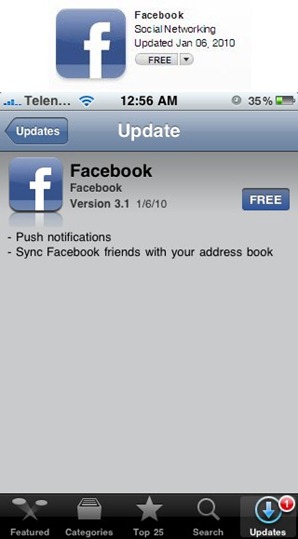
Now work will arguably be more interrupted than ever as people to take up Facebook’s new 3.1 update that allows push notifications to your iphone. At least before people often left FB open on their screen and could see messages easily, now they will be shovelling through their bags and desks as their phone beeps with that expectant moment when you wonder which of your friends has sought you out! The facts according to Razorfish annual study – Razorfish Feed – are scary for the workplace, apparently the average connected person updates their FB pages every 37 minutes, the full report can be found here:

Click to access Razorfish_FEED09_Webinar.pdf

Facebook is part of life now so I think offices that ban its use need to get over it as it is here to stay and part of our communication, I would rather see banned the trend of recent years of everyone wearing headphones at work. It is the most depressing of sights to see a bank of people all with headphones, no one learning from each other, no one knowing if your team member is talking utter rubbish on the phone. The office has changed, lets worry about things that stop people communicating rather than things that encourage it.

How many of your team have you pissed off?

Marco Bertozzi:04:10
In the next six months all companies are going to experience an extremely challenging time. Particularly those with young, ambitious members of the team that feel they have just lost a year or arguably two of salary, promotions and bonuses, regardless of the realities of the recession, they feel aggrieved.

Media, digital and advertising agencies are prime examples of companies where managing the staff costs has been paramount, they represent half the cost in the business, more in some cases. The last year has seen different agencies deal with their cost bases in many different ways. Some have been able to manage with some light redundancies and a little voluntary, others have had to take pay cuts and heavy redundancies. The niceties have been removed, the taxis, the lunches etc and everyone has been asked to work that much harder in return. Most people have obliged, in the main out of fear.

Now we are in what we hope to be a slow but steady return to the good old days everyone feels better, but along the way it is going to be exceptionally bumpy. Many agency chiefs are now sitting on an army of disgruntled employees, PricewaterhouseCoopers believe up to 30%, all ready to jump ship at the first sign of a decent job offer and promotion, the promotion they have been stopped from receiving over the last 18 months.

This is not the fault necessarily of the individuals in management, in many cases there is little they can do, they had to manage the numbers although some may have handled their individual situations better than others. I think the testing times will come now as to how we manage the exit from recession. How companies reconnect with their employees, that will be down to management and the steps they take.

It’s critical agencies do this because the end result if PricewaterhouseCoopers is correct (http://bit.ly/4LieSw) will be clients seeing a revolving door of people on their accounts, the continuity on the accounts falls apart and suddenly you have a client feeling a little disgruntled themselves.

So it’s probably about now that everyone needs to have a look at their teams and start to ask themselves honestly – just exactly how many people have I pissed off?

There is nothing like memory lane

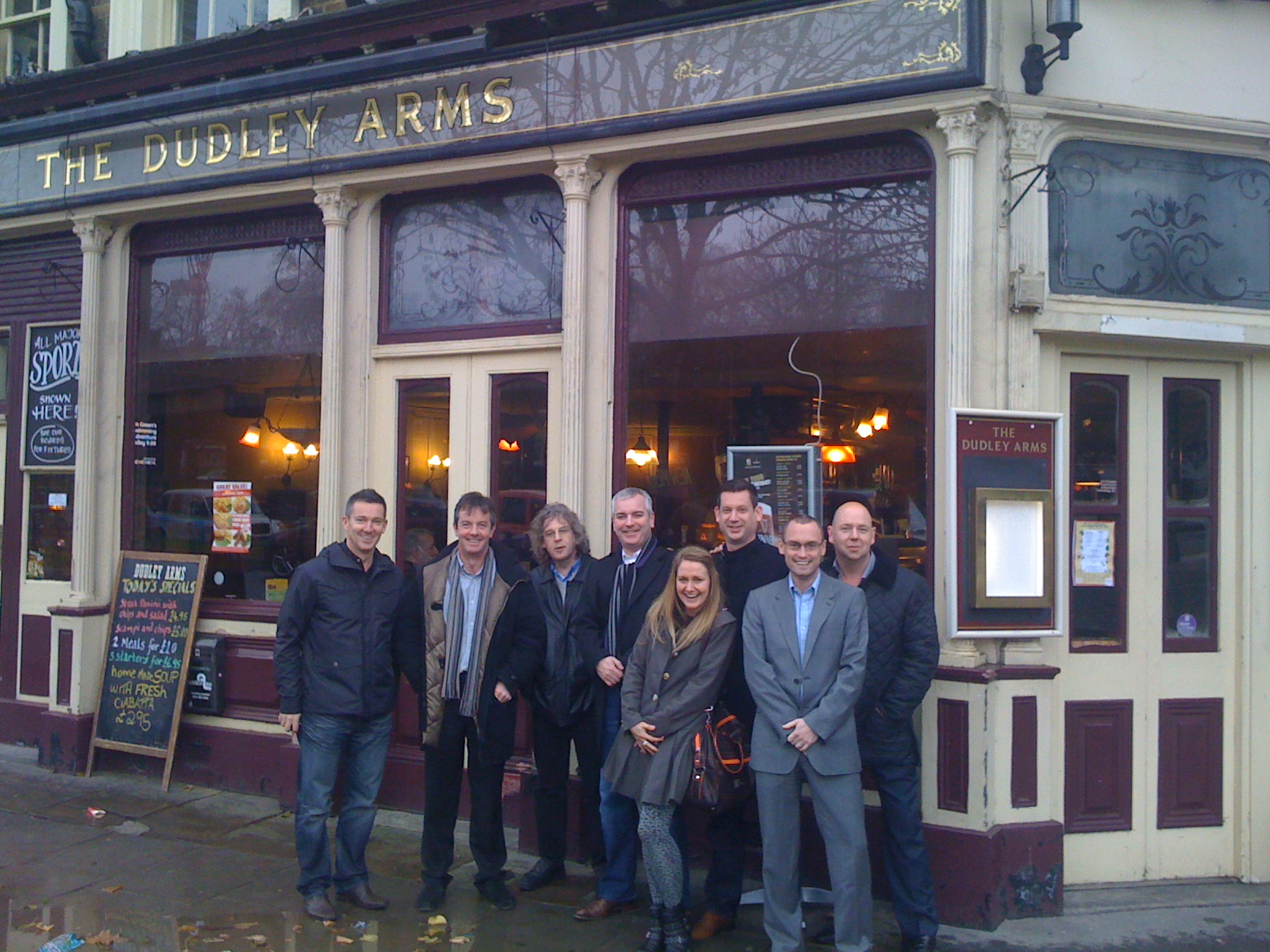
Yesterday saw a small reunion at The Dudley pub in Paddington. The Dudley was the spiritual drinking home of Zenith Media as it was. Yesterday some of its most loyal supporters returned to have a quick drink there before moving on to other Paddington favourite haunts.

The reminiscing and story telling was in full swing and it was a great day but left you realising how much media has changed from the days back in the shed @ Paddington. ZO is now all grown up with shiny offices on Charlotte St, along with many other agencies in the area, many of our group had left ZO and interestingly often from agency to media owner which shows how much the skills between agency and media owner are blurring as they become more and more strategic in their approach as well as more central to discussions with clients as clients look to involve content and conversation in their approach to reaching people.

All in all though, it was good to discuss some of the bigger issues which I would be prohibited from raising here but focused on JF and TS quite a bit and of course not to mention JH and KH.

YouTube not afraid to put targeting first, media channel second

Marco Bertozzi: 02.12.09
Good to see YouTube advertising in the Guardian and Metro, there was a time when executives in the company would rather be seen dead than advertising, let alone in press. Surely that would admit they need offline media to launch a new proposition.

I think actually what it shows is that planning how to reach an audience is more based on where they are likely to be found at any given touch point through the day as opposed to what is the channel of choice and or whether it would be seen as admitting defeat, it shows that regardless of your brand, whether it’s the most digital company in the world or not, you should use the right channels to reach your target audience.

The Ad itself now makes it feel like YouTube are really beginning to flex their muscles a little and take ownership of TV on the web away from all the hype surrounding Hulu. I am sure that just round the corner we will see some major film content and other TV company content. I still feel that they need to change the design a little, I know it’s a successful formula but if they really want to ad lots of great content I believe it should be presented in a more grown up setting. (Maybe I am getting old)

How will Ad agencies manage Ad exchanges?

Marco Bertozzi: 18.11.09
I mentioned how important ad exchanges are becoming but not the difficulties they will bring both to sellers and buyers.

By some they are touted as an impression by impression targeting opportunity where at last you can optimise your ROI against a very specific audience, this may well be true. However to achieve this campaigns need to be managed day in day out, who will do this in an agency? It’s closer to running a search campaign than a display campaign but I can’t see the search teams running it, so that leaves the buying teams.

Buying teams don’t do what the search teams do and on the whole would rather not. Those guys tend to buy idea based campaigns, Ad exchange activity will need optimising, not weekly or twice weekly but hourly, the buying teams won’t do that, they have too much else to do.

I know that companies like google struggle with this, who are we talking to; buying, planner buyers, search teams, account teams, digital teams? Their problem gets worse when you add in video, with tv and digital departments grappling over who owns it. This is the fundamental issue agencies face, Damian Burns at a recent Monaco Media event challenged Nikki Mendonca on how an agency should adapt and I am not sure she really had an answer, it’s clearly still a difficult situation.

Let’s say we do sort all that out, the bigger issue remains that this all takes resource and therefore decent salary budgets. Digital media commissions have stayed relatively strong with many clients still paying 10+ percent but any decent sized account is now half that and below, where is the agency going to make money on these new time consuming approaches and that includes social media.

I hope that slowly agency payment methods evolve to one closer to paying for a premium service, monthly fees being a norm rather than an exception, even better monthly fees with a commission, I think these new channels will make agencies have to reevaluate how they charge and establish exactly who will do the work!

The new model agency

Marco Bertozzi:11.11.09
Its starting, the momentum is gathering towards the true ‘new model agency’. First we had media agencies that were all in silos by department with TV being the dominate in most. Over time that has merged into cross media departments with TV, Press etc buyers all working together, makes me think of ZULU the film, closing ranks to protect themselves from the onslaught. Are we seeing the end of the buyer as we know it?

Digital has thrown everything up in the air and then on top of that technology has thrown digital up in the air and everyone is trying to cope, the one thing that is true though is that more and more technology will do the best job of ‘buying audiences’ as its becoming known. I have just come from an agency that was very commercially aware that low value, high volume accounts and the people who worked on them are not needed in central London, stick them somewhere cheaper was their idea. With agency margins being squeezed this can make a genuine difference.

Buying has that feeling about it, do media agencies really need 40-50 buyers, buying media that has already either been agreed in an overarching deal or is being supported by technology. The arrival of ad exchanges from Google, Right media and many others will change everything. You need to buy impression by impression, audience by audience and in real time, ‘paying’ the right price by impression millions of times an hour – no media buyer will do that.

The planning of TV, Press, digital or outdoor is all possible through technology so I suspect in five years time we are looking at media agencies that focus on strategy, some key trading heads to do the deals and a lorry load of computers. Agencies will be paid for adding value not buying media.

I will be interested to see which agency is brave enough to embrace this new model ahead of the pack and decide that things really can be done differently..lets see.