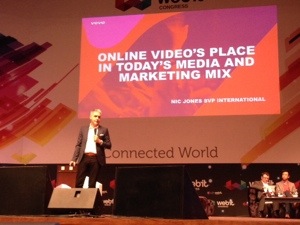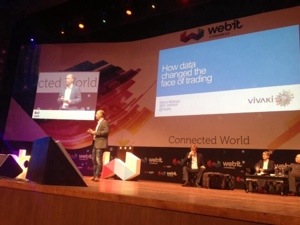
The least well known, best attended event: Webit 2013

20131113-200927.jpg

Probably 6-9 months ago when November seemed a life time away I received my first communication from Webit. Come the day I walk on stage, myself and fellow speakers had received according to the hosts around 36,000 emails in the arranging of this event. Based on my own experiences and those of others, it felt like at least 36,000 as well. As time went by I started to talk to more people who appeared to be attending this mysterious event in Istanbul and so I decided to have a go.

Welcome to Webit, 8000 people from 103 countries all converging on the astounding Istanbul. Link to event here

The 36,000 emails was a precursor to a peculiar event, just as Istanbul sits between Western world and Eastern world so the event seemed to attempt to straddle both but with an emphasis on the Middle East. I think to call it an International event is slightly over stating, I would suggest that 80% of attendees were local or from the Middle Eastern region with a smattering of people from the rest of the globe.  The genius of these conferences is that a smattering of logos gives it the appearance of something that perhaps it will be one day but not yet. Vevo, Yume, VivaKi, Omnicom (Nikki Mendoca flew in for a morning to grace us), Facebook etc all make it look a big deal and yet many presentations were far from International.

As an event I believe it over stretched itself although I am not sure the organiser thought so, there was no hint of embarrassement that they had spammed people with communication in the run up, so much so that basically everyone I met had given up caring and waited until the last minute to work out where to go next. There is less hierarchy in an arilines exec club status than at this event with three or four different tiers of ticket and then corresponding content. As an example the Telco area and presentations was only available to Platinum, consequently there were no people in the sessions! Different rooms, different tiers and thousands of emails led to a pleasantly chaotic environment. 

I think the focus on start ups and innovation is probably very valuable to the area and I think the mentality of networking very strong and so this side of the event was more powerful than other more sedate affairs. The outside areas and exhibition area, actually quite small, was more like a souk atmosphere with human interaction front and centre. I certainly have never had so many spam contacts, apologies, new business opportunities sent to me and continue to be so. A small point but I feel like I have signed up to the biggest direct mail database by attending the conference, as my inbox seems to be now filled with new biz opportunities. My favourite being:

‘We partner with firms to enable you to expedite time-to-market and improve Return-on-investment by providing cost effective solutions’

I think the area that the organiser most needs to focus on is the matching of titles and content, the Big Data session as an example had at least two presentations that niether mentioned the words Big Data or in fact had anything but a tenuous link with it. Some might say that is the norm, but watching a number of the sessions, it felt to me like too much time spent on creating an overcomplicated infrastructure and not enough on the content, both original content and how it is coordinated. The Panels at times had 8 people on them, this format needs some work, too many people not saying enough, less is more definitely springs to mind!

Evening entertainment was very good, especially for the speakers and panelists and the men, a wonderful evening boat ride and dinner followed by cool party on night one and then night two a meal followed by probably the least likely entertainment – a mass naked Hammam..umm. This combined with some liberal belly dancing left a few of the International ladies wondering whether this conference could be a little more balanced in its approach to men and women and indeed I doubt anyone really cared about how many women there were on stage – the answer. very few.

br />

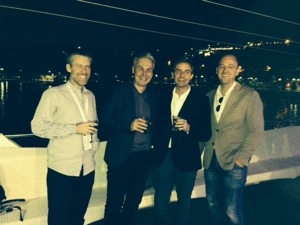
20131113-201246.jpg

20131113-201257.jpg

20131113-201316.jpg

20131113-201458.jpg

20131113-201238.jpg

All that said it was an amazing location, infectious atmosphere led by Plamen and I am sure it will continue to grow and grow. I feel like it needs to take a lead from other large events in how it is set up and run to streamline everything and have less of the workings on show and more of the content. If you want to really ramp up business in the area I also believe it would be a great starting place. For VivaKi expanding and increasing the Audeince On Demand services there it worked well on the back of the AOD Publisher Day we had before it and I am sure many other International teams will see similar opportunity.

The event also created two side lines, the first is that myself and Brian from Digiday have coined the phrase ‘they did a Webit’ and that Brian has big plans for bringing programmatic to the Bazaars of Istanbul, he is particularly worried about the longevity of the exclusive superglue stall man in this new era of RTB!


Four years ago today…

Image

I wrote my first blog. I had no idea what I was getting into and where it would lead. It appears that four years later I have written 196 posts, most of them home grown content, I could never have imagined that four years ago I would start writing an average of one a week for four years, but I have loved it. Anyone who blogs regularly knows that it is slightly addictive and becomes a vehicle for venting. The Ad tech space has been a perfect muse and there are so many baddies to talk about!

I think I am perhaps best known for venting although I try and keep it constructive. I have had at least three CEOs complain to my bosses, I have had my bosses complain to me a few times too with an exasperated Head of Comms Europe in Claire Ballard and Global Cheri Carpenter asking me politely to ‘let them know when I intend to publish something contraversial.’ I have had good supporters in Adexchanger, Digiday, Mediatel, Mediaweek, The Drum and others in republishing content. I have also had guest posts from Simon Birkenhead (now famous script writer for Hollywood), Paul SIlver, Danny Hopwood, our new recruits and others.

I have had people in 121 countries read my blogs, every continent and even places I did not know existed, amazing the power of digital and the web to be able to have that kind of reach. After four years, my top charting blog remains – ‘Trading Desks are in for the long haul, not just the sale’ if you want to read it click here. A time when the Ad tech space seemed so much simpler but there was a lot of tension created by the shift in balance of power between Ad Nets, agencies and new tech companies. It was an exciting time.

Anyway, thanks for the readers and support and comments and sharing etc it has been a lot of fun and I hope to continue for many more years.

When did the big media companies give in?

I was really pleased to attend the #IABengage event this year after an absence of probably at least 6 or 7 years. Believe it or not I attended the event because I wanted to hear about something outside of RTB and programmatic. I wanted to widen my knowledge of other things happening in the market and was convinced this would be the event to do it.

The thing that struck me was that every stall and sponsorship was from the RTB and programmatic space. Turn, Videology, Millenial, Tribal Fusion ( exponential) all hogging the floor. Everywhere I turned I saw data and tech companies lining up like a Morocco Souk all offering shiny rows of things that to the outsider all looked the same.

Similarly to Cannes these companies and more besides have been puffing out their chests more and more every year, bigger stalls, bigger sponsorships and bigger parties. I can’t remember the last event I went to whether it be Cannes, CES, IABengage and others where the Adtech companies have not been expanding like helium balloons inflating on Valentines Day. I love the Adtech industry, it’s great they have marched in, hungry to change the world, turning adserving into something sexy and they are right to do it…but

Where the hell are the brands?!! Where are the companies who own inventory, who have invested in content, who have journalists and film makers and production skills – where the hell did they all go? All these companies on show are adservers, when did adservers take over the world? This event was IAB engage, Internet Advertising Bureau, purveyor of all things digital. At the end of the day these companies help an advertiser get their Ad from one place to the next or help an advertiser find a target. They are not the destination, they don’t make anything, they are not creating anything so where are all the companies that do?

I was amazed to not see Yahoo, Guardian, Mail, Viacom, Vevo et etc why are they not at the premier digital event of the year? It’s like the magpies moved in and took over. Microsoft was there but on the whole the place was sadly lacking those brands that at the end of it all are creating a destination and an audience.

We are living through an exciting times right now and there is genuine change going on but let’s make sure big brands and content producers still have a story to tell and a presence to be felt at events like this. Dmexco, ATS and Adtech have the rest covered.

By the way Turner has decided three years too late that it wants to do programmatic – maybe there is an opportunity to sponsor IAB engage in 2014?

Advertiser RTB Desks – Not as easy as it looks

http-inlinethumb41.webshots.com-5928-2732919050104237032S425x425Q85

I cant 100% explain the tone or actual words, but it translates along the lines of ‘watch out boys, ALL the advertisers are going to do this RTB thing themselves.’ I hear the message a lot, usually from people in companies that feel they will benefit either way, agency relationship or not. Trouble is there is rarely any proper definition of this phenomena and that leads to falsehoods and scare mongering.

Facts first, an advertiser employing a Mediamath or an Audience Science is not ‘going it alone’ they are merely changing the people they pay to make the work happen, that is going direct, different to going it alone. I would love to write an article about how misguided the rationale is but will save that for another day. Fact is we need to be clear on what we are describing first and foremost because any advertiser who employs a managed service has changed nothing other than the party they are employing, sure, the industry may then be broadening out but thats not a big deal, has happened all through the last couple of decades and big players came and went.

So what does that leave us with? The advertiser who truly does this themselves, I mean employs people who sit in a room? Well first of all, lets look at what needs to happen to deliver a decent offering. At Audience On Demand central to our approach is VivaKi Verified, a team of people who evaluate Tech, Data and Inventory at scale and that is all they do. They are experts, they have expert processes and support the whole operation. When you meet these guys you know they are serious and without them, you have a shaky offering.

But back to the ‘going it alone’ advertisers.

1. The first and most important thing is to hire people to do the work, so you are looking for people interested and experienced in this space. They have to be experienced as your advertiser organisation on the whole would not have people to train them up and mentor them. Those people then need to be inspired, developed, they need to grow as employees, they want to be in an exciting dynamic operation, we know these people, they are demanding. Working in one business, with no peers and little scope for growth will not inspire the best to come and work so you need to find a solution there. If you are lucky enough to hire quality you then have to retain them because if they leave, you wont have a large team to retain knowledge. Final piece in that jigsaw is getting headcount signed off, not easy, what is the rationale exactly as you wont be ‘saving’ money, you will be a cost.

2. OK so let’s say you found the industry RTB expert who wants to come and join, next they need to choose the tech partner, partners. So they do a ‘review’. What does that entail exactly? A few presentations, a load of words on a slide with no way of knowing if they are true or not. Your tech decision is based on a very lightweight approach and has no benchmarks. Even worse you end up choosing lots of different ones and testing and testing. Likelihood is you end up working with one partner. In my day job I am asked a lot about the importance of remaining agnostic, fleet of foot, go where the best tech is. Advertisers want to know we are doing that, but is that practical on a stretched team without expertise? I would challenge it and without scale you cant run different verticals, brands etc to see how DSPs respond so you end up leaning on one partner.

3. OK, so we have a person and some technology. So you start running some campaigns. Feels good to be doing all this in house. One day though you get an email from the boss saying he saw your ad on an unsavoury site. How did that happen, I used all the right tick boxes? Suddenly the pressure descends on how on earth you are going to make sure that does not happen again. Vetting urls needs to occur, ideally upfront, creating white lists and verticals, it has to be ongoing. You need to have that up to date, the tech provider you use cant be trusted to do that. Some DSPs have in their T&Cs that it is simply not their responsibility, so it is now yours. Verification is time consuming, and needs resource to be done well. If you are using multiple partners out their that are not transparent you will have to fix that ASAP because the liability is with you, and you wont be able to demand money back. So best thing to do is do a review of verification providers in the space, there are a lot and they all promise a lot, it is down to you to decide. You could ask a partner for their view perhaps?

4. Now we are in a good place, you have a person, tech x 3, verification process that is ongoing. You now need to develop your inventory outside of standard exchange inventory and into private exchanges, you need to develop partnerships with large players. I would suggest that to be done properly you need a dedicated FTE, you don’t have that to hand so you will need to find some quick wins, otherwise known as average solutions, par with market. As well as inventory we have data that needs verifying – you need to trust the data, source of data, how it is collected etc, that is what we would expect in AOD – beyond that, a strategy around first party data combined with 2nd and 3rd party data to really maximise what you are doing. Ideally would be good to see how a certain data compares based on vertical or business type, KPI type etc, harder for a single advertiser desk. I guess you could ask your partners to fill you in?

5. Campaigns are live. Results are OK, not sure how they compare, but they are OK, you need to optimise though and that takes time, would be good to have some other people to run strategies by though, maybe discuss optimisation strategy, even learn from other countries. Vital to have cross fertilisation in this new space as there are very few experts. Doing a good job takes time. Understanding why something is not working as planned is where things get tougher, you could ask a partner to help?

6. Did you know that DSPs don’t design individual dashboards for you, or cut the data just how you want it to report to the board. They don’t always give you the insights you need so ideally create a solution that you can pull that data into that gives you flexibility – you can licence some software, learn all about it and use that.  Maybe the DSP has something it can sell you – is it the best one though? Perhaps worth a review of the market to come to some conclusions. Ideally would be good to talk to some people who have had experience of multiple solutions and look under the bonnet. You could ask a partner to help on that I guess?

This is the tip of the iceberg, running and creating a genuinely Grade A trade desk is not about logging in and pressing go, it is about scale, it is about cross pollination, you need to have support and strength in depth. We have an incredible team in AOD that is able to provide a fantastic proposition to advertisers that is technology agnostic, founded on deep expertise and importantly a team of people focused on results not their VC pressure to extent the number of partners and revenues before sell date or IPO. I am a passionate advocate for what we do and to be honest the wider groups as well, as long as they are showing transparency and not flogging their own tech.

Advertisers may well do this themselves and some do, but what I have seen so far are advertisers who say they do it themselves but really then lean on third parties, no different to using a Trade desk. Perhaps that is the future, that’s not my debate today, its about those who are saying they do it themselves. In my opinion they will end up creating a less good proposition for their business, with less experienced people who even if they stay, fall behind the market place because they are too siloed and lack inspiration from different people. I am proud of what we do and how we do it, I hope that advertisers continue to realise the benefits of that, but watch with interest the ‘DIY’ strategies play out of course. Either way, I reckon there is space in the business for everyone to play in.

The article today from Adage here is talking about how tech companies are going direct to advertisers and agencies need to shape up if they are going to stop that trend. For all the reasons above, I dont see this as a genuine trend. Its a just another chapter, we dont know how it will end, I can tell you though that most of these tech companies are not geared for this and niether are the advertisers. All the benefits above should soon reveal themselves to any advertiser trying to go it alone pretty quickly.  Anyway does anyone care – isn’t Google going to take over the world? No probably not, they don’t want the terrible business models we have to endure and niether will all the others.

Persistent Identity – holy grail available to some..

20130912-204926.jpg
I am Just back from meetings in Seattle and San Fran with the Big 4. Big 4 you ask? Well in todays world of data connectivity, mobile innovation and growth as well as digital commerce the big 4 has changed. Facebook, Twitter, Google, Amazon are now gunpowder and bullet. The others more and more the barrel.

The message that is coming out loud and clear is that these players in their own varied ways are out to maximise the insights they have on their users and customers through a single themed approach of ‘Persistent Identity.’ I heard it a few times over the time I was out there, I have seen it mentioned in the odd article. But when you get to spend three days with all these market leading companies it becomes loud and clear that the data they hold on consumers is the key to their future and the single most valuable asset.

20130912-205128.jpg
Persistent Identity is a fancy way of saying ‘we know who you are, we know where you are and we know what device you are on, the holy grail of data. The kind of data and insights advertisers are crying out for. What strikes me about this data is how much more powerful it is than third party data sold by any number of companies, data which is slightly worn out, like an old apple at the bottom of a bag, still edible but just not as fresh and juicy as when it was picked.

The ability to recognise you, add insights to your iD, serve ads depending on which device you are on, understand you through your behaviour by device, friends, clicks and links is so powerful, so powerful in fact you can see the likes of Facebook being the defacto judge of what is good or accurate data instead of the traditional players. That has already started of course but I think will gather momentum. Watch out panel data.

When you take a step back and realise what data they have you can understand why they are reticent to share it or risk it being stolen, putting up walls of protection around it. Amazon with their marketplace, Facebook only allowing access through API, Twitter pulling info from Google, these are the actions of companies with hidden treasure. These businesses dont need all the old methods of tracking whether it is panels of adserved cookies, they know their people, signed in, registered people at scale.

Persistent identiity is powerful and logical, the only problem is that you have to stack up on these solutions. Like having a car and pulling up at the fuel station and putting 3 or 4 different petrols in to be able to get the car going. I want to recognise everyone through the ability of joining up these players – I would love to spot a FB user who has been updating a status about an iPod, browsing on Amazon and nail them with a promoted Tweet or video Ad to close the deal. I know it is too much to ask to have all these companies reveal their secret source but targeting would be fun..

Either way, data businesses will need to work hard and fast to justify their models in the face of the biggest digital players in the world starting to pull up their sleeves and flex their guns, because be under no illusion they are big guns.

Call centre ineptitude from RAC and AA negates good advertising

For many years I have sat opposite brand managers asking us to deliver more sales, conversions and the ‘right kind of customer’. This was often in the face of poor offers in market from those same Brand managers. The privilege of being the client, when asked how competitive a product is for say insurance or mortgages, the answer being, very uncompetitive, but don’t let that stop you. This is daily life for many agency performance planners in the business and is what makes performance remuneration so tricky.

But lets say the offer is good, lets say the creative is great, acquisition is still difficult and customers are hard won. So I want to understand why businesses allow thousands of call centre people to allow potential customers walk with no attempt to keep them or common sense.

I want to talk about my experience with break down cover. Three players in this space. RAC, AA and Green Flag. It is a battle royal and I have worked with two of those three so know how difficult it is to keep up acquisition at a good cost.

So this weekend my son got in my car and turned on the radio and left it like that for 24hours so that the battery became dead, dead, dead. So dead I could not even get under the bonnet to charge the battery(electric switch). So I call the RAC who I have been a customer with for around 7 years. It turns out that my cover did not auto renew because my debit card had changed at the same time I moved home and my address was not updated. This actually is a side issue but they had my number – no text or message to alert me?

Instead the lovely lady on the phone tells me I can renew but I have a surcharge based on my ‘usage’ last year ie called them twice AND a £70 extra charge for sending someone out at the same time. So I said ‘thank you RAC, its been good but you are now losing a customer.’ Again a side issue but there was no attempt to keep me, no discussion, no sweetener, just a ‘OK thanks.’ What a shame. How much media to now replace me?

So I go online to AA and start to book with them, all going well until I click the button ‘are you in a breakdown situation?’ The AA then add £130 pounds to the booking. Angry but in need of support I call the AA to proudly tell them I am leaving the RAC after all these years and I am ready to book for a year upfront for two people, £150 of cover and could they see clear to not adding the charge. No chance. In fact the guy sounded like he enjoyed saying no. And here lies the issue. Their rules suggest that I become a bad customer if I claim the minute I join, but what about if I stay for 7 years, and I would, that’s a minimum 1000 pounds they lost and the opportunity to cross sell, to try and gain £130. It is crazy.

The banks will negotiate overdraft fees, the insurance companies offer discounts but clearly that has not reached the breakdown companies. Worst still is the complete and obvious lack of flexibility, training and initiative that the bosses provide for call centre workers.

Well RAC and AA. I managed to get the bonnet open, and charged the car and now I am going to book with Green Flag and all for £70. Don’t come asking your planner to increase sales when your call centres and commercial practises are so flawed.

The Drum – Top 200 Digital leaders poll

Image

The Drum are running a Poll for top 100 Digital Influencers in the market and are asking the market to vote. I am flattered to be in there and will of course look for as many votes as possible, no surprises there!

The Poll is hosted here  I would be grateful for a vote and perhaps a share on Twitter to get the message out. Lets face it with some of the name on their I wont be anywhere near the top but the Top 100 would be nice.

Putting the RTB in B2B

Since 2000 when I started to work in digital there has been a constant learning curve for agencies, advertisers and publishers alike. The fantastic part of working in digital but also the greatest challenge is that it rarely sits still for long, leaving people constantly chasing the next level of knowledge. If I look back over the last thirteen years there have been some key milestones. First we got this whole thing off the ground around 2000 in a real manner. We then saw the rise of Search as a real revolution of the digital business. The dot com crash and overall stagnation saw little innovation until Youtube, social media start up around the middle of the decade. Just as everyone was comfortable along came Real time bidding and exchanges.

Each sector of our business has responded differently to each of the challenges and seen different challenges and opportunities. In the last 12 months I have been asked to talk at a couple of B2B events on the subject of RTB, it is a business that was traditional in nature and could understand digital from a search and targeting perspective, mainly because they could replicate the very industry specific offline approach online. Many websites, content specific and so on. The trouble is RTB is not about the content. It can be part of the equation, but it is not the driving force. The driving force is Audience and reaching that audience.

At first that felt wrong to people but actually I have had many conversations over the years where we wanted to target small business owners or IT professionals and the conclusion was that these professionals ‘were just people’ and we should target them not just in work specific environments but also in their spare time, catching them where you would expect them to be. How many campaigns run on Golf sites in the hope of attracting C-level execs?

At the heart of the issue is that, how do you target very specific audiences without being in very specific content. Reaching the investment community, IT hardware budget holders, small businesses, you name it. Well RTB has some answers and the marketeers of B2B and Publishers alike need to start testing and creating their own very bespoke audiences. The data is there, as an advertiser you have visitor data, registered user data, you have data from your social presence and more. Publishers collect information all the time and there is even more they can do as sophistication increases. Planning is not what it used to be, planning starts by creating profiles and target segments using your data, publisher data and third party data. Start to create and test, RTB allows you to switch on and off in an instant and so the opportunity to learn is immense.

I sometimes have this impression that people still see RTB as the remnant of the industry on long tail sites. This is a misconception so I advise a marketeer to go an investigate. The world’s leading content is now in the exchange ecosystem, whether through private marketplaces or public. If the FT, Guardian, Telegraph most IT sites all see opportunity then the marketeer should also. The technology and the data can now be applied intelligently to all this premium inventory and combine that with intelligent use of dynamic creative and you have a powerful opportunity. And after all of those benefits you can apply the macro benefits of RTB – you dont buy upfront, you buy what you need to buy, one impression at a time. You can frequency cap, single reporting and achieve transparency of what you are buying. These are vital in the new digital ecosystem marketeers should be demanding this as standard.

I often spend time explaining to advertisers that we have changed our agency model, the publishers have adapted or are in the process of adapting to this revolution in digital, but many times we dont challenge the advertiser to change. That would be my core message here, dont do what you have always done, you should change and if you agency partner is not challenging you to do that then you have the wrong agency.