Three months in at Vivaki Nerve Center

Why does the Nerve Center exist? Lots of people want to know that. I have just come from a week of meetings with journalists and have been asked the very same thing. Well let’s look at the three months that have just passed. The iPad has launched, the new iPhone announced, iAds were launched, iLevel went bust, News Corp put up firewalls, The Windows 7 phone is around the corner, the Google Phone started to sell and on and on…this is the reason the Vivaki Nerve Center exists and why any major Advertising group needs something like it.

All agency brands are being challenged to be future facing and think about the larger digital world we are living in. Day to day in an agency it is easy to be swamped by either new business pitches or the demands of the average client and suddenly that plan to do a global deal with a publisher falls by the wayside! Also its not always necessary to reinvent the wheel everytime. It is beneficial to have a body of people focused only on the longer term and delivering solutions that satisfy those longer term goals.

The Nerve Center is focused on four key strands that cover technology and platforms within the media landscape, global partnerships, innovation and efficiencies in certain disciplines. It’s exciting times, in technology and platforms I am working on the Ad exchange solution for Vivaki called Audience on Demand, I work closely with Microsoft and Google in relation to our partnerships and am close to launching The Pool in the UK, a research and productisation project that I hope will change the video marketplace in the UK.

It’s taken time for the organization to take hold and become more structured but we are getting there and the one thing that is most exciting is the ambition. The city has recently highlighted Publicis as the most digital and forward thinking agency Group and that’s on the back of the ambition that started the VNC. There are detractors of course, change comes with a price and I understand that but it’s very exciting and feels like being in the centre of the digital revolution as it happens, my role will be to make it ever more real and valuable in the eyes of the Vivaki agencies and I am already enjoying that day to day.

Three months in it’s been a fascinating journey, looking forward to the rest..

My Q & A with Exchangewire on Ad Exchanges / Agency models

Marco Bertozzi is the Managing Director, EMEA, VivaKi Nerve Center. Vivaki is a strategic unit within Publicis Groupe that helps agencies leverage the scale of the group’s media and digital operations to improve campaign performance for its clients. Marco took time this week to speak to ExchangeWire about the Vivaki operation in more detail, the industry’s move to automated audience-buying, and the evolution of the agency model.

There’s much confusion about what Vivaki does? Is it buying platform? Is it a crack exchange trading unit? Can you explain the Vivaki proposition in more detail?

MB: Vivaki is the strategic entity created by Publicis Groupe to leverage the combined scale of its media and digital operations, which represent nearly $60 billion dollars in global ad spend and influence. VivaKi aggregates the marketplace influence of five autonomous brands, including: two global media agencies, Starcom MediaVest Group and ZenithOptimedia; two leading digital marketing agencies, Digitas and Razorfish; and a premiere futures practice, Denuo.

On behalf of its agency brands and their clients, VivaKi faces the market to help identify and build technology, message distribution, audience aggregation and content solutions for the future. VivaKi also includes a “Talent & Transformation Practice”, which leverages the scale of the VivaKi brands to develop and deliver tools and approaches designed to attract, develop, train, motivate and reward the world’s best people.

Sitting at the core of VivaKi is the VivaKi Nerve Center, which serves as a think tank, R&D centre and testing ground to activate new pathways for clients to connect with consumers in an increasingly digital world.

The key objective of the VivaKi Nerve Center is to help deliver better solutions for our clients as the marketing landscape continues to evolve and accelerate at a fast pace, collaboration within the VivaKi family, and across the Groupe, is essential.

To succeed in our mission, the Nerve Center will focus on some key areas to empower our VivaKi agency teams and clients:

Global Platforms & Products: Developing global platforms and proprietary products that help our agencies differentiate and compete in the marketplace. Products will be supported by an advanced underlying technology and data infrastructure that delivers speed and scale.
Industry-Leading Partnerships: Creating strategic global partnerships that provide tangible value for our clients and partners, while differentiating against the competition.

Innovation & Thought Leadership: Investing in innovation and next generation emerging opportunities, like The Pool, which will validate our leadership position in the marketplace.

Our ad exchange solution is called Audience on Demand and is therefore a key strand in the global platforms and products category above and indeed innovation. It’s one of the most exciting areas to touch all agency groups in recent years and needs to have a defined and aggressive focus put upon it. Vivaki Nerve Center has worked very collaboratively with the brands in delivering the Audience on Demand platform to their clients. We are live with Audience on Demand and really excited by the performance of the solution.

Can you elaborate a little more on your role within Vivaki?

MB: My role in is Managing Director of The Vivaki Nerve Center in the EMEA. I report into the Global President of the VNC, Curt Hecht. The VNC has made significant progress in the US and my role is to work closely with the brand management and digital teams to establish how the VNC can help them in delivering the future-facing digital solutions that our clients are asking for everyday. Ad exchange trading through Audience on Demand is a significant area of work for me.

What’s your perspective on automated trading and audience buying through exchanges and other demand sources?

MB: I have been blown away by it. I may be biased and perhaps my background lends itself to making this exciting to me but when you see the potential of automated buying you can’t help but be impressed. It’s worth saying that automated buying is a little misleading. It requires clever optimisation strategies and insights that the agencies need to lead through talented people. I would not want people to think that you a press a button and it’s all done. Anyone who thought search bidding would be automated would testify that is not the case – it is search bidding times ten so definitely not just automated.

The trading platform allows you to target exactly the individuals you want at the price you want. You are buying one impression at a time which makes a CPM approach look outdated although it is not the death of the CPM buy just yet, not least because media auditors would not know what to judge us on! I believe it will ask questions of every agency trading model to some extent or another. It will also challenge auditors to stop judging agencies on an arbitrary discount off a pool metrics, and force everyone to consider more performance related contracts. I think for now it lends itself more easily towards the performance models but down the line I can see far more being traded through this method.

Do you think that large European holding companies like Publicis are now seeing ad exchanges as an efficient channel to buy ad inventory?

MB: I think the large network groups get a hard time for not changing enough and being slow to react. In some ways that may be true but agencies today are very different to those of 15 years ago. They have completely transformed: agencies realise change is inherent in what they must deliver year in year out.

Ad exchanges are just another media / trading / targeting opportunity that have come along, and agencies will embrace it and make the most out of it on behalf of their clients. My experience so far is that all the groups see the benefits of it but that will vary by group as some are more advanced than others. You will see who believes in it the most by how quickly they grow their ad exchange spend because once you start to see the results, clients and agencies alike will want to move their budgets into new the model.

Do you think that trading on ad exchanges makes it easier to leverage agency and client data to deliver better campaign performance?

MB: Trading on ad exchanges will allow data to become more important but actually it’s not the exchanges where the benefit lies but with the use of DSPs like Audience on Demand. It is this technology that allows us to best use data to enhance the performance of campaigns and target only those users that are most likely to deliver a beneficial response for our clients.

The combination of our clients being able to retarget their visitors but on a much larger scale with the introduction of third party data means we can turbo-charge our schedules to deliver at the right cost and at the right level of volume. Those third party vendors need to move quickly over here. We already have demand and they are a little slow to get going. I was pleased to see Phil moving from Yahoo to Quantcast, perhaps a sign of things to come.

Does Publicis have an exchange strategy for Europe, and if so will this be headed up by Vivaki? Are there plans to devote more resource to developing this area of the business?

MB: This is not a UK or US only market place. It will become important across all major markets so of course we will grow our business in those countries. Many of our major European markets are already testing different models and gaining from the insights. Vivaki Nerve Center will take the route that drives the consistency and ability to learn as a group and not at a country/agency level. We are in the very formative stages of this area so it’s important we all learn from each other.

Resources will evolve over time. Some people will re-skill into this area, some will be recruited. But we have time yet to get into that. Rest assured though that the number of people working in this area will grow substantially!

What do you think are the key difficulties in moving an agency toward automated media buying? Is it the lack of technology and data skills that exist within the agencies? Or is it a lack of technology?

MB: It’s not a technology issue. We have the technology and it works. I am sure all of our competitors have their technology too. Some will work better than others perhaps, but generally I don’t see that as an issue. Technology should not be the differentiator for agencies, it’s the people behind it and what it delivers that counts. Clients do not want pitches where we all get our technology out and wave it about; they want to see insights and results.

In Vivaki there are pools of people who understand this new area and those that know less about it but is that not always the way? Over time we will train people and recruit people so that we have the right level of understanding and evangelism in the business. Look how agencies changed around search. We had the same discussions back then and we now have these amazing skill sets around search in the agencies, so I don’t really see too many issues. If you think the opportunity is a good one, you can make things happen.

Do you think the arrival of DSPs into the European market will help agencies bridge this technology and skills gap?

MB: DSPs will allow agencies to build campaigns across multiple ad exchanges, create data pools, and control frequency etc across the whole playing field rather than at a site or network level. They will also provide us with the largest search area when we are trying to find the elusive consumers who have visited our client sites previously. DSPs are enablers so of course it’s a great innovation in the marketplace globally.

I would say that I believe a true DSP is one that’s only interest is in providing technology to do all the above. It should not to try to resell inventory or have morphed from an ad network. There are many blaggers out there and it’s important that people choose carefully in who they work with as you may discover that the systems they provide are not as future-facing as you thought. The market place is very grey around the edges!

What’s your view on real-time bidding? Is it a game changer for the display market? Or are there still fundamental problems that need to be worked through (such as the computational costs) before we see the benefits?

MB: It works. Our campaigns are delivering great results on the RTB strands of the campaigns. I think RTB will be affected by many different elements not least volume of competition, which will only increase. But this is where the clever use of data helps you in RTB: only you know what is deemed a valuable cookie. Hence you will be bidding on it, not the rest of the world. This is different to search where everyone knows that if you bid on home insurance you will sell insurance. This is a huge benefit for ad trading – the agency knows who is valuable not the publisher telling us what is valuable.

Overall I believe that RTB will be a game changer. Suddenly impressions are valuable again in the volume game. Interestingly though, they are valuable from a data perspective and not so much from a context /channel perspective. The rules have changed. What’s premium now?

How do you see the European exchange space developing over the next twelve months?

MB: I think you will see many of the major players in the US getting people on the ground here to push into big European markets. The ecosystem is developing rapidly in Europe, and it will not be any different than the US. There are already companies up and running in Europe, providing ad serving and other services, and they will try to steal a march in these markets. The DSP pure players will soon be driving a more objective approach across Europe. I also think we will see the likes of Google really ramping up in the markets here, which in itself will drive liquidity.
Hearst to buy iCrossing. Good for Hearst, bad for icrossing (apart from managers)

Marco Bertozzi 20.04.10
I understand why they would. What a great short cut to getting loads of digital knowledge into a business that has been slow to embrace digital, like all media companies they resisted moving from their traditional and core ad models until they could wait no longer. Magazines have been particularly bad at this in the main and have always been playing catch up to some extent.

Read the PR coverage here

Now as the agency world starts to move into Ad exchanges, putting the decision as to what is valuable inventory or not back in their hands and social media and search becomes more and more complicated Hearst has decided that they should buy a big digital independent agency, nice work. It’s a good move for them and it’s an even better move for those who have substantial shares in iCrossing but for the rest of the people there I am not sure what it means for them.

The history of media companies buying agencies is not great and rarely ends well for the people in the agencies, you become second class citizens to the brands you serve. How independent are you exactly? Will iCrossing start to be a digital department of the media group with regular schedule lines being Hearst properties? What about if you just become an internal department of the company, like an IT help desk to answer questions, solve ongoing problems the brands have in digitising. I am sure they will do a great SEO job on Hearst and perhaps provide a search strategy, Hearst still needs to create decent sites with decent content.

I am not sure I like the sound of it, I am possibly not seeing all the facts but if Hearst spends 375m on the agency, they are not going to let it live happily, bumbling along on its own, there will be some significant impact on the staff there.

How has Tweeting changed the face of conferences?

Marco Bertozzi:29.03.10

I read today a post by Mel Carson that he tweeted out there about someone at a conference commenting on the clothing ‘suits’ and words they used at the conference ‘actionable’. He seemed quite upset that he had been described as a suit, you can see his defence at here and the fact a member of the audience had questioned certain words used.

That got me thinking about how the conference has changed, the old days you turned up perhaps a little hungover and under prepared, or absolutely word perfect, either way you did not really know how you were performing. The advent of tweeting at conferences and the fact presenters are actually reading them has meant you need to think very carefully about whether or not you want to tweet what’s on the tip of your tongue. The person Mel talks about has obviously caught the wrath of the conference speaker/attendee but will that always be the case? What are the rules?

It is easy to be bothered by peoples comments but at the same time you have put yourself in that situation and therefore should you not be prepared to take some criticism? I think yes, as a rule, thats not to say it is right that people hide behind electronic communication to make their points but equally if everytime someone is tackled up for their comments you will kill what has been the most interesting part of most conferences so I suggest caution. Although this was not the source of this post it did also get me thinking about the quality of ones presentations at conferences. Basically if you don’t want to get negative comments then prepare well and make the content interesting. It amazes me the amount of presentations that are re drafts, they are cut, chopped and diced to fit the subject of the day and often presented with no prep. In this age of live digital critiquing I think we all need to be prepared to take some grief if we have not put enough effort in.

In reality you will never please everyone, one man’s ‘suit’ is another man’s ‘professional’, who cares if you wear a suit? I think that the rule is if you don’t like what you read or hear, dont get up on stage.

My new role at Vivaki Nerve Center , EMEA

Marco Bertozzi:03.03.2010
After a break of three months I have very recently secured a new role at Vivaki Nerve Center. I set out to find a role that was at the heart of the world of digital and I am pleased to say this role 100% achieves that. I am also excited about the fact that we are still at the formative stages for the Vivaki Nerve Center and that I will be part of the definition and growth of the unit.

http://www.mediaweek.co.uk/news/994625/Marco-Bertozzi-hits-nerve-VivaKi/?DCMP=ILC-SEARCH

In the last three months I have spoken to many agency folk around the market and its been a fascinating view on the market. All the major agency groups are investing in their parent group offerings, seeing the benefits of aggregation of skills, knowledge, technology and of course media investment. I hope that as part of the VNC I will be working in what will be the future for Publicis Groupe and help lead the change.

As I have written about previously I believe that the one thing that is for certain is that technology and changing trading methods will alter the way agency groups structure around digital planning and buying. The role of the ‘media schedule’ will be less relevant when in fact we should be buying audiences regardless of their location or site they are visiting. Trading will be about buying at the best price to deliver the relevant ROI not about the fact you bought 10million impressions at a set price earlier in the month and that will combine search and display in all its formats.

On top of that we are of course dealing with the huge changes coming from mobile, social and video, three huge topics that we have to make a success of in our marketing solutions. I am constantly on my iPhone and Nexus one, I surf, blog, update and find information and there are many like me so our solutions need to be making the most of that audience. I believe we have a way to go in that arena as an industry, I look forward to working with Phonevalley and others in implementing these new strategies.

Whether it be social media, mobile or straight forward impression buying we also need cutting edge tracking and reporting solutions and I look forward to working with our partners and Groupe companies in helping us to deliver intuitive, useful and accurate reporting suites to help us across Search, display, video and social.

Having just spent a few days in San Francisco its clear there is an enormous amount to be getting on with, some tasks more straight forward than others but all equally exciting. Our strategic partnerships are going to really create some amazing opportunities for our clients and there will no doubt be more to come. I work in a group of amazingly talented companies including Razorfish, Digitas, Performics and many others so this should be an exciting times and I cant wait to start.

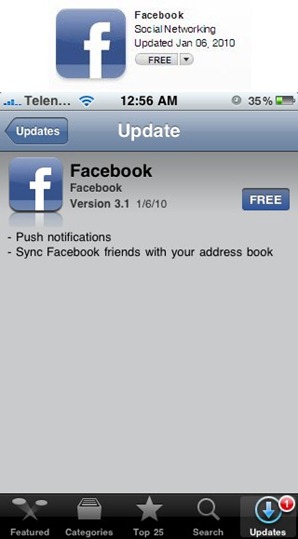
New Facebook push notifications will mean mobile dominates FB usage, even in the office

Marco Bertozzi:07:01:10
Discussion around whether or not Facebook should be banned in the office has pushed more and more people towards using mobile as the primary route to Facebook interaction. The numbers are impressive about how much people update their status via their mobile.

Now work will arguably be more interrupted than ever as people to take up Facebook’s new 3.1 update that allows push notifications to your iphone. At least before people often left FB open on their screen and could see messages easily, now they will be shovelling through their bags and desks as their phone beeps with that expectant moment when you wonder which of your friends has sought you out! The facts according to Razorfish annual study – Razorfish Feed – are scary for the workplace, apparently the average connected person updates their FB pages every 37 minutes, the full report can be found here:

Click to access Razorfish_FEED09_Webinar.pdf

Facebook is part of life now so I think offices that ban its use need to get over it as it is here to stay and part of our communication, I would rather see banned the trend of recent years of everyone wearing headphones at work. It is the most depressing of sights to see a bank of people all with headphones, no one learning from each other, no one knowing if your team member is talking utter rubbish on the phone. The office has changed, lets worry about things that stop people communicating rather than things that encourage it.

A review of digital media predictions for 2010

Marco Bertozzi 10.12.09
As we leave 2009 we start to see the endless list of predictions for 2010, some interesting, some very topline some very specific but all worth having a read if you want to see how 2010 is going to be shaped. It is only a selection, if you want to add yours then leave a comment at the end. I have researched a fair few of them and listed out the main issues for 2010.

As I am keen to make it clear that I have used other people’s musings I have listed them below for you to have a look through as well, but my suggestions may speed things up!

1. Status updates and Tweet burn out will result in a little more culling / blocking of ‘friends’, reducing the social element of social media.

2. Real time search, recently launched by Google will mean brands need to work much harder to stay on top of the sentiments being expressed around them. People will be able to complain in an instant and have it up on the web. It will also make SEO and PPC far more complicated and require very frequent reviews of price and position vs the content around it.

3. Facebook and direct Tweets will replace personal email as the preferred route to reach people.

4. Mobile commerce taking off through a more Apple App store approach to paying for goods, anyone who buys apps on the iphone knows just how easy it is to buy loads of things that you wouldn’t if you had to put your card in every time.

5. As many companies ban social media sites at work, the mobile will be the guilty pleasure and escape from work shackles.

6. Commercialisation of the Twitter audience, I am sure it will come with a vengeance and hopefully some innovative new ad approaches.

7. Less of a prediction, more of an interesting thing to watch, the battle of online news content, to pay for or not? My view is still an Ad funded model as the victor.

8. Convergeance of video and TV. youtube and Hulu and the like taking ever more film / TV content online.

9. The rise of commercial applications as a route to making the most of the social phenomenon where shouting at your audience while they are ‘hanging out’ does not work.

10. Media agencies making some genuinely large structural, technological and commercial changes to future proof themselves in a market where the 2% margin model does not pay.

Below are a few of the links, there are many more, would be great if you added your predictions in the comments section.

http://www.digitalmediabuzz.com/2009/12/top-digital-trends-for-2010/

http://www.web-jungle.com/2009/11/07/social-media-trends-2010/

http://www.emarketer.com/Article.aspx?R=1007410″

http://www.clickz.com/3635686″

http://www.themediaonline.co.za/themedia/view/themedia/en/page1353?oid=41569&sn=Detail”>

Integrated, digital at the centre, agencies have changed, how do media owners respond?

Just before the recession kicked off every article was about digital, within the agency world it was the key battle ground, who had more of it, was it integrated, who was pretending etc etc. The recession seemed to put pay to that for a while, everyone concentrating on survival. What the recession will have done in many agencies is allow them to make a lot of change very quickly, people are a lot more receptive to structural change when their jobs are at risk. The end result of that will be that agencies have perhaps now taken a bigger step forward in a shorter period of time than at any previous period of the past.

Most agency groups now have pulled together or bought up a vast array of digital properties and now the task is to link them all together and make them something that clients can genuinely buy into, thats the biggest task of all and there are definitely some struggles out there.

Likewise the media owners are having to adjust at the same pace, they have also battled with separate sales teams, on and offline, agency relationship managers, sponsorships and many other properties but to make them work the teams have to work together and present a coherent face to the marketplace.  Guardian teams have been well known to be struggling in this regard and have done for some time and perhaps this is now being reflected in the IPA Media Owner survey. The Telegraph made a very high profile office move and merged teams far more quickly and effectively and they seem to be benefitting from that move.  The thing that stands out for me at the more successful media properties is that they all have two common themes; the right people in the key jobs and a desire to completely reinvent. AOL was down on its knees but therefore had little to lose and have completely re-engineered themselves and came to market with clarity and ambition. Telegraph was a similar story in terms of their ambition to completely evolve.

There is a lesson in that and some agencies could also look at those examples and shake things up, there are many agencies that have the same people, in the same roles and in the same format. Look to the brave and reinvent your offer and be brave enough to change. Change is addictive, tough to start with but once you do it, you can make a real difference.