Persistent Identity – holy grail available to some..

20130912-204926.jpg
I am Just back from meetings in Seattle and San Fran with the Big 4. Big 4 you ask? Well in todays world of data connectivity, mobile innovation and growth as well as digital commerce the big 4 has changed. Facebook, Twitter, Google, Amazon are now gunpowder and bullet. The others more and more the barrel.

The message that is coming out loud and clear is that these players in their own varied ways are out to maximise the insights they have on their users and customers through a single themed approach of ‘Persistent Identity.’ I heard it a few times over the time I was out there, I have seen it mentioned in the odd article. But when you get to spend three days with all these market leading companies it becomes loud and clear that the data they hold on consumers is the key to their future and the single most valuable asset.
20130912-205128.jpg
Persistent Identity is a fancy way of saying ‘we know who you are, we know where you are and we know what device you are on, the holy grail of data. The kind of data and insights advertisers are crying out for. What strikes me about this data is how much more powerful it is than third party data sold by any number of companies, data which is slightly worn out, like an old apple at the bottom of a bag, still edible but just not as fresh and juicy as when it was picked.

The ability to recognise you, add insights to your iD, serve ads depending on which device you are on, understand you through your behaviour by device, friends, clicks and links is so powerful, so powerful in fact you can see the likes of Facebook being the defacto judge of what is good or accurate data instead of the traditional players. That has already started of course but I think will gather momentum. Watch out panel data.

When you take a step back and realise what data they have you can understand why they are reticent to share it or risk it being stolen, putting up walls of protection around it. Amazon with their marketplace, Facebook only allowing access through API, Twitter pulling info from Google, these are the actions of companies with hidden treasure. These businesses dont need all the old methods of tracking whether it is panels of adserved cookies, they know their people, signed in, registered people at scale.

Persistent identiity is powerful and logical, the only problem is that you have to stack up on these solutions. Like having a car and pulling up at the fuel station and putting 3 or 4 different petrols in to be able to get the car going. I want to recognise everyone through the ability of joining up these players – I would love to spot a FB user who has been updating a status about an iPod, browsing on Amazon and nail them with a promoted Tweet or video Ad to close the deal. I know it is too much to ask to have all these companies reveal their secret source but targeting would be fun..

Either way, data businesses will need to work hard and fast to justify their models in the face of the biggest digital players in the world starting to pull up their sleeves and flex their guns, because be under no illusion they are big guns.

A few months in photos..#VivaKi

20130621-235344.jpg20130621-235359.jpg

Welcome to some photos of the last few months to liven up my blog. It has been a crazy few months but incredibly exciting and met some very cool and bright people that make life os interesting.

20130621-235413.jpg

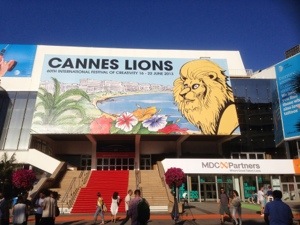
The first sights of Cannes, the main event and the Publicis entrance..one was visited more than the other..

20130621-235424.jpg20130621-235441.jpg

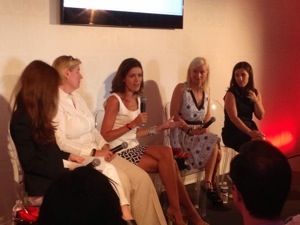
Power ladies on one panel – Carolyn Everson of Facebook, Laura Desmond of SMG, Erin Clift of Spotify and Wendy of Coca Cola – not bad..

20130621-235452.jpg20130621-235533.jpg20130621-235502.jpg

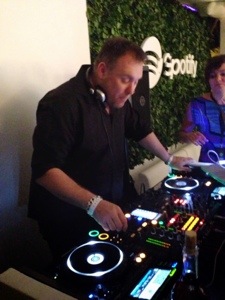
The juxtaposition of the classy Seb Fontaine against the Gutter Bar, we did both very well, great night with Spotify.

20130621-235509.jpg

20130621-235517.jpg20130621-235525.jpg

20130621-235546.jpg20130621-235554.jpg

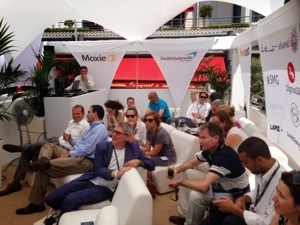
The Rubicon Panel at Le Rooftop, Cannes, the worlds leaders of Trade desks talking the talk. It was hot!

20130621-235602.jpg20130621-235621.jpg

20130621-235615.jpg20130621-235628.jpg

The Eden Roc outside of Cannes, beautiful spot for an evening meal with a few old friends, colleagues and new friends

20130621-235634.jpg20130621-235641.jpg

20130621-235807.jpg

20130621-235824.jpg20130621-235837.jpg

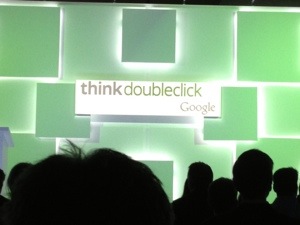
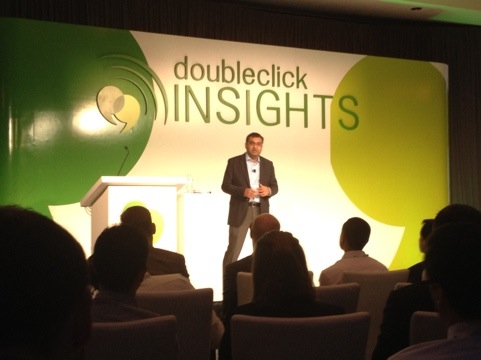
Doubleclick Client Advisory Board in Los Angeles – St Regis. Amazing venue and more announcements from Google. I also had my five minutes in the spot light!

20130621-235908.jpg20130621-235852.jpgOne of the greatest runs for a hangover cure, down by Dana Point

20130621-235957.jpg20130622-000014.jpg

20130622-000042.jpg20130622-000118.jpg

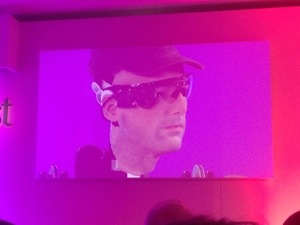
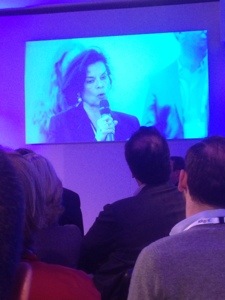
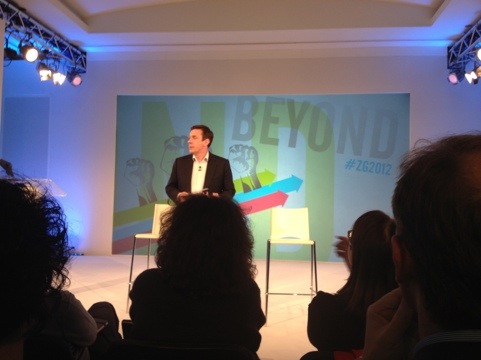
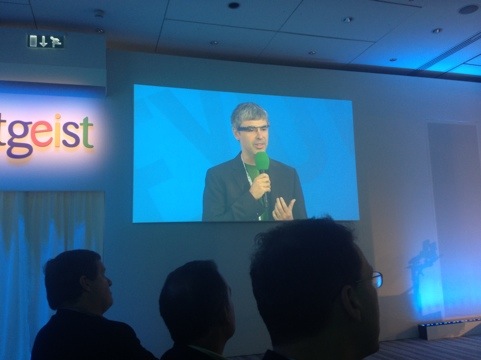
Google Zeitgeist – the amazing collection of people, politicians, genius types, robots and Jesse J – standard!

20130622-000135.jpg20130622-000154.jpg

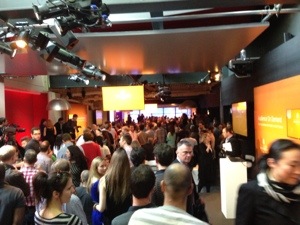
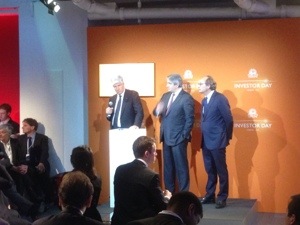
Publicis Investor Day – the great and good of Publicis all at LBi

20130622-000214.jpg20130622-000233.jpg

CES – More to add here but suffice to say this was the hardest bit to get through

20130622-000259.jpg

A year is a long time at Google

As I sit wide awake on an American Airlines flight to California, when really I should be sleeping, mainly down to the horrendous ‘Angle flat’ beds I started thinking of the blog I wrote a year ago called ‘A Frictionless Web’

It talked about how Google wanted to streamline the whole cookie process and launch for the first time a ‘true stack’ something that had raised some eyebrows at the time mainly because Google had been excellent in many areas but had been flawed on Doubleclick and bordering on slow in the DSP space after purchase of Invite.

Google presented the new DFA and lots of new brand names like DDM – Doubleclick Digital Marketing, DBM, DC Bide Manager, DS3 and so on. Funny to think back then that even the Google people on stage were struggling to remember to use this terminology rather than good old Invite, DART etc etc. Neal Mohan presented credibly what the future would look like and that it was going to be powerful. At the time I thought, sometimes out loud and to the dislike of the DBM competition that this could really strike a blow to the competitive ecosystem if it turned out to be true.

Fast forward a year. In my opinion a big part of that dream has turned out to be right. Let me start with some of Audience On Demand’s change. We were well known for working with Invite and were heavily crticised for it but we stuck with it, especially as I saw the content of CAB 2012. The London office of AOD, powered by Geoff and Danny migrated all accounts to DBM (we say that now instead of Invite with out reminder!) the London office was and probably still is the largest user of DBM anywhere in the world and that includes the US, that does not happen often with something like DC.

As a result we were the first in the world to use the Search remarketing opportunity where DBM joins seemlessly with DFA and DS3. I cant reveal the results to that as thats my presentation at CAB but we learned an awful lot and that is still a big USP for us in the market as not many people have lined up DBM, DS3. DBM itself had a rocky start but again is now delivering the promise and we are pleased we got out there early and set the pace, working closely with the US team.

Bigger and more ominous for the competition however is that the new DS3 has really started to roll and two big things have happend. The first is that the product itself is good, widely acknowledged to be an improvement on some systems without the extra cost. I have seen across Europe business being returned to them from the companies that jumped in to fill the void of a quality Google product for years. The second is DFA in general has started to win back some lost ground from others in its own right. A good job Facebook bought Atlas as that was literally dead in the waters and amazingly those few major clients who continued to use them had seen the light and were off.

But the real success has been where advertisers or whole agencies are swapping to DS3 and DFA because they are or are about to be heavy users of DBM and want to benefit from the frictionless web. I work with people a year ago who were nowhere near wanting to work with DFA and were proudly using Mediamind or Flashtalking etc and have now switched and are happy. One major advertiser held a pitch right around now this time last year and the Stack solution was sold but was a just a little early with DS3, DBM all untried for them. One year on that shift is well under away. This is the fruits of the Stack and it is pretty compelling, Google in a year has transformed the display sell and regained an incredible amount of ground in such a short period of time.

There is work to be done of course around social tools and dynamic creative but hasn’t everyone? I am looking forward to presenting the amazing work the UK Audience On Demand team have done at this years CAB and hearing the next stage of the revolution. Over to Neal Mohan…

Our latest recruits – Their views, one month in at Audience On Demand

Image

I thought I would ask our three latest recruits, all graduates to give me their view of our industry just one month in. The message is clear, we are big and complex and we love TLAs but that is what makes it fascinating. Backgrounds of economics, maths and marketing show that regardless of diverse backgrounds, all roads lead to RTB! Sorry Real Time Bidding! I am always excited when we have new people joining and so let’s hear from them..

Trisha Halai @trisha_halai

Having done a maths degree I never thought I would see myself taking on a career in the digital advertising industry. After being approached by a recruitment agency and being told about the role and company – I can say I will never look back. My first month has been very much a learning curve and a very interesting one. Understanding the technical aspect of the role in terms of getting to grips with the platform and the systems has been one thing and understanding the hundreds of jargon used in advertising is another. Initially, I was completely thrown back in my first week when I heard acronyms such as DSP, SSP, DFA, DFP, DBM, MPU and PMP to name a few. However, as time has gone on and the more I have heard these terms, they have become second nature to me and now not using them would be slightly absurd.

Coming from a maths background, I developed many transferable skills and I can say I am proud to have the opportunity to apply these analytical, problem solving and logical thinking skills into my current role.   Working in a dynamic and creative industry, one that is so measureable and trackable in every aspect is exciting. It is great to be exposed to the industry at a point where it is constantly changing and advancing. Communicating and building relationships with highly respected technology and data providers and some of the big publishing names as well as agencies is what makes the day-to-day role so varied.

Being part of the AOD team at Vivaki has been an insight in many ways. It is very exciting working in a team that helps brands to deliver strong, highly targeted messages to very niche audiences across many channels such as display, video, mobile and social media. Working in a team that takes great pride in what it does and is passionate about its day-to-day management of campaigns is inspirational.

I look forward to learning new skills and developing a deeper understanding of my current role and I look forward to any challenges I may be faced with in AOD.

Claire Hobson @claireHobs

My first month as a member of the AOD team at VivaKi has been both exciting and eventful. I’ve had the opportunity to meet so many new people and have learnt a great deal about the dynamic industry of digital media in such a short time.

As a Marketing MA graduate, I had developed an interest in digital marketing and was keen to get into this area as a first step in my career. However, I had never come across agency trading desks or real-time bidding and as a result I found the complexity of the real-time bidding ecosystem quite overwhelming when I first started. RTB, DSPs, Ad exchanges, ad networks, ad servers, SSPs, PMPs… it was all like a foreign language to me, particularly with the frequent use of (appropriately named) TLAs.

Four weeks on, what seemed complex to me back then is now much clearer, having benefitted from being amongst the hugely knowledgeable AOD team and from meeting the various external teams that represent the other vital pieces of the RTB puzzle. I have noticed the difference in levels of understanding and views of RTB across these different teams, whether it be media planner/ buyers, publishers, data providers or technology platforms. This has been useful for me to gain a more holistic understanding of how RTB is viewed in the wider media industry and has helped me in developing my own opinions.

Part of the reason why I wanted to work in digital after graduating is that it is an industry that is growing and constantly changing, making for an exciting and fast-paced environment to work in – my first month at VivaKi has definitely confirmed this. However, it has also highlighted that there are often challenges, difficulties and problems to solve around these changes, something that I did not previously fully appreciate but have come to see how this is key to the development of such a dynamic industry.

A good way to sum up my first month is perhaps not to reflect but to look at how it has given me both an eagerness to learn more and a strong desire to be a part of the future of RTB, whether it be in display, mobile, video or even connected TVs. I look forward to my second month at VivaKi in the exciting world of digital media and RTB.

Nick Brown @NickPhBrown

PMP, IO, SSP, DSP, KCT, vCPM, KPI, ABC1, GRP, MPU, RTB are just a bunch of letters… However, I have come in to contact with them such remarkable regularity that I find myself thinking what a laborious task it would be to have a conversation using full, un-acronym-ed words. Since, I started work at VivaKi, the AOD team has performed massive brand blasts, won over some great clients, tested cutting edge industry inventory, even achieved a world first! The list goes on… We work closely with companies like Doubleclick, VisualDNA and large pubs like eBay and Amazon, all to our own varied ends.

Point being, there’s so much to Real Time Bidding; too much to ever come close to having a shrink wrap solution to it. On top of that, it is constantly morphing and progressing. Not only are Mobile and Video making leaps and bounds forwards, but the platforms we work with on a daily basis bring in a whole host of new features almost weekly. It’s a crazy trade to be in and my first month has overwhelmed me with a phenomenal amount of information. I would love to write all about the diverse, highly affable team I’m working in, and on how much fun I’ve had in the many social events that have already taken place but if I tried to it would fill pages and pages. Suffice to say that my first month has been a whirlwind tour of the immense and fascinating world that AOD is right in the centre of: RTB.


Google Glasses: don’t take them seriously. Take the tech seriously

I am so tired of seeing articles about Google Glasses from the perspective of a new Apple phone review. Even worse from try hard bloggers talking about the impact it will have on others. These articles are mainly dedicated to increasing traffic. @undrip.

Google glasses will be on sale. It will sell. People will wear them. But does anyone think that Google is planning to compete with Samsung shipping numbers or iPhone sales figures? Do they think their self drive car will be a top seller? No. No.

They are a technology and innovation company, they have people who innovate and they have started with Glasses. Already people are protesting about the fact they may be recorded mid conversation. Perhaps they be used inappropriately, maybe they will be but at a minimum of 1500 dollars they won’t be owned by some delinquent. Even if they were, this is not about Glasses this is about the evolution of technology. It is here, it is happening. It would be like saying that we don’t want the Internet because kids will look at porn. Well if the adults didn’t watch it then it would not be there in the first place.

Whether it is uncomfortable, whether it comes in the form of Google Glasses is neither here nor there. It is technology and you can’t stop it. An analogy was used about a guy on a bus filming stuff on Glasses and then transferring it to text and tagging it to a person and how that was the end of the world. Come on, whatever you do on Glasses you can do on a Nexus 4. I can film on a bus, I don’t need Glasses to do it.

Let’s all stop taking Glasses seriously but take the technology and brains behind it seriously because it is the heady cocktail of those two that will show you up as totally missing the point.

We will laugh when we tell our kids we had to watch Ads!

ImageWe will laugh at the idea of having to sit through an Ad we didn’t want to watch in years to come. The likes of CBS, who recently downgraded an award to DISH for their Hopper product (a product that allows the viewer to skip Ads) by influencing the CNET panel, will need to change their views and fast.

 Perhaps people have not noticed but the beginning of the end for being forced to sit through Ads is already underway. Google is building a business on the back of skippable Ads. It is a mere skip and a jump before that model is rolled out to TV. It’s not just Google though. We have all got used to fast forwarding through Ads on our PVR’s. There are companies like DISH, with their Hopper product, making it a central offering.  Even online Apps usually have a premium or Ad subsidised version. Other companies, for example SpotXchange, have rolled out account based solutions where users can pay to skip ads. The concept of not watching Ads you do not want to watch is entering our ecosystem like water pouring through a leaking dam. No matter how you try and plug the leak, the tide is turning and before we know it the idea of forced Ad viewing will be a thing of the past.

 Consumer opinion eventually is paramount. This is not about not watching ads, it is about watching ads that are relevant and entertaining. As viewers get used to skipping ads and companies offer that as an option in a new medium, like TV, consumers will turn there first. The DISH example in the US will be an interesting one to follow. When PVR’s were first launched, the whole industry was very nervous about them and the implications. But we coped. Google’s skippable Ads is a fantastic model for them with incredible CPM’s on ads that are watched through to the end. It works for them. Advertisers also like the idea of paying for real user viewership. The challenge therefore is for advertising to improve (please no more perfume Ads following the same old, superficial format) and for the delivery mechanism to improve.

 This is all fine for online, but TV? No way! Well in case anyone had missed it, TV is changing. The mechanisms through which we watch TV are changing and the way content is being consumed and distributed is changing. Addressable advertising across multiple devices is already under way in Alpha and Beta tests. Ads will become adserved which will allow better targeting and if targeting improves, the response will be better and consumers will appreciate the relevance. If we can do this well then who is to say that the Google business model will not suddenly look attractive to broadcasters?

 Importantly we will question this idea of ‘extra value’ in TV, which is code for wastage as opposed to actually buying the audience we want. An Audience On Demand offering could quickly be applicable in TV. So if we can combine adserving technology, with proper targeting and importantly measurement (let’s not get in to that today!) and sprinkle some consumer boredom with relevant advertising, we are well underway to a world where we tell our Children that; ‘yes they made us sit through five pre-roll ads before we were allowed to see the programme we wanted to watch’ – ‘and at a time dictated by them’! A crazy notion.

Blog also ran on Digiday – http://www.digiday.com/agencies/skippable-ads-are-a-good-thing/

VivaKi and Audience On Demand take first mover advantage on Google’s DDM

The thing that most inspires me in this role is the constant ability to innovate ourselves, as well as work with leaders in the technology space. As of this quarter, VivaKi and the Audience On Demand team in London are paving the way and entering a new era of activating search advertising data in the display ecosystem intelligently. Below find our internal release.


A collaboration between VivaKi and Google sees a global first for the organizations – the launch of a remarketing from search ads campaign. Audience On Demand (AOD), the market-leading addressable media buying practice for VivaKi, leveraged Google’s integrated technology suite to deliver a display remarketing campaign optimised around traffic on search ads on behalf of their client, a leading automotive services provider.


“As the leader and one of the first entrants in the RTB marketplace we work tirelessly to ensure our clients benefit from first-mover opportunities” says Marco Bertozzi, Executive Managing Director for the VivaKi Nerve Center. He continues: “Since launching AOD we have worked closely with Invite [now DoubleClick Bid Manager] as our primary partner and it has been an incredible mutual growth story. We saw back in 2010 the amazing opportunities for AOD and our clients in the Google product development roadmap and display remarketing from search advertising was absolutely top of the list.”


This feature enables the use of search ad clicks as a signal in optimising client’s display campaigns, re-engaging consumers with display ads across billions of ad impressions available on global ad exchanges. The integration between DoubleClick Bid Manager and DoubleClick Search 3 provides the ability to split referring keywords into specific groups based around different levels of interest and exercise bid strategies appropriately, re-igniting the potential of clicks that did not deliver an outcome in the first instance. This maximises the efficiency of search investment and boosts the performance of display campaigns.


Geoff Smith, Head of Activation for AOD comments: “This technology allows us to identify and differentiate consumers with greater intent to purchase, depending on their behavior with search ads. This granular insight allows us to alter our bid strategy accordingly, thereby maximising the efficiency and effectiveness of the overall campaign.”


This will add yet another layer of power to our offering and shows that Audience On Demand has yet again delivered innovation in the exciting marketplace. We had a choice – follow the pack and let

Is this the 2nd most successful paid for social network?

20120824-151426.jpg

In the last three weeks I have responded a couple of times to Tweets regarding social media. One was entitled ‘would you pay for social media’ and it got me thinking that when we talk about social we often forget Flickr. Then I see a tweet about the way most of the mobile Apps for Google+ and Facebook are evolving into a series of rich images to scroll through and again I think to myself what a whopping missed opportunity Flickr was and how a lack of foresight led it to be a photo repository for the average user.

Flickr has 50m registered users, pretty good but when compared with what it could have been! It was bought for $35m dollars in 2005 by Yahoo, it seems so cheap and in terms of what it could have been, a steal! I think the timing of the purchase was unfortunate with Yahoo in some of its biggest disarray in terms of position in market anbd future strategy as well as FB etc coming to town. Back then Flickr had a function to bring people together to ‘chat’ around subject matter photos – the equivalent of a ‘Hang-out’ at the time I guess. Basically what Flickr lacked was someone who could see the future and how social and sharing was going to be HUGE.

Would you pay for social media? I do every year when Flickr say to me that if I ever want to see my photos again I better pay up! That is one of the best social media payment models in the business no? Now of course I resent the ransom note every year but begrudgingly admit that they do a job, they hold this for me, allow me to share it, although their god awful privacy controls are difficult to fathom, normally when you want to send a single photo you send people everyone of your private photos!

I notice that Flickr has started to adapt, new interface, new controls and a far more user friendly interface, but they need to do more, they need to create an easy way to share, comment, bring in friends, let people announce things, set up environments for events and..oh is that not Facebook? I would like to see a ‘hang out approach’ on videos you want to share, invite them live and so on, the opportunities are endless and this is what makes me realise what a terribly, terribly big waste of an opportunity it has been thus far. It is however not too late in my mind.

There has been some debate about their revenues, conservative at $50m ranging upwards helped by Getty Images, Advertising on billions of impressions and other partnerships so it is a good business from the outside, I will be intrigued to see if the most successful pay-for-play-social-media-platform in the world can continue to adapt and grab the new opportunities before it is resigned to being a bloody good attempt at a social network from 2005.

Business photography

A few photos from the last few weeks on the road! Instead of my usual stuff I thought I would let the pictures tell the story!

20120622-165714.jpg

20120622-165735.jpg

Damian Burns doing his usual top class client service, another Damian in the background being less professional.

20120622-165750.jpg

Mark Ronson at the Microsoft Party in Cannes – a very cool session

20120622-165811.jpg

Neal Mohan of Google setting the scene at the start of the Client Advisory Board Meeting in LA

20120622-165839.jpg

An amazing view of the beach at Dana Point, a beautiful jog first thing

20120622-165907.jpg

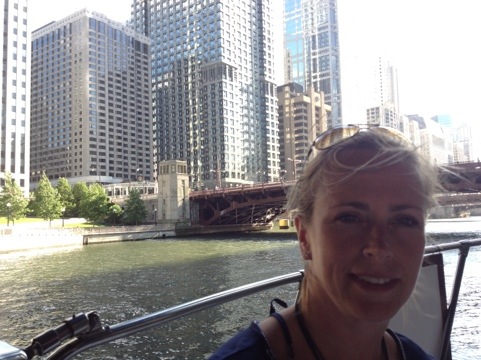
Tracey Scheppach of SMGx and VNC fame on the water in Chicago with HQ just behind

20120622-165917.jpg

Beatriz and Sara from Spain and Italy talking RTB (Not)

20120622-165934.jpg

20120622-165951.jpg

20120622-170003.jpg

20120622-170026.jpg