Interview with Beet.TV at Monaco Media Forum – Programmatic video

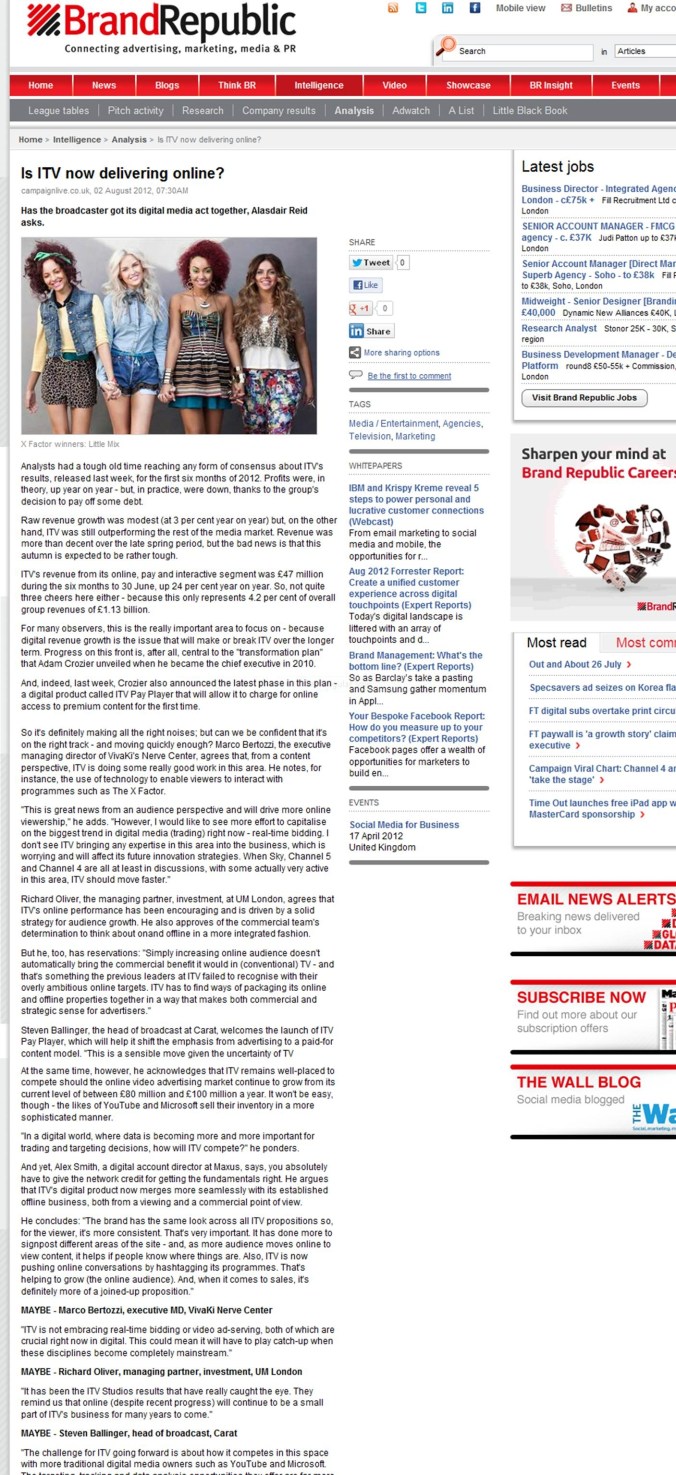
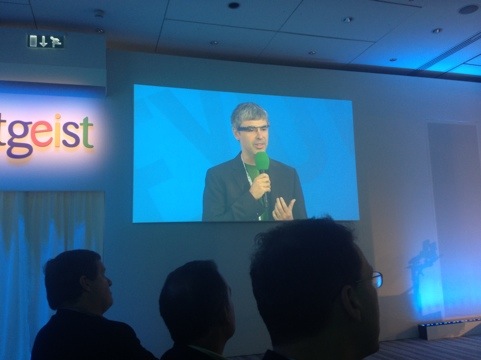
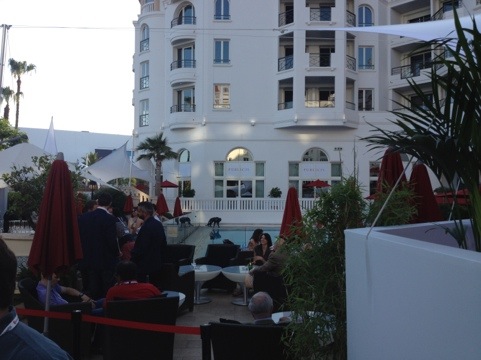
Each year I go back to Monaco the subject of Real time bidding, programmatic buying and data rises up the agenda. Year one there was little or no coverage of the topic. Last year we had a side room break out on the topic, not attended by anyone outside of those who worked in it. This year I was interviewed on the topic, and the panel regarding tech, data and RTB was on the main stage as well as other related round tables.

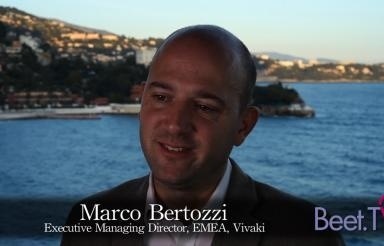
Part of that for me was an interview with Beet.TV on the growth of programmatic buying in the video ecosystem. Click on the image below to be directed through to the site.

20121116-162809.jpg

Digital Trading Standards Group (DTSG) – heard of it?

20121010-001406.jpg

I attended a seminar this morning called something like ‘Is your brand safe online’ A number of parties were there, all worried about their brands, namely trade bodies, Ad nets, Agencies and global digital media companies. The one group severely lacking was the advertisers! It is notoriously difficult to get clients to turn up to events and this was obviously not an event that they thought important. Why would they? Don’t they have their agencies to do this stuff?

It is a similar story with ePrivacy, although almost all the onus falls on the advertiser to make sure their site is compliant and that their advertising is as compliant as one can be in this area, there has been limited discussion on the topics since ‘the date’ came and went. How come? Maybe everyone thought that someone else was worrying about it?

20121010-001453.jpg
The group is focused on getting self regulation principles about where Ads appear to be taken up by media vendors. They want to suffocate the advertising revenue streams for unsavoury or illegal sites by making sure that all the major suppliers of inventory agree not to use them.

So today’s agenda showed that again we have a topic that appears an important one and yet again we have the merry go round of whose responsibility it is to make sure we are compliant. Well today we heard it loud and clear, The Police and Fact think that it is the advertiser who has to take responsibility for making sure that their Ads do not appear on illegal or inappropriate content. We were given an example of the client EasyJet that the guy from Fact kept repeating has not been able to be reached. He was very annoyed by that..I asked if he had contacted their agency to be told that it was not his job to spend time looking for who Easyjet agency was – umm maybe ask your IPA friends? No it was better to keep sending letters to Easyjet when the agency would have had those Ads down in about 15secs.

So bearing in mind that the Police think the advertiser should take responsibility, the advertiser thinks the agency should, the agency thinks the Trading Desk should and the Trading Desk things the suppliers of inventory should we have a beautiful example of sequential liability (without all the legal jumbo jumbo!) – I took a decision. I decided that the suppliers of inventory should be taking responsibility for where my agencies, advertisers’ adverts are being placed and I wrote them all a nice letter asking them to abide by the Principles of the DTSG.

20121010-001544.jpg

I just did it. It was easy to do to be honest. I wrote to them and said ‘ please can you confirm that you won’t put Ads on porn sites, children sites, illegal sites (the special police list), Torrent sites and basically anything else unsavoury because our agency’s advertisers will not want it.’ And why was it easy? Because it is so bloody basic and common sense that I am trying to work out why everyone has not done it, apparently some are reticent at this stage to do it. Well for me I am all for it because it is straight forward and I don’t want another ePrivacy debacle involving 10 different bodies and loads of political bull. I just want to buy ads in nice places.

Our whole VivaKi Verified approach means we are already vetting, categorising, white listing inventory so this is a no brainer for me, I appeal to everyone else to get on with it as well. It will be one less committee meeting to go to and will mean everyone can get back to dealing with the nightmare that is ePrivacy, I would hate for another topic to come along and hijack every media conference panel debate!

After this cause is put to bed I am starting out on Ads appearing alongside prostitute cards in phone boxes – now who is responsible for making sure that does not happen?

AOD Summit – 2012

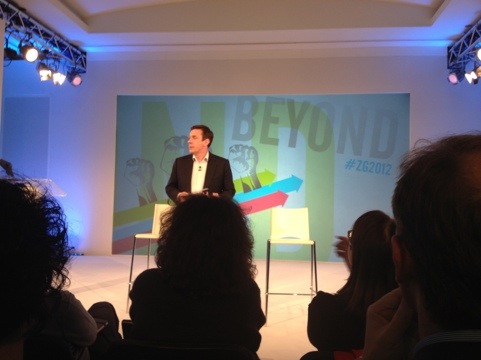
The two days ended with a great talk from one of the godfathers of digital – Scott Ferber. Founder of ad.com the worlds most successful ad net and now founder of Videology. The guy is both crazy and unbelievably bright, engaging and down to earth.

20120714-201018.jpg

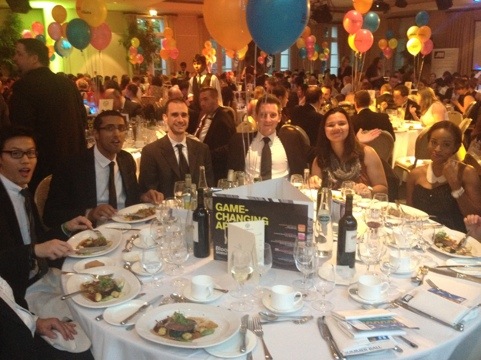
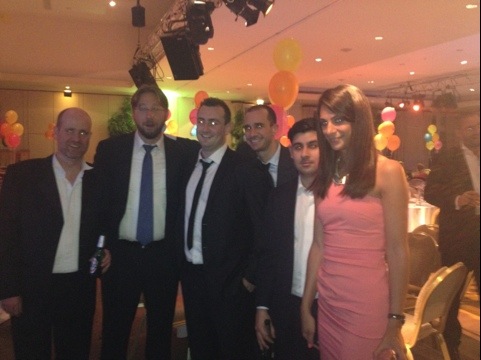
Two tough days of Audience On Demand and VivaKi bonding, I probably did not plan it brilliantly by accepting an invite from Google to take all 28 of us to the IAA Summer ball! There were some tired faces on day two but it was the right thing to do. The team had a great time.

20120715-063733.jpg

20120715-063911.jpg

We had people from UK, France, Italy, Dubai, Spain, Germany, Belgium, Netherlands, Sweden and Poland. Too many teams claim to have resource and capabilities in different markets but that means clicking the geo buttons on their DSPs. We have established teams now driving markets forward and it’s exciting to see in action.

There are an amazing amount of similarities between markets, there is a curve of adoption that I believe is reflected in most markets but only where companies are pushing the market. It looks very different if you are a follower. Our teams in Dubai for instance are not pushing they are creating it, I highlight it as the entrepreneurial spirit that makes the people in The Vivaki Nerve Center different.

The two days ended with a panel with Stewart Easterbrook, CEO SMG UK, Matt Roche of Weborama, Ryan Jamboretz of Videology, Jon Slade at the FT and Jason Bigler of Google painted a picture for the markets to take back of a world in which programmatic buying and RTB was going to be fundamental to all their businesses.

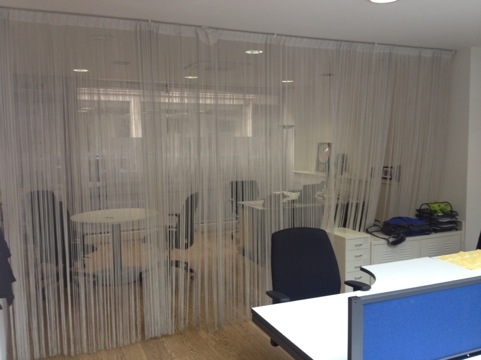
This Monday sees a new home for us all. We have enjoyed being part of the SMG team at Whitfield street but very excited about having our own office. It has been two years and 4 months of hard work that has taken us to this point and it feels like the time is right for expansion. I do need to get rid of the curtains though!

20120717-104512.jpg

The market is still moving fast with acquisitions and evolutions and indeed people moves. Interesting to see Damian Blackden move to Adnologies this week, showing that data and exchanges are still pulling the talent to them and we continue to meet with a myriad of tech companies all trying to carve out their space.

Business photography

A few photos from the last few weeks on the road! Instead of my usual stuff I thought I would let the pictures tell the story!

20120622-165714.jpg

20120622-165735.jpg

Damian Burns doing his usual top class client service, another Damian in the background being less professional.

20120622-165750.jpg

Mark Ronson at the Microsoft Party in Cannes – a very cool session

20120622-165811.jpg

Neal Mohan of Google setting the scene at the start of the Client Advisory Board Meeting in LA

20120622-165839.jpg

An amazing view of the beach at Dana Point, a beautiful jog first thing

20120622-165907.jpg

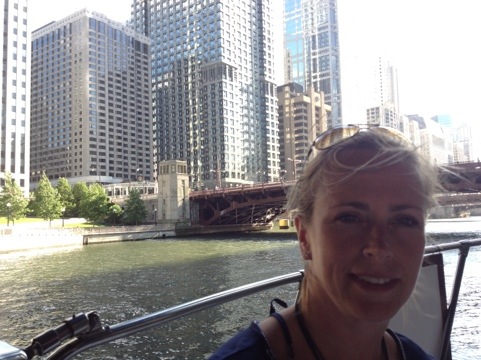
Tracey Scheppach of SMGx and VNC fame on the water in Chicago with HQ just behind

20120622-165917.jpg

Beatriz and Sara from Spain and Italy talking RTB (Not)

20120622-165934.jpg

20120622-165951.jpg

20120622-170003.jpg

20120622-170026.jpg

Creating change – it is not all plain sailing

20120531-152600.jpg

Two days in Chicago at the VivaKi Nerve Center Management meeting and one thing really struck me, that change even when it is really needed is pretty tough. Key to getting through it though is by having a plan and sticking to it. The VNC started in 2008 and we were laughed at, Curt Hecht who leaves us this month was there at the start and he recalled some of the comments at the time. That plan though has been sturdy and continues to be at the core of everything we do and it is resistant to country whims and individual blocks and that change we are bringing can not be stopped now.

VNC was a slow burn Internationally but in recent times things have accelerated rapidly. Over the last two days we have had people from the VNC from US to Australia and everywhere in between and each person was ringing the bell on the old models, it is time to step up and be prepared to change. Only two years ago we had VNC in US, UK, Dubai and Spain. Add to that now Italy, France, Germany, Australia, China, Russia and more to come, amazing growth.

Trouble with change is that it unsettles and some people don’t want it and are willing to slow things down and say ‘it’s not like that here’ and excuses to that effect. The encouraging thing though is that those people are becoming far and few between now and most people have started to embrace. I met recently with Maurice Levy and it was clear where he expects to see development, what areas should be moving faster and that is the biggest encouragement of all when it comes from the top.

Change your mind or change the people was a phrase mentioned by someone recently and I agree. I have always loved change, it is so exciting and creates so much opportunity so I assume everyone will but I am afraid that is not always the case. The VNC over the last two days has presented some amazing work and propositions and it is no wonder it has been copied by most of the other groups – whether it was market leading Partnerships, the worlds first and largest trading desk, driving innovation through The Pool, VNC has lead and shown the people laughing behind their hands that in fact it has become a blueprint.

The work we are doing with our agencies is moving so fast in many many markets and the ambition in the room has been palpable so expect to see more and more from this group over the coming weeks, months and years.

See you Chicago, it has been a pleasure (apart from your terrible airport).

I only recruit from NASA – you?

Image

Well I say that, in actual fact I have recruited two people into the Head of Product roles from within our agency group, NASA did not really come into it, although I am sure some people would claim it! It is something I am asked all the time – where do you recruit from? What type of people should we hire? Will my Head of adserving do? 

One thing I am sure about is that I fear the return to the days of when search took off and they became a hugely overpaid, under experienced, high churn group of individuals, around 2005 it was a merry-go-round of people in the search teams with each agency ignoring their best search strategies and allowing us all to  bid up the price endlessly. It was partly this factor that led to search teams not being as efficient as they could have been since staff costs got out of hand. There is a danger of us returning to those days within the exchange space, but at the same time I believe we have more choice, on the basis you are a little more open minded.

As I said at the top a common question is what type of people do you employ, I struggle to answer that. Looking round the team we have people from adserving, mobile DSPs, agency, Data, and so on, so yes of course they all have some common DNA but that is not the key. Curiosity is the key, the desire to want to learn, to want to look under the bonnet and see what is happening and to do it all the time not once a month. Everyone in the team has that, and in my opinion that makes them different from the majority. Too many digital planner buyers have become a little too process driven and not inquisitive enough. They are not questioning the numbers, they are not trying to work out a different way, or challenge a target, too much is paper pushing and and that is why the new generation of people, as much tech as media are different BUT because you work with tech does not make you an immediate candidate.

When I interview I want to see passion and interest, I want to see a history of someone who likes the ecosystem and has been reading about it before they even got the job, I want them to know all about the space, without really knowing all about it because the one thing they lack is working experience. Come in and challenge us, come in and want to understand more. We don’t mind what your background is, just show us that you don’t just want a job in this new space because you think you should.

I have seen some really good candidates, often those who are actually working in competing trading desks, we have never employed one. Too many of them looked like they fell into it rather than wanted it.  So for those starting to recruit the interview recipe to grow a team is curiosity plus desire sprinkled with a big dollop of instinct (perhaps the key ingredient at the end of it all).

Audience One Demand is always happy to receive CVs and always on the look out if you want to fire them over.

All change at The VivaKi Nerve Center

The one consistent in life is change (I think there is a more eloquent phrase) but it is true and I am excited to be in the heart of that change. Curt has been a great leader but everyone moves on at some point and our team is really strong and we are excited about VNC 2.0. Below is the release that went out yesterday, exciting times all around.

CHICAGO,  4/12/12 – VivaKi CEO Jack Klues today announced that Kurt Unkel has been named President of the VivaKi Nerve Center. Unkel assumes responsibilities from Curt Hecht, who moves to a new role at The Weather Channel. Unkel will report into Frank Voris, global chief financial officer for VivaKi. Rishad Tobaccowala, chief strategy and innovation officer of VivaKi, will serve as advisor to Unkel and the Nerve Center leadership.

Prior to assuming the role of president, Unkel had been EVP/general manager of Audience on Demand™ (AOD) – one of the Nerve Center’s fastest growing practices and largest revenue-drivers.  Today the practice services 350+ clients and manages over 15,000 daily campaigns across display, search, video, mobile and social.

Unkel has been a member of Publicis Groupe for more than a decade and among the Nerve Center’s first employees. Prior to joining the Nerve Center, Unkel created and led digital strategy, investment, analytics and ad operations teams across Publicis Groupe, with a special focus on General Motors (GM). Unkel resides in Detroit and will be based there.

“Curt Hecht has built a strong foundation for the VivaKi Nerve Center, and Kurt Unkel is just the right person to drive our vision forward,’ said Klues. “Kurt has shown great leadership in building and developing AOD from one of the first agency-led ad trading platforms with two clients and three employees to a world-class practice that has been replicated in markets all over the world, and leads the competition.”

“The Nerve Center is comprised of some of the sharpest minds in digital and tech,” said Publicis Groupe Chairman and CEO Maurice Lévy. “With Kurt at the helm, we look forward to more aggressively pursuing new opportunities in arenas such as data, mobile, social and technology.”

Unkel and the Nerve Center are supported by a seasoned leadership team, including Doug Kofoid, who is EVP of product development. Kofoid is an operations expert and co-author of several Nerve Center products, including AOD Social.  The Nerve Center will leverage his expertise more broadly across the globe in the coming months.

Sean Kegelman has been named EVP of partnerships, and will continue to lead global partnerships and create new opportunities with companies like Google, Microsoft, Yahoo, AOL, Facebook and others for the Nerve Center and the VivaKi agencies it supports.

Marco Bertozzi has been elevated to executive managing director of Nerve Center EMEA, focusing on continued expansion of the Nerve Center throughout the region.  Co-founder of The Pool, Tracey Scheppach will continue to explore engagement models of the future while serving as EVP/innovations director for VivaKi.

The Nerve Center leadership team also includes Pradeep Ananthapadmanabhan, who continues to serve as chief technology officer for the Nerve Center and Project Olympic; Ken Wiesman, who leads Finance and Barb Jobs, who continues to lead Talent.

The Nerve Center was formed in 2008 to provide tools, technology and offerings that give VivaKi agencies and their clients an edge when it comes to digital media and marketing solutions. The Nerve Center currently employees more than 250 employees worldwide, with a presence in  Australia, China, France, Germany, India, the Netherlands, Spain, United Arab Emirates, United Kingdom and the United States.

Why Paying to skip video Ads undervalues what we do

My Opinion piece in NMA this week on the new Skipit service,  link here but behind a paywall

Image

In December 2003 a version of skippable Ads opened, it was called the M6 Toll road. Designed to make life easier for drivers they were offered the chance to pay a small fee and skip the bad traffic on the normal M6. Surely it is better to pay a couple of quid and get a luxurious stretch of tarmac without delays than have to sit in traffic for hours, especially when we are so time poor? Well the reality appears not. Demonstrating we are not as time poor as we thought. The toll road traffic has consistently fallen since opening, showing that perhaps paying to avoid inconvenience or bad experiences is not as high up on our agenda as some would have us believe.

And that is my view of the new format from Skipit where you can pay 10 cents to skip an Ad. You can build up credits through other means, by liking an Ad or interacting on some level with an advertiser, which I feel equally uncomfortable with.

Let’s stick with the principle of paying to skip an Ad though. Really? I am intrigued as to which Ad is going to push a person over the edge and make them sign up to an account. I find the idea of idly watching some content and then deciding ‘enough is enough, I am going to go to all the trouble of signing up to an account just to avoid a couple of minutes of Ads’ a stretch. As my colleague Paul says, perhaps it will improve completion rates as people are forced to establish the real cost of sitting through an Ad? Perhaps this system will improve performance on average Ads as people realise that it is not a big deal to watch them as long as they are engaged with the content.

Also, this isn’t going to pave the streets with the Gold that publishers might be expecting. To make this a meaningful revenue stream would require LOTS of video content being consumed outside of YouTube and the BBC. Recent Comscore research tells us this isn’t true. Google accounts for nearly 30 million uniques, the BBC accounts for nearly 7.5 million and VEVO (which again has most of its volume within YouTube) accounts for over 11 million. Consumers would also need to be willing to dip their hand in their pocket time and time again. Lastly, the rollout of such an initiative is unlikely to sit within the premium long form content owners. This is important considering the video Ad lengths which dominate the short form content space; am I really going to pay to skip 10/15 seconds of Ads being played on content that I am not really that engaged with anyway?

Now there are skippable Ads and skippable Ads. This approach is the caveman’s club vs. the surgeon’s scalpel where Google’s skippable Ads are the more sophisticated. Their approach is to incentivise advertisers to improve the quality of Ads by penalising bad creative; surely that is the right way round, not giving money to a publisher who carries bad Ads that people don’t want to see? VivaKi’s The Pool and their ASq® format offers users a chance to choose the Ad they want to watch, the impact on completion rates, engagement and memorability is considerable and encourages our advertisers to constantly see their video creative as something that should receive the same level of attention as their TV ads, but differently and with the end goal of their content being chosen over content from another advertiser.

Our job in this business is to make people realise that Ads pay for content, that Ads should be as high quality as possible, and that advertisers need to create content people want, whether that is an Ad or a short film or whatever. Paying for likes, watching an Ad to get something, all these models are blunt instruments and undervalue what we do. They are not what we should be aspiring to.