Interview with Beet.TV at Monaco Media Forum – Programmatic video

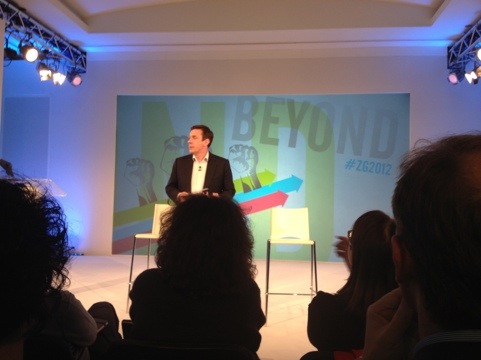
Each year I go back to Monaco the subject of Real time bidding, programmatic buying and data rises up the agenda. Year one there was little or no coverage of the topic. Last year we had a side room break out on the topic, not attended by anyone outside of those who worked in it. This year I was interviewed on the topic, and the panel regarding tech, data and RTB was on the main stage as well as other related round tables.

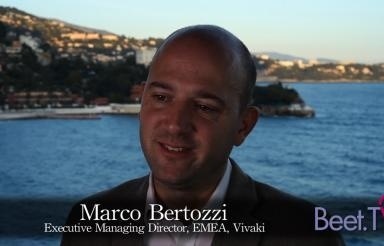
Part of that for me was an interview with Beet.TV on the growth of programmatic buying in the video ecosystem. Click on the image below to be directed through to the site.

20121116-162809.jpg

Happy Birthday Bertozzi Bytesize – 28.10.09

I remember the first blog. I had no idea how to use the tech of the blog, no idea where it would end up but really wanted to know how all this blogging stuffed worked.

150 blogs later – basically 4 a month and I am amazed the number of people who visit the blog, most people give me s*** for it, but begrudgingly admit that I started something and managed to keep it going.

When I wrote the first blog It was a pretty awful working time of my career, working somewhere I hated with every sinew of my body but determined to fix it, to get into a role that was entirely digital, in a growth market and working with the best and brightest of our industry. Now is a good time and makes the blog that much easier to fill with good, bad and indifferent pieces.

I hope to maintain this, it’s hard to stop once you start. I make time for this blog, contrary to the usual crap from people about ‘you can’t be that busy if you can write a blog’ I write at home, at night, at weekends, on flights etc and I enjoy it.

For anyone who reads or subscribes, thank you, I know it’s not Dickens, but appreciate your support!

Digital Trading Standards Group (DTSG) – heard of it?

20121010-001406.jpg

I attended a seminar this morning called something like ‘Is your brand safe online’ A number of parties were there, all worried about their brands, namely trade bodies, Ad nets, Agencies and global digital media companies. The one group severely lacking was the advertisers! It is notoriously difficult to get clients to turn up to events and this was obviously not an event that they thought important. Why would they? Don’t they have their agencies to do this stuff?

It is a similar story with ePrivacy, although almost all the onus falls on the advertiser to make sure their site is compliant and that their advertising is as compliant as one can be in this area, there has been limited discussion on the topics since ‘the date’ came and went. How come? Maybe everyone thought that someone else was worrying about it?

20121010-001453.jpg
The group is focused on getting self regulation principles about where Ads appear to be taken up by media vendors. They want to suffocate the advertising revenue streams for unsavoury or illegal sites by making sure that all the major suppliers of inventory agree not to use them.

So today’s agenda showed that again we have a topic that appears an important one and yet again we have the merry go round of whose responsibility it is to make sure we are compliant. Well today we heard it loud and clear, The Police and Fact think that it is the advertiser who has to take responsibility for making sure that their Ads do not appear on illegal or inappropriate content. We were given an example of the client EasyJet that the guy from Fact kept repeating has not been able to be reached. He was very annoyed by that..I asked if he had contacted their agency to be told that it was not his job to spend time looking for who Easyjet agency was – umm maybe ask your IPA friends? No it was better to keep sending letters to Easyjet when the agency would have had those Ads down in about 15secs.

So bearing in mind that the Police think the advertiser should take responsibility, the advertiser thinks the agency should, the agency thinks the Trading Desk should and the Trading Desk things the suppliers of inventory should we have a beautiful example of sequential liability (without all the legal jumbo jumbo!) – I took a decision. I decided that the suppliers of inventory should be taking responsibility for where my agencies, advertisers’ adverts are being placed and I wrote them all a nice letter asking them to abide by the Principles of the DTSG.

20121010-001544.jpg

I just did it. It was easy to do to be honest. I wrote to them and said ‘ please can you confirm that you won’t put Ads on porn sites, children sites, illegal sites (the special police list), Torrent sites and basically anything else unsavoury because our agency’s advertisers will not want it.’ And why was it easy? Because it is so bloody basic and common sense that I am trying to work out why everyone has not done it, apparently some are reticent at this stage to do it. Well for me I am all for it because it is straight forward and I don’t want another ePrivacy debacle involving 10 different bodies and loads of political bull. I just want to buy ads in nice places.

Our whole VivaKi Verified approach means we are already vetting, categorising, white listing inventory so this is a no brainer for me, I appeal to everyone else to get on with it as well. It will be one less committee meeting to go to and will mean everyone can get back to dealing with the nightmare that is ePrivacy, I would hate for another topic to come along and hijack every media conference panel debate!

After this cause is put to bed I am starting out on Ads appearing alongside prostitute cards in phone boxes – now who is responsible for making sure that does not happen?

My Mediaweek judging experience – take it back to basics

20120910-172245.jpg

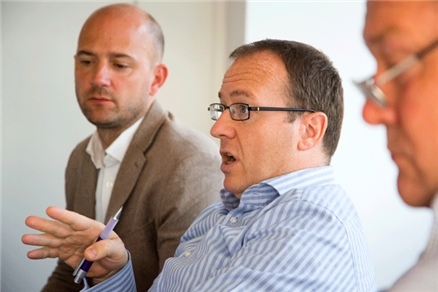
I judged my first Mediaweek awards this week. An array of illuminati from media were there (me excluded), from agencies, publishers, creative and media. All of them were senior and full of experience in judging and the industry as well as carrying a good helping of cynicism and sarcasm.

20120921-231352.jpg

Not sure what I expected really, a big old argument over the winner, a load of opinionated, puffed up media types all showing how right they are? I could not have been more wrong. In fact my group, not to mention names, was experienced and senior for sure, a mixture of advertisers, agencies, clients and media owners, all very polite, thoughtful and very insightful.
20120921-231740.jpg

With that comes a very acute ability to judge and to see through bullshit. Discussions around the table were not around disagreements so much as agreement. Of course there were individual opinions and differences but actually what really stood out was the immediate way in which entries that lacked either direction, quality, clarity on accomplishments and results were all found out very quickly.

It was fascinating seeing the entries boiled down to a single 5 minute video, it means you have to nail it and in a clear and succint fashion. Overall the quality was very high indeed but there were a couple that when they ended left the group all staring at each other in bewilderment. It is harder than it looks, sitting in that room watching this finished material it looks easy but I know it is hard from my New Business days. I recall the time we were told to do ‘something different’ in our new biz submission so we decided to send a video as primary introduction. It was slick, showed off the brands and the results we had achieved, it was described by the client as ‘a load of corporate w@@@’ So it is difficult to know what to do. Overall though my advice to entries of the future, knowing that it is being watched by 10 very experienced, sharp, media people would boil down to these few tips:

1. Start with the brief and make sure your video actually answers it and focuses on what the category is looking for, not what you want to shoehorn in.

2. Enter it in the right category!

3. Don’t submit the same video into different categories without adapting to some extent, this was an interesting debate. I think I came out on the side of tailor in some way, a nod of acknowledgement that it was a different brief to the previous you submitted into – not everyone agreed with that though.

4. Make sure results are strong and properly benchmarked – amazing amount of stats used out of context and with no benchmark. You have to remember that judges will either think they are not great stats in context or they are made up and twisted in some way if you dont.

5. Dont over use phrases such as ‘contributed to the overall’ that will deliver a wave of cynicism from these old hacks

6. Create a professional video that looks like you want to win, not one you threw together for your graduate presentation. Can you hear what the people are saying over special effects for instance?

I have to say thought that overall I was really impressed both with the approach and professionalism of both the judges and entries. It was fascinating to see all this great work side by side and even more interesting to hear the judges comments first hand. I was also quietly relieved to see business results front and centre rather than likes, licks and other titbits.

Is this the 2nd most successful paid for social network?

20120824-151426.jpg

In the last three weeks I have responded a couple of times to Tweets regarding social media. One was entitled ‘would you pay for social media’ and it got me thinking that when we talk about social we often forget Flickr. Then I see a tweet about the way most of the mobile Apps for Google+ and Facebook are evolving into a series of rich images to scroll through and again I think to myself what a whopping missed opportunity Flickr was and how a lack of foresight led it to be a photo repository for the average user.

Flickr has 50m registered users, pretty good but when compared with what it could have been! It was bought for $35m dollars in 2005 by Yahoo, it seems so cheap and in terms of what it could have been, a steal! I think the timing of the purchase was unfortunate with Yahoo in some of its biggest disarray in terms of position in market anbd future strategy as well as FB etc coming to town. Back then Flickr had a function to bring people together to ‘chat’ around subject matter photos – the equivalent of a ‘Hang-out’ at the time I guess. Basically what Flickr lacked was someone who could see the future and how social and sharing was going to be HUGE.

Would you pay for social media? I do every year when Flickr say to me that if I ever want to see my photos again I better pay up! That is one of the best social media payment models in the business no? Now of course I resent the ransom note every year but begrudgingly admit that they do a job, they hold this for me, allow me to share it, although their god awful privacy controls are difficult to fathom, normally when you want to send a single photo you send people everyone of your private photos!

I notice that Flickr has started to adapt, new interface, new controls and a far more user friendly interface, but they need to do more, they need to create an easy way to share, comment, bring in friends, let people announce things, set up environments for events and..oh is that not Facebook? I would like to see a ‘hang out approach’ on videos you want to share, invite them live and so on, the opportunities are endless and this is what makes me realise what a terribly, terribly big waste of an opportunity it has been thus far. It is however not too late in my mind.

There has been some debate about their revenues, conservative at $50m ranging upwards helped by Getty Images, Advertising on billions of impressions and other partnerships so it is a good business from the outside, I will be intrigued to see if the most successful pay-for-play-social-media-platform in the world can continue to adapt and grab the new opportunities before it is resigned to being a bloody good attempt at a social network from 2005.

Venture capital – are you a write off?

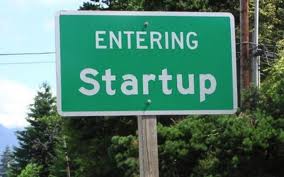
Over the last few months I have been spending more time talking with Venture Capital firms as we start to launch VivaKi Ventures in EMEA and I have to say it has been fascinating. On top of that I have been talking with individuals who have working in multiple start ups. If I am honest I am struck by the combination of instinct, nous, luck, crowd mentality and incredible returns and losses the VCs work off.

Information is extremely varied and disparate but overall it appears that the funds do a number of things, they are looking to make sure they have some ‘skin in the game’ in different sectors – we must be in mobile, we must be in video etc, sometimes buying into companies that from the outside appears misguided – Groupon to the punter on the street just appeared crazy but that did not stop anyone investing. Then we have this emotional crowd mentality where people in the investment community get excited and invests illogically based on sentiment, not dissimilar to the city swings we see on share prices.

In times of financial ups and downs investment firms are then trying to recoup the best returns, again, perhaps not always thinking straight in IPO situations, one of the views on Facebook was that the institutional investment firms had cash, it was making no returns through any conventional financial methods whether the stock market or banks and so the money was burning a hole in their pocket. An IPO like Facebook and others was a great opportunity to hit those return goals.

After all that there is the general rule of thumb that anywhere between 30 and 50% of companies will be complete write offs. I got thinking about that, and in discussions on that subject it struck me how blase they were about it. It is not working, cut it. You may be an owner, founder, an employee in these companies working hard and caring very much whilst backing you is a company that may one day wake up and say – lets pull the plug. It feels like that is an easy thing for them to do, when they are balancing that decision with high returns of 30x somewhere else. It is very matter of fact and shows just how hard it is to be a successful start up, especially in such difficult times.

I know for sure that there are good VC firms and less good in terms of caring for their investments but they all for sure know that they can walk away from companies easily as it is all built into the maths.  Good luck to everyone who starts their own business or joins a start up. It is a brave world.

Agencies and publishers are polarising structures based on the perfect storm

Technology killed the admin star.

One of just many debates raging around the new world of programmatic buying and exchanges. Are we seeing the death of the buyer? The death of the seller? Has the world of computers stripped advertising of all its creativity? Lots of big questions and debates but over the last six months, one common thread has become apparent; there is no value in execution in the long term.

Two or three big themes have converged in the last year, they have been around for longer of course but they have been lit up by the tech debate. The first is that in my view too many businesses sold their value on execution and delivery. These are necessities and you can’t not have them but is that where the value is? Is that what you charge more for? I don’t think so, the agency world in particular suffers from focusing a lot on service and delivery and execution over real value add strategy and quality creative thinking.

In itself that is not the end of the world, many advertisers want perfect execution of course, but what it ends up being then is an easily quantifiable, discountable service that becomes very commoditised – tell me the difference between two media agency TV departments? Secondly lets combine that with the fact that the world of Paid, Earned and Owned means that clients are now not only trying to squeeze costs and fees they are starting to see these new approaches as a gateway to spending less. I have just finished doing preliminary judging and of about 40 entrants at least 37 boasted / moaned (not in so many words) that they had little or no budget to make their campaign work.

So we have smaller budgets based on the social buzz doing the heavy lifting for us and we have fees for service and execution being cut – that leaves us with only one alternative – start to charge for ideas and creativity, for strategic guidance so that the execution is less crucial to the revenues. This works more now than ever as to make the social buzz work for you, good ideas and strategy are needed to do it..it is no coincidence that the non traditional media planning and buying teams in agencies are the fastest growing divisions. Big sponsorships, events, social strategy, performance strategy, content, these are where the future lies backed up with technically led brilliant basics.

To gain traction strategically you need to invest in good people. You also need more of them. Investment  in the current climate is not straight forward so you need to rebalance the organisation. The investment in time and people from a strategic perspective needs to increase and at the same time you need to make execution more efficient allowing you to free up people and resources to focus on intellectual capital. So Enter the third factor  – programmatic buying.

Ask a customer if they want to pay for a load of people bogged down in admin, or people actively thinking about how best to run their business and make it a success, the answer will invariably be the latter, but that’s what we all do in the main at the moment. Clients pay for people and hours spent on too much Admin and not enough thought, this situation needs to change. Technology and programmatic buying/selling is now allowing all companies to achieve efficiencies. Whether it is publishers like the Guardian or agencies through trading desks technology is freeing resource to focus on value rather admin.

Publishers are moving fast now, after a stuttering start, they are moving rapidly, trying to find ways to move more and more into programmatic sales, now with words like premium and brand being attached. They are opening parts of the site, previously sacrosanct such as home pages to the evils of tech. Trading and execution is taking a back seat as Partnerships, strategy, event type words come to the fore – BIG ticket sales are now the focus.

Some recent people decisions are a reflection on that with people like Vevo choosing Partnerships people over sales people and Yahoo re-evaluating structures and there are many more. I am sure The Guardian will be looking to Tim Gentry to help them achieve better margins and a more efficient approach to the market, the signs are there..

So for me the message is clear – we all need to find a way to make money from clients and customers who want to pay less for service and execution and spend less on advertising. Armies of people pushing excel around is not going to be the answer.

AOD Summit – 2012

The two days ended with a great talk from one of the godfathers of digital – Scott Ferber. Founder of ad.com the worlds most successful ad net and now founder of Videology. The guy is both crazy and unbelievably bright, engaging and down to earth.

20120714-201018.jpg

Two tough days of Audience On Demand and VivaKi bonding, I probably did not plan it brilliantly by accepting an invite from Google to take all 28 of us to the IAA Summer ball! There were some tired faces on day two but it was the right thing to do. The team had a great time.

20120715-063733.jpg

20120715-063911.jpg

We had people from UK, France, Italy, Dubai, Spain, Germany, Belgium, Netherlands, Sweden and Poland. Too many teams claim to have resource and capabilities in different markets but that means clicking the geo buttons on their DSPs. We have established teams now driving markets forward and it’s exciting to see in action.

There are an amazing amount of similarities between markets, there is a curve of adoption that I believe is reflected in most markets but only where companies are pushing the market. It looks very different if you are a follower. Our teams in Dubai for instance are not pushing they are creating it, I highlight it as the entrepreneurial spirit that makes the people in The Vivaki Nerve Center different.

The two days ended with a panel with Stewart Easterbrook, CEO SMG UK, Matt Roche of Weborama, Ryan Jamboretz of Videology, Jon Slade at the FT and Jason Bigler of Google painted a picture for the markets to take back of a world in which programmatic buying and RTB was going to be fundamental to all their businesses.

This Monday sees a new home for us all. We have enjoyed being part of the SMG team at Whitfield street but very excited about having our own office. It has been two years and 4 months of hard work that has taken us to this point and it feels like the time is right for expansion. I do need to get rid of the curtains though!

20120717-104512.jpg

The market is still moving fast with acquisitions and evolutions and indeed people moves. Interesting to see Damian Blackden move to Adnologies this week, showing that data and exchanges are still pulling the talent to them and we continue to meet with a myriad of tech companies all trying to carve out their space.

Business photography

A few photos from the last few weeks on the road! Instead of my usual stuff I thought I would let the pictures tell the story!

20120622-165714.jpg

20120622-165735.jpg

Damian Burns doing his usual top class client service, another Damian in the background being less professional.

20120622-165750.jpg

Mark Ronson at the Microsoft Party in Cannes – a very cool session

20120622-165811.jpg

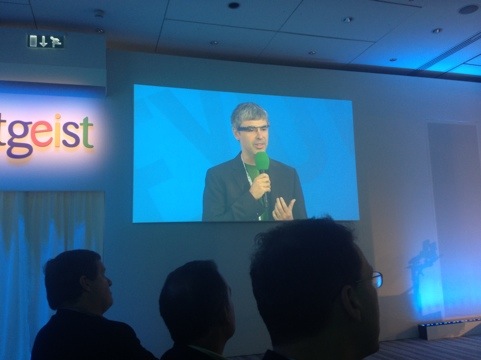
Neal Mohan of Google setting the scene at the start of the Client Advisory Board Meeting in LA

20120622-165839.jpg

An amazing view of the beach at Dana Point, a beautiful jog first thing

20120622-165907.jpg

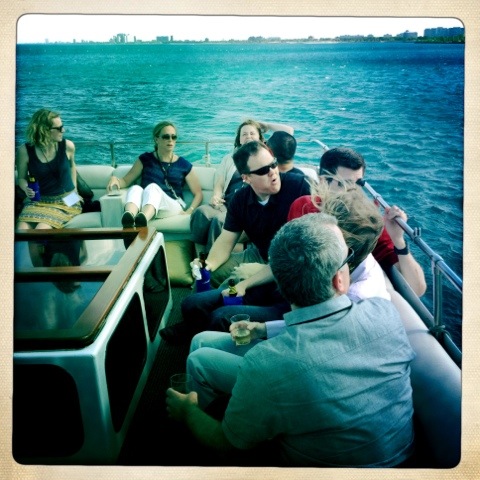
Tracey Scheppach of SMGx and VNC fame on the water in Chicago with HQ just behind

20120622-165917.jpg

Beatriz and Sara from Spain and Italy talking RTB (Not)

20120622-165934.jpg

20120622-165951.jpg

20120622-170003.jpg

20120622-170026.jpg