Will Millennials ever know Serendipity?

serendipitymachine

Apart from loving the word, I wanted to write about Serendipity as I sometimes wonder whether it is going to be a rare thing for coming generations. For those that are not sure the definition of Serendipity is basically about coming across something pleasant by accident. Now I started thinking about this from what I read online and updates etc and it struck me that unless you work hard at it, serendipity is not what it used to be.

I work in a business where we deliver exact ads to exact cookies which is another shot in the eye for Serendipity when compared with TV advertising that still trades on the fact you buy one audience but could pick up many other ‘free’ audiences. Online advertising is just one part of the equation though, it is also about my Twitter feed, Linkedin and so on.

If you think about it the World Wide Web is closing in on us everyday we use it. We have Google showing us Ads related to searches and sites we visit and then content that is determined by our own behaviours and our friends social behaviour. I have 500 people I follow that I have hand picked based on their subject matter expertise whether that is personal or professional or indeed they are just friends. By definition I am presented with content of the same genre, often lots of the same content over and over. Of course you can add random people but most people forget to do that. To help make your readership less varied Twitter then suggest people like you so you keep adding more of the same.

Facebook is of course again a hand picked bunch but for some reason I see the same people adding updates. I keep being told that this is based on my interaction with them, I know for sure that is not the case so there must be some other science at work, either way I want more variety and it is killing my Facebook experience and interest. On top of that I am being shown highly targeted Ads based on interest and friends. It all adds up to a pretty repetitive and unsurprising experience.

Linkedin are usually people from the same genre and updates cross over with Twitter, Ads are targeted and so again I am seeing the same stuff. If I go shopping on Amazon they are predicting my tastes and showing me content that they think I will want whether it is books, films or electricals. This leaves very little revelation in my experience. That extends into most shopping as targeting becomes more sophisticated where very personalised content will be shown just for me across many sites. Of course we are then flocking to sites like Zite that learns fast or asks what content you like until you end up with a painfully myopic view. To be honest the examples go on and on with iTunes and other music systems proposing other songs and albums, but always based on something that you already like.

Right now we are primarily talking about ads and people but when we get into search that becomes more and more tailored we may never see an alternative view. If Google learns that I am a conservative and look at that content, that is what I will see, I will never be given alternative content. Same for any belief or interest. The technology we use is driving our experience to be more and more focused on understanding the user and making sure what they see is relevant. That might be good for Ads but I feel like we need a serendipity button.

We need to mix this up, challenge ourselves and give ourselves an opportunity to see something new and exciting before we target ourself into the most narrcow cast existence with no little surprises around the corner. Let us all press the Serendipity button. Aleks Krotoski has allowed us to do this, the image for the blog above is her Serendipity engine which actually creates it through a physical representation. It takes some getting your head around but it is fascinating – click here for more.
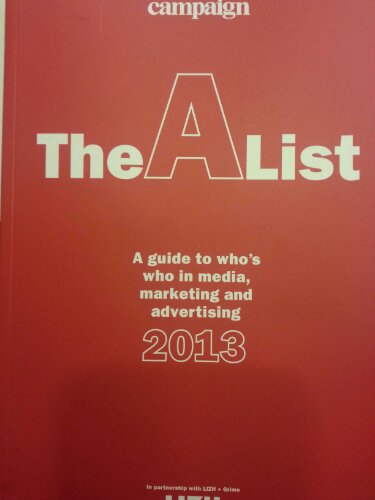
Campaign A-list at 40

image

Some people dont care, some have been in it for years, some are freshers like me but quietly everyone is pleased to be in Campaign’s A-list. It wont change your life or your career,  it’s a nice to have and a
good addition to the Bertozzi Bytesize scrap book.

Thanks to Campaign for my inclusion, let’s hope I get to stay in it now although it looks like you have to work hard to get thrown out going by some old timers in there!

The area people seem to be most interested in is the icons that sum you up, I had four which for a fresher was deemed good and I was described as nice (!), Reliable, techie and one other. It’s all rock and roll around Bertozzi by the sounds of it.

We have reached a new level of self harm in digital measurement

ImageAh the Ads are on – cup of tea anyone?

Digital media will eat itself then be sick all down us. Viewability is the latest craze to hit those who must have historically worked offline with frustrated metrics and now want to take it out on digital. When I moved to digital in 2000 we beat our chest with just how much we could measure. We could measure every time an Ad was shown! Every time someone clicked on it! Every time someone bought something! On and on it went, glory times. Until we realised that just because we could measure it, it was not necessarily a good thing.

Digital tracking issues started with no reach and frequency metrics! Everyone has been scrabbling to replicate the TV world. I am often asked how we measure brand metrics – well we can look at certain key numbers like engagement etc but ultimately if you want to track brand engagement then measure it with a survey, just like you do on every TV campaign. As we have evolved so have our measurement approaches but we are entering a new era of self harm. Viewability.

I am not even going to get into the fact that the tech is ill tested and nascent and needs some really thorough analysis. Or that the measurement can be carried out by any number of different companies each with a different way of tracking, so no consistency whatsoever. No lets look at what we are doing to the industry vs the offline world.

Could someone explain to me how marketeers (and / or agencies) are starting to nail digital on something like viewability and yet TV and Press are sat laughing at our complete stupidity. The TV market has it sorted. They came up with a plan 40 years ago, they got everyone to buy into it. Ratings, indexes, context, reach, frequency and a brand survey. Nuff said everyone liked it, pretty simple – lets not dig too much further or upset the nice little market place we have going. Otherwise how can you explain that in digital there are people clamouring to only pay for viewable impressions when a multi billion pound TV marketplace trades off people leaving the room, making tea, talking, texting on Twitter when the Ads come on. Press? Lets not go there.

If we are not careful in this digital business of ours we are going to measure ourselves into the ground. In TV the metrics are broad and deliver against some key criteria that they plan against, the industry has made it simple for advertisers to spend money and not question the fact that a 20,000 person panel in the US powers $65b TV market . Viewability is a classic example where we are setting a bar so high vs the other the channels because we can. For those who are challenging the industry from an advertiser perspective – should then turn the spot light on their other media expenditures. I would ask that we take some time to establish some very clear guidelines and transitions and not go in like a bull in a china shop just so we can show off at the next pitch. Lets do things right, for the good of the industry, not just the next sell.

Interview with Beet.TV at Monaco Media Forum – Programmatic video

Each year I go back to Monaco the subject of Real time bidding, programmatic buying and data rises up the agenda. Year one there was little or no coverage of the topic. Last year we had a side room break out on the topic, not attended by anyone outside of those who worked in it. This year I was interviewed on the topic, and the panel regarding tech, data and RTB was on the main stage as well as other related round tables.

Part of that for me was an interview with Beet.TV on the growth of programmatic buying in the video ecosystem. Click on the image below to be directed through to the site.

20121116-162809.jpg

Happy Birthday Bertozzi Bytesize – 28.10.09

I remember the first blog. I had no idea how to use the tech of the blog, no idea where it would end up but really wanted to know how all this blogging stuffed worked.

150 blogs later – basically 4 a month and I am amazed the number of people who visit the blog, most people give me s*** for it, but begrudgingly admit that I started something and managed to keep it going.

When I wrote the first blog It was a pretty awful working time of my career, working somewhere I hated with every sinew of my body but determined to fix it, to get into a role that was entirely digital, in a growth market and working with the best and brightest of our industry. Now is a good time and makes the blog that much easier to fill with good, bad and indifferent pieces.

I hope to maintain this, it’s hard to stop once you start. I make time for this blog, contrary to the usual crap from people about ‘you can’t be that busy if you can write a blog’ I write at home, at night, at weekends, on flights etc and I enjoy it.

For anyone who reads or subscribes, thank you, I know it’s not Dickens, but appreciate your support!

Digital Trading Standards Group (DTSG) – heard of it?

20121010-001406.jpg

I attended a seminar this morning called something like ‘Is your brand safe online’ A number of parties were there, all worried about their brands, namely trade bodies, Ad nets, Agencies and global digital media companies. The one group severely lacking was the advertisers! It is notoriously difficult to get clients to turn up to events and this was obviously not an event that they thought important. Why would they? Don’t they have their agencies to do this stuff?

It is a similar story with ePrivacy, although almost all the onus falls on the advertiser to make sure their site is compliant and that their advertising is as compliant as one can be in this area, there has been limited discussion on the topics since ‘the date’ came and went. How come? Maybe everyone thought that someone else was worrying about it?

20121010-001453.jpg
The group is focused on getting self regulation principles about where Ads appear to be taken up by media vendors. They want to suffocate the advertising revenue streams for unsavoury or illegal sites by making sure that all the major suppliers of inventory agree not to use them.

So today’s agenda showed that again we have a topic that appears an important one and yet again we have the merry go round of whose responsibility it is to make sure we are compliant. Well today we heard it loud and clear, The Police and Fact think that it is the advertiser who has to take responsibility for making sure that their Ads do not appear on illegal or inappropriate content. We were given an example of the client EasyJet that the guy from Fact kept repeating has not been able to be reached. He was very annoyed by that..I asked if he had contacted their agency to be told that it was not his job to spend time looking for who Easyjet agency was – umm maybe ask your IPA friends? No it was better to keep sending letters to Easyjet when the agency would have had those Ads down in about 15secs.

So bearing in mind that the Police think the advertiser should take responsibility, the advertiser thinks the agency should, the agency thinks the Trading Desk should and the Trading Desk things the suppliers of inventory should we have a beautiful example of sequential liability (without all the legal jumbo jumbo!) – I took a decision. I decided that the suppliers of inventory should be taking responsibility for where my agencies, advertisers’ adverts are being placed and I wrote them all a nice letter asking them to abide by the Principles of the DTSG.

20121010-001544.jpg

I just did it. It was easy to do to be honest. I wrote to them and said ‘ please can you confirm that you won’t put Ads on porn sites, children sites, illegal sites (the special police list), Torrent sites and basically anything else unsavoury because our agency’s advertisers will not want it.’ And why was it easy? Because it is so bloody basic and common sense that I am trying to work out why everyone has not done it, apparently some are reticent at this stage to do it. Well for me I am all for it because it is straight forward and I don’t want another ePrivacy debacle involving 10 different bodies and loads of political bull. I just want to buy ads in nice places.

Our whole VivaKi Verified approach means we are already vetting, categorising, white listing inventory so this is a no brainer for me, I appeal to everyone else to get on with it as well. It will be one less committee meeting to go to and will mean everyone can get back to dealing with the nightmare that is ePrivacy, I would hate for another topic to come along and hijack every media conference panel debate!

After this cause is put to bed I am starting out on Ads appearing alongside prostitute cards in phone boxes – now who is responsible for making sure that does not happen?

Naked Wines – A master class in CRM and customer relations

20120921-223141.jpg

Have you heard of Naked Wines? Do you like wine? Then you should check it out In our industry we talk a lot about customer engagement and CRM / social media usage and often talk about AMEX or Starbucks as the benchmark. There is one company that in my experience has blown them all away, I mean really stand out and that is Naked Wines.

Basically Naked Wines invests in new wine makers, start ups of the wine industry and you are encouraged to invest, the investment is small scale, could be £20 a month for example. This money is then ploughed back into the start ups via your purchases. As you purchase you receive 33% cash back to spend again. There is then an amazing site that allows you to rate and share and see what others are drinking, liking etc. When you do buy some wine, it comes with a personalised message from the wine maker on the label which is a nice touch.

As with Amazon they keep track of what you like and don’t like and make suggestions for you etc for future purchases. This is all good but it is not all of this that has taken me, it has been the amazing contact strategy.

After a few standard emails from them telling me what money I have in the account I then receive an email entitled ‘FW That thing I was telling you about’ you open it up to find Naked Wines have forwarded an email from a winemaker offering a chance to Angel investors to buy a one off. Naked Wine email starts with ‘this is what I love about my job’. It is all a fantastic tone, it draws you in.

As it happens I did not take this offer and a little while later I receive an email entitled ‘Have I offended you?’ This is the text:

Dear Marco

I am baffled.

Every month I tell you about the free bottle of wine that you have earned..and every month you ignore it. It is not a trick, it is your reward for being a loyal investor.

If you are too busy to faff about mixing a case to get your free bottle then I have a solution. (goes on to explain solution)

If there is some other problem then please tell me by hitting reply.

This is an engaging, refreshing and actually quite to the point as an opening approach and had me already more engaged in something I was partially committed to. They continue with a number of contact emails and most are ignored, not out of dissatisfaction, more time, busy life etc and I think that is where I genuinely respect this company – they worked that out!

Every so often though after a period of time, they come back to grab your attention, I liked ‘warning do not open before Christmas’ when you open there is a selection of wines with the warning that they may attract unwelcome relatives. As you read further it continues to push the message – avoid this offer – all the way through, it’s nice, a change of pace from the usual CRM messaging.

To my amazement I then actually got a call from someone to have a chat with me about my wine preferences and what I would be interested in the future, a website that calls you? As it happens I did not have time and so…

Along came the next hook email – ‘I am feeling VERY guilty…’ the opening line is brilliant ‘We’ve got your money AND your wine. That is not good! We owe you £80 of wine and I am losing sleep over it’ then comes the genius and ties back to what I said earlier, they know I have not got loads of time for deliberation so they make it easy.

‘I’ve tried to call you several times, but you are a very hard person to get hold of, so I have a no nonsense proposal for you’ They go on ‘Give me one chance to put a selection of wines together and if you like them you have had some great wine and I get a clean conscience. If not a full refund.’ What did I need to do to get this arranged? Hit reply and say YES! That’s it. There is the beauty of it. Let us do the work and just say yes, show us some faith. I did. On the delivery confirmation email they then propose another way I could work with them that gets me the best wines and with the least hassle until I decide to invest more time in it.

Underpinning this amazing contact strategy is an awesome service. Order before 3pm for next day delivery, follow up emails, great website full of information and social engagement and more. Why have I felt like writing about this company, well because so much time is spent writing off email strategies instead focusing on social media etc etc. I don’t think it is true, it is just not done well. Naked Wines is the best experience I have had with a business bar none and should be a benchmark for all. And at the end of it all as I reviewed the emails they sent me I saw that I had bought a fair amount of wine and I would say 90% of that has come from the email nudges!

Well done Naked Wines and every one else take a good look and learn something.

My Mediaweek judging experience – take it back to basics

20120910-172245.jpg

I judged my first Mediaweek awards this week. An array of illuminati from media were there (me excluded), from agencies, publishers, creative and media. All of them were senior and full of experience in judging and the industry as well as carrying a good helping of cynicism and sarcasm.

20120921-231352.jpg

Not sure what I expected really, a big old argument over the winner, a load of opinionated, puffed up media types all showing how right they are? I could not have been more wrong. In fact my group, not to mention names, was experienced and senior for sure, a mixture of advertisers, agencies, clients and media owners, all very polite, thoughtful and very insightful.

20120921-231740.jpg

With that comes a very acute ability to judge and to see through bullshit. Discussions around the table were not around disagreements so much as agreement. Of course there were individual opinions and differences but actually what really stood out was the immediate way in which entries that lacked either direction, quality, clarity on accomplishments and results were all found out very quickly.

It was fascinating seeing the entries boiled down to a single 5 minute video, it means you have to nail it and in a clear and succint fashion. Overall the quality was very high indeed but there were a couple that when they ended left the group all staring at each other in bewilderment. It is harder than it looks, sitting in that room watching this finished material it looks easy but I know it is hard from my New Business days. I recall the time we were told to do ‘something different’ in our new biz submission so we decided to send a video as primary introduction. It was slick, showed off the brands and the results we had achieved, it was described by the client as ‘a load of corporate w@@@’ So it is difficult to know what to do. Overall though my advice to entries of the future, knowing that it is being watched by 10 very experienced, sharp, media people would boil down to these few tips:

1. Start with the brief and make sure your video actually answers it and focuses on what the category is looking for, not what you want to shoehorn in.

2. Enter it in the right category!

3. Don’t submit the same video into different categories without adapting to some extent, this was an interesting debate. I think I came out on the side of tailor in some way, a nod of acknowledgement that it was a different brief to the previous you submitted into – not everyone agreed with that though.

4. Make sure results are strong and properly benchmarked – amazing amount of stats used out of context and with no benchmark. You have to remember that judges will either think they are not great stats in context or they are made up and twisted in some way if you dont.

5. Dont over use phrases such as ‘contributed to the overall’ that will deliver a wave of cynicism from these old hacks

6. Create a professional video that looks like you want to win, not one you threw together for your graduate presentation. Can you hear what the people are saying over special effects for instance?

I have to say thought that overall I was really impressed both with the approach and professionalism of both the judges and entries. It was fascinating to see all this great work side by side and even more interesting to hear the judges comments first hand. I was also quietly relieved to see business results front and centre rather than likes, licks and other titbits.

Is this the 2nd most successful paid for social network?

20120824-151426.jpg

In the last three weeks I have responded a couple of times to Tweets regarding social media. One was entitled ‘would you pay for social media’ and it got me thinking that when we talk about social we often forget Flickr. Then I see a tweet about the way most of the mobile Apps for Google+ and Facebook are evolving into a series of rich images to scroll through and again I think to myself what a whopping missed opportunity Flickr was and how a lack of foresight led it to be a photo repository for the average user.

Flickr has 50m registered users, pretty good but when compared with what it could have been! It was bought for $35m dollars in 2005 by Yahoo, it seems so cheap and in terms of what it could have been, a steal! I think the timing of the purchase was unfortunate with Yahoo in some of its biggest disarray in terms of position in market anbd future strategy as well as FB etc coming to town. Back then Flickr had a function to bring people together to ‘chat’ around subject matter photos – the equivalent of a ‘Hang-out’ at the time I guess. Basically what Flickr lacked was someone who could see the future and how social and sharing was going to be HUGE.

Would you pay for social media? I do every year when Flickr say to me that if I ever want to see my photos again I better pay up! That is one of the best social media payment models in the business no? Now of course I resent the ransom note every year but begrudgingly admit that they do a job, they hold this for me, allow me to share it, although their god awful privacy controls are difficult to fathom, normally when you want to send a single photo you send people everyone of your private photos!

I notice that Flickr has started to adapt, new interface, new controls and a far more user friendly interface, but they need to do more, they need to create an easy way to share, comment, bring in friends, let people announce things, set up environments for events and..oh is that not Facebook? I would like to see a ‘hang out approach’ on videos you want to share, invite them live and so on, the opportunities are endless and this is what makes me realise what a terribly, terribly big waste of an opportunity it has been thus far. It is however not too late in my mind.

There has been some debate about their revenues, conservative at $50m ranging upwards helped by Getty Images, Advertising on billions of impressions and other partnerships so it is a good business from the outside, I will be intrigued to see if the most successful pay-for-play-social-media-platform in the world can continue to adapt and grab the new opportunities before it is resigned to being a bloody good attempt at a social network from 2005.